
Judge’s gavel resting on a desk next to an open law book with scales of justice in the blurred background
Dog Attack Wrongful Death Guide

Content
Losing a family member to a fatal dog mauling ranks among life's most devastating experiences. You're thrust into an impossible situation—grieving while simultaneously trying to understand whether anyone can be held responsible, how your family will manage financially, and what legal options exist.
Here's what many families don't realize: wrongful death cases involving dogs operate differently than typical injury claims. Your loved one can't tell their story. You're left piecing together what happened, often relying on witnesses who may have seen only fragments of the attack. State laws vary wildly—what applies in California won't necessarily help you in Texas. And you're working against strict deadlines while trying to process unimaginable grief.
These cases sit at an uncomfortable intersection of animal control regulations, civil liability, and wrongful death law. Insurance companies often dispute coverage. Defense attorneys argue provocation or trespassing. Meanwhile, you're wondering whether pursuing legal action will provide any measure of justice or simply prolong the pain.
When Dog Owners Are Liable for Fatal Attacks
Your ability to hold a dog owner responsible hinges on which state you live in. The U.S. has developed three distinct legal approaches, and knowing which governs your case changes everything about your strategy.
Strict Liability vs. One-Bite Rule by State
Different states take dramatically different approaches to dog owner responsibility. Here's how they break down:
| Legal Framework | What You Must Prove | Examples | Critical Differences |
| Strict Liability | The dog attacked your family member; they had legal right to be there | CA, FL, MI, NJ, AZ | No need to show the owner knew about danger; defenses mostly limited to trespassing or provocation scenarios |
| One-Bite Rule | The owner had prior knowledge their dog posed a threat | TX, VA, MD, AK | You'll need documentation of previous incidents, complaints to authorities, or evidence of aggressive tendencies; much harder to prove |
| Hybrid Systems | Depends on what damages you're seeking | OH, PA, NC, GA | Medical bills fall under strict liability; everything else requires proving negligence; you may file under both theories |
In states with strict liability, your family doesn't need to demonstrate the owner recognized their dog as dangerous. That said, don't assume you'll automatically win. Homeowners can still defend by claiming your loved one provoked the attack or was somewhere they shouldn't have been—arguments that work even in plaintiff-friendly jurisdictions.
One-bite states create bigger obstacles. Despite the name suggesting dogs get one "free" attack, that's not quite accurate. You'll need proof the owner should have recognized the danger. This might come from previous bite incidents, the dog's breed reputation in some jurisdictions, neighbors' complaints, or even the owner's social media posts about having an "aggressive guard dog."
Proving Owner Negligence in Fatal Cases
Building a negligence case—even where strict liability exists—strengthens your position and can unlock additional compensation. You'll need to establish four things: the owner owed a duty of care, they violated that duty, this violation caused the death, and your family suffered damages.
Common scenarios where negligence becomes central:
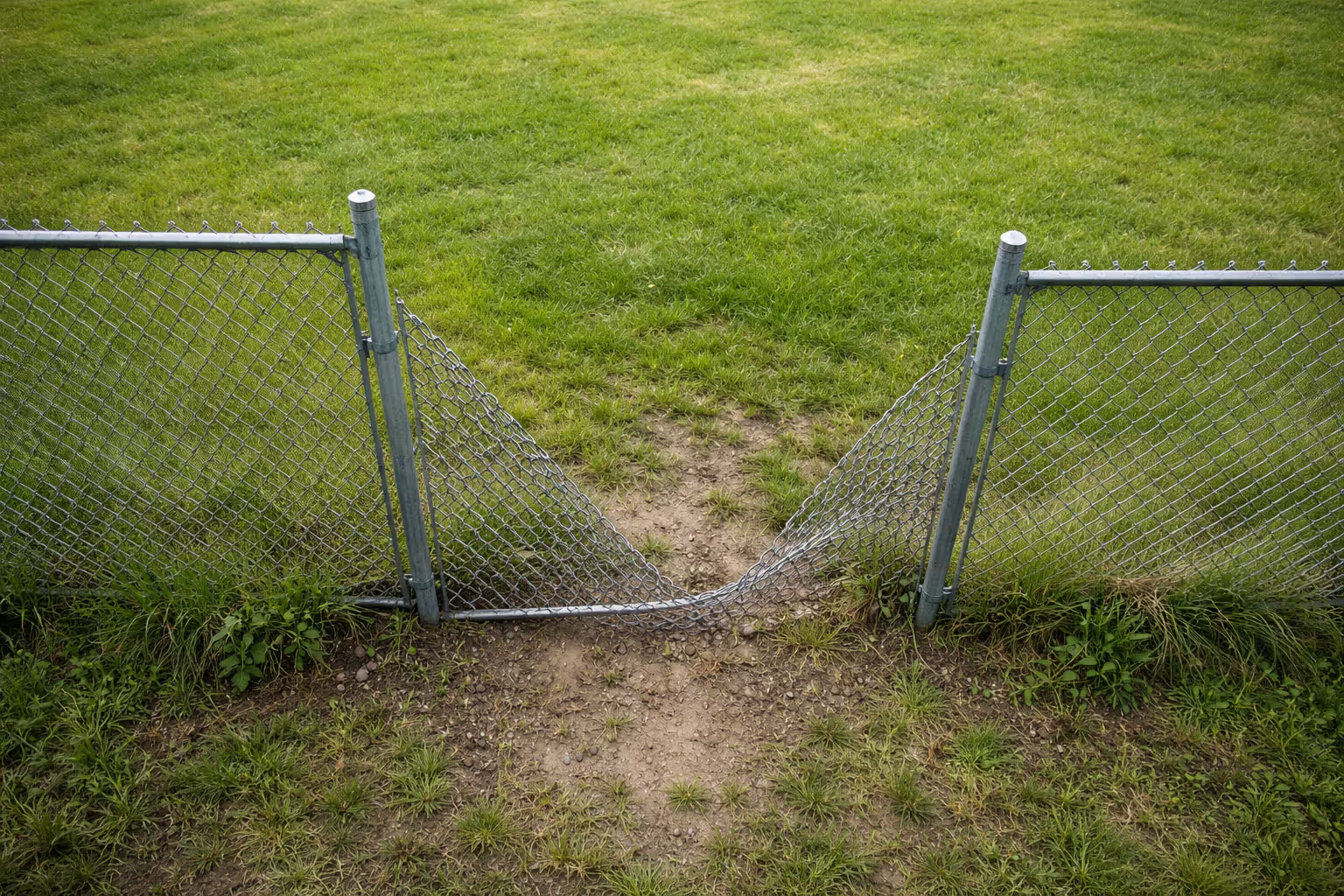
Inadequate containment: Consider an owner whose dog repeatedly jumped a four-foot fence. Neighbors had complained. Yet the owner never upgraded to higher fencing. When the dog escaped and killed someone, that failure to address a known escape risk becomes powerful evidence.
Disregarding behavioral red flags: Delivery drivers avoided the property. The mail carrier filed complaints. Visitors reported the dog lunging and snarling. When owners brush off these warning signs and the behavior escalates to a fatal mauling, their dismissiveness establishes negligence.
Dangerous supervision gaps: Leaving a dog with documented aggression alone with vulnerable people—kids, elderly neighbors, disabled individuals—without barriers. I've seen cases where owners knew their dog showed aggression toward children yet left it in an unfenced front yard where kids walked to school.
Breaking local animal laws: Your city probably has leash laws, fencing requirements, or rules about dangerous dogs. When owners violate these ordinances and their dog kills someone, you've got strong negligence evidence. A real case from Cincinnati involved an owner who violated a local ordinance requiring six-foot solid fencing for multiple large dogs—he had only a three-foot chain-link fence. When his dogs escaped and mauled a cyclist to death, the ordinance violation became central proof of negligence.
Author: Olivia Hartman;
Source: mannawong.com
Who Can File an Animal Attack Fatality Claim
Not everyone affected by a fatal mauling has the legal right to file a lawsuit. States strictly control who qualifies, and filing without proper legal standing wastes time and money.
Eligible Family Members Under Wrongful Death Statutes
Most states follow a priority system. Here's the typical order:
Surviving spouses: Every state allows a lawful spouse to file. This includes common-law marriages where recognized and same-sex spouses following the Supreme Court's marriage equality ruling.
The deceased's children: Both biological and adopted kids can file—either with a surviving spouse or alone if there isn't one. Adult children have equal standing with minors in most places, though damages often differ since adult children typically weren't financially dependent.
Parents of the deceased: When an unmarried child dies (whether minor or adult), parents usually have standing. Some states distinguish between minors (clear parental standing) and adults (standing may shrink if the adult child had their own spouse or kids).
Extended family: Rarely do siblings, grandparents, or aunts and uncles get standing. Florida allows siblings if no closer relatives exist, but most states don't extend that far.
Unmarried partners: Here's where it gets tough. Even if you lived together for years, shared finances, and functioned as a family, most states won't recognize your standing if you weren't married. California and a handful of others allow registered domestic partners, but you'll face an uphill battle in most jurisdictions.
A frequent mistake: assuming emotional closeness or financial impact automatically grants standing. Courts don't care how devastating the loss is to you personally—they look only at whether statute gives you the right to sue.
The law does not measure grief — it measures legal standing. Families often come to me devastated not only by their loss, but by the discovery that the person closest to the victim has no right to file suit. Understanding who qualifies under your state’s wrongful death statute is the very first question that must be answered, because everything else — damages, strategy, timeline — flows from that determination
— Robert A. Lancaster
Estate Representatives and Their Role
Some states require the deceased's estate representative—the executor or personal administrator—to file the wrongful death claim, even though damages ultimately go to family members. This creates extra steps: someone must formally open an estate and get court appointment before filing the lawsuit.
The representative doesn't keep the wrongful death recovery (except any share they're entitled to as a family member). They're managing the claim for the beneficiaries' benefit.
Why does this matter? Because the estate has separate claims—medical bills before death, funeral expenses, estate administration costs. These estate damages are distinct from wrongful death damages like lost companionship or future financial support.
How Dangerous Dog Laws Affect Your Case
State and local dangerous dog regulations create additional liability theories and evidentiary opportunities. These laws operate alongside general dog bite statutes and can dramatically strengthen your case.
Breed-Specific Legislation and Owner Responsibilities
Hundreds of cities have passed breed-specific laws targeting dogs perceived as dangerous—pit bulls, Rottweilers, German Shepherds, and similar breeds top the list. Controversial? Absolutely. Some states have even banned these local laws. But where they're enforceable, they matter enormously.
BSL typically mandates special requirements for covered breeds: liability insurance minimums, reinforced fencing, muzzling in public spaces, special permits, or outright ownership bans. When an owner violates these requirements and their dog kills someone, you've got negligence per se—the violation itself proves they breached their duty.
But there's a flip side. Defense lawyers sometimes argue that following BSL requirements to the letter proves the owner acted reasonably, even if their dog later killed someone. Smart attorneys counter that compliance with minimum standards doesn't excuse ignoring the specific dog's known dangerous tendencies.
Laws focused on individual behavior rather than breed work differently. After a dog attacks or behaves threateningly, animal control can officially label it "dangerous" or "vicious," triggering special requirements. When an already-designated dangerous dog later kills someone, that prior designation becomes devastating evidence—the owner had official notice their dog posed a lethal risk.
Prior Attack History and Documentation
Previous incidents transform your case. Even one prior bite—especially if documented through animal control reports, medical treatment records, or insurance claims—can establish owner knowledge in one-bite states and demonstrate negligence anywhere.
Where to find documentation:
- Animal control investigation files and complaint histories
- Police reports from earlier incidents
- Emergency room records from previous bite victims
- Vet records noting aggression or bite history
- The owner's homeowner's insurance claim history
- Neighbor testimony about threatening encounters
- The owner's own social media acknowledging their "protective" or "aggressive" dog
The challenge: minor incidents often go unreported. A dog that snapped at the FedEx driver or nipped a neighbor without causing serious injury may have zero official record. That's when witness testimony becomes critical, but memories fade and people move away as months pass.

Author: Olivia Hartman;
Source: mannawong.com
Damages Available in Fatal Dog Bite Lawsuits
Wrongful death damages attempt to compensate survivors financially and, sometimes, punish reckless conduct. Understanding what's recoverable helps families evaluate settlement offers intelligently.
Economic vs. Non-Economic Compensation
Economic damages cover measurable financial losses:
Lost financial support: What the deceased would have earned over their lifetime, minus what they'd have spent on themselves. Economic experts calculate this using age, health, education, career path, and expected work-life. A 35-year-old engineer with 30+ earning years ahead? This could hit several million dollars. A retiree living on Social Security? Possibly nothing.
Lost benefits: Health coverage, retirement matching, and other employment perks the deceased provided to family.
Funeral and burial expenses: Usually $7,000-$15,000, though some families spend considerably more.
Medical bills: Every penny spent between the attack and death—emergency transport, trauma surgery, ICU care. Even a few hours in trauma care can generate $100,000+ in bills.
Estate costs: Legal fees and court costs for probating the estate, though these usually come from a separate claim.
Non-economic damages address intangible losses:
Lost companionship: The relationship value—love, guidance, emotional support, daily presence—that survivors lost. Spouses can claim loss of consortium; children claim loss of parental guidance.
Emotional suffering: The psychological toll on survivors—grief, depression, anxiety, trauma from the loss.
Loss of care and protection: Especially relevant when the deceased provided hands-on care for kids, aging parents, or disabled family members.
Many states cap non-economic damages in wrongful death cases—typically $250,000 to $1 million, though these caps face ongoing constitutional challenges. Other states impose no limits whatsoever, letting juries award what seems fair.
Punitive Damages for Reckless Owners
Punitive damages punish especially outrageous conduct and deter others from similar behavior. They're not available in routine cases—most states require willful misconduct, recklessness, or malice beyond ordinary carelessness.
Situations supporting punitive damages:
- Training a dog to attack people, then failing to contain it properly
- Intentionally releasing a dog to attack someone
- Ignoring repeated warnings from animal control and previous victims
- Keeping a dog with multiple serious attacks in a neighborhood full of children
Jennifer Martinez, who's handled wrongful death cases involving animal attacks for 18 years, puts it this way: "These families don't just wrestle with legal complexities—proving liability, calculating damages, navigating insurance disputes. They're forced to relive the attack over and over through depositions, discovery, potentially trial. The whole process takes two to four years typically, during which they're repeatedly confronted with traumatic details. Yet so many families tell me that seeking accountability—making sure the owner faces consequences and hopefully preventing future attacks—becomes part of how they heal, even though no amount of money truly compensates for losing someone you love."
Punitive awards vary wildly—tens of thousands to millions—depending on jurisdiction and circumstances. Some states cap punitives at a ratio of compensatory damages (commonly 2:1 or 3:1). Others allow unlimited amounts.
Steps to Take After a Fatal Dog Attack
What happens immediately after a fatal mauling and during the following weeks significantly impacts your legal case. While you're understandably focused on grief and funeral arrangements, certain time-sensitive actions preserve critical evidence.
Evidence Collection and Witness Statements
Physical evidence degrades rapidly. Someone needs to photograph the attack scene, the dog, containment systems, and visible injuries as soon as possible. If the attack occurred on the owner's property, document fence conditions, gate functionality, warning signage (or absence thereof), and sightlines showing whether the owner could have monitored the dog's behavior.
The dog itself serves as evidence. Photos should capture size, breed characteristics, collar and tags, visible injuries the dog sustained. Video of the dog's demeanor shortly after the attack can prove valuable, though safety comes first.
Witness memories fade fast. People who saw the attack, heard it, or arrived within minutes have the clearest recollections immediately afterward. Get their contact information and initial statements about what they observed right away. Over time, witnesses relocate, disconnect phone numbers, and lose details.
Preserve clothing and personal items from the scene—they may contain DNA evidence or demonstrate attack patterns. Store them in paper bags (plastic promotes degradation) in a secure location.
In fatal dog attack cases, the first 48 hours determine the strength of every legal argument that follows. Physical evidence disappears, witnesses scatter, and memories reshape themselves. Families understandably focus on grief, but having even one person dedicated to preserving the scene and collecting contacts can make the difference between a successful claim and an unwinnable one
— Dr. Patricia Holden
Reporting Requirements and Animal Control Involvement
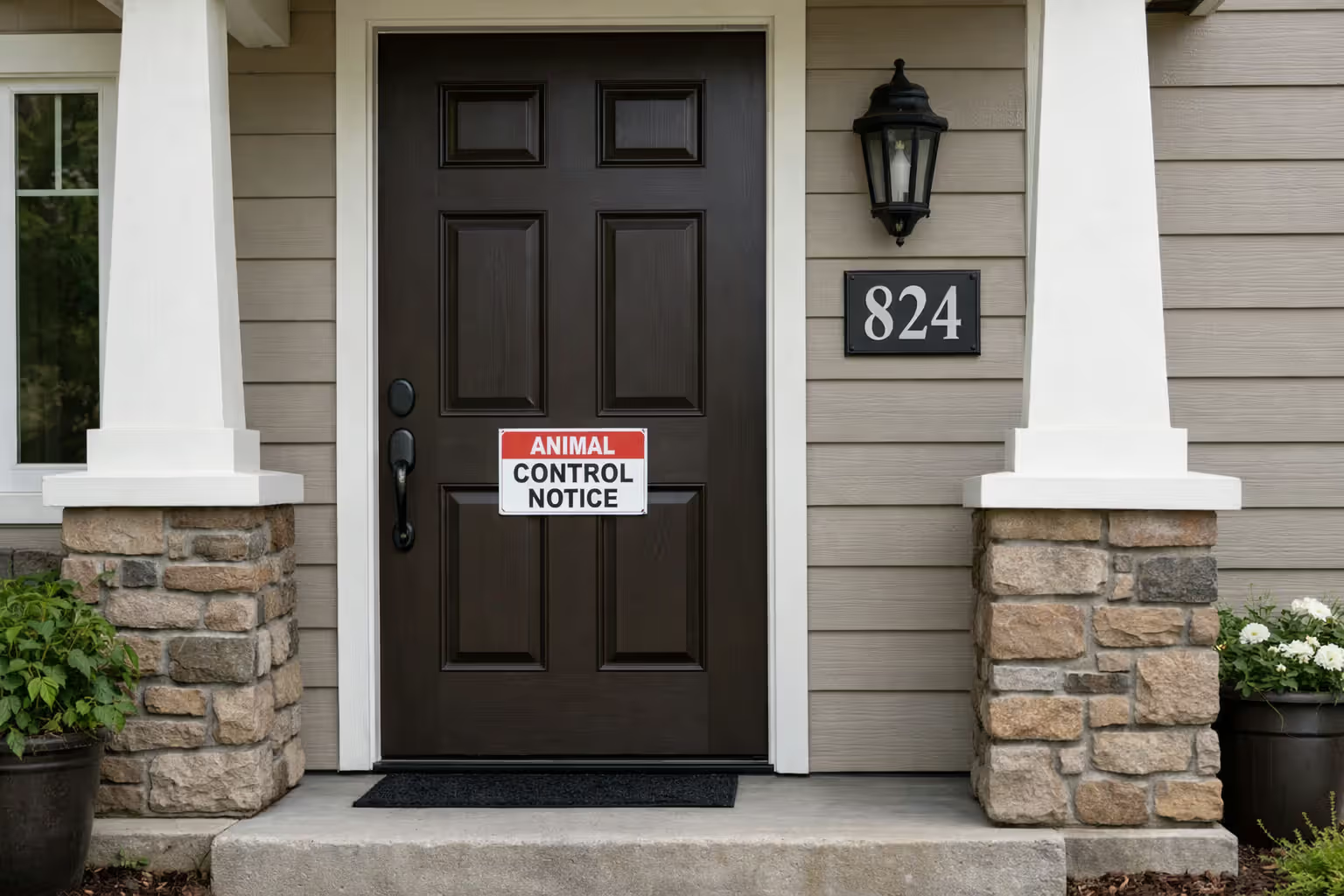
Every state mandates reporting fatal dog attacks to local animal control, law enforcement, or both. This reporting serves multiple functions: triggering official investigation, creating a documented record, and starting quarantine or euthanasia procedures.
The animal control investigation file becomes key evidence. These files typically document:
- Detailed attack circumstances
- Witness statements collected by investigators
- The dog's vaccination and license records
- Prior complaints about the same dog
- Property and containment system assessments
- Recommendations for criminal charges or dangerous dog proceedings
Request the complete investigation file, not just summary reports. Full files often contain photos, supplemental statements, and investigator observations that don't make the final report but prove valuable later.
Medical examiners or coroners conduct separate death investigations in most jurisdictions. The autopsy report and death investigation file provide medical evidence about injury nature and severity—important for establishing the dog attack caused death, especially if your loved one had pre-existing conditions or died after some delay.
Criminal charges against the owner might include anything from misdemeanor ordinance violations to felony involuntary manslaughter. While criminal cases don't directly compensate families, convictions can be used in civil cases and may motivate settlement.
Author: Olivia Hartman;
Source: mannawong.com
Common Obstacles in Dog Attack Wrongful Death Cases
Even strong cases face predictable challenges that can delay resolution or limit recovery. Anticipating these obstacles allows you and your attorney to develop counter-strategies.
Homeowner's Insurance Policy Exclusions
Most successful fatal dog attack claims get paid through the owner's homeowner's or renter's insurance, not the owner's personal funds. But coverage isn't guaranteed.
Breed exclusions have proliferated. If the policy specifically excludes pit bulls and the attacking dog was a pit bull or pit bull mix, the insurer may deny the entire claim. Over the past 20 years, insurers have dramatically expanded these exclusions to limit dog bite exposure.
Some policies exclude dogs with documented bite histories. If the owner previously reported a bite to their insurer, they may have received an exclusion for that specific dog. Or if the owner never disclosed the dog's history when applying for coverage, the insurer might rescind the entire policy for misrepresentation.
Intentional act exclusions create another barrier. Standard policies don't cover injuries the insured meant to cause. If evidence suggests the owner deliberately set the dog on the victim or used it as a weapon, insurers invoke this exclusion. Defense lawyers sometimes try characterizing grossly negligent conduct as "intentional" to trigger the exclusion and avoid policy limits.
Business-related exclusions affect guard dogs, breeding operations, or security dogs. These situations typically require commercial policies instead of homeowner's coverage.
When coverage gets denied, limited, or doesn't exist, families face hard choices. Going after the owner's personal assets makes sense if they're wealthy, own valuable property, or have other attachable assets. Many dog owners have limited personal resources though, and even winning a judgment may mean collecting nothing. Attorneys usually won't take these cases on contingency unless preliminary asset investigation reveals realistic recovery potential.
Statute of Limitations by State
Every state imposes filing deadlines for wrongful death lawsuits—typically one to three years from the death date. Missing this deadline by even one day usually means permanent loss of your right to sue, regardless of case strength.
Wrongful death filing deadlines vary:
- One-year jurisdictions: TN, KY, and LA impose one-year limits—among the nation's shortest
- Two-year jurisdictions: Most common timeframe, including CA, TX, FL, GA, IL, and many others
- Three-year jurisdictions: Fewer states like AL and RI allow three years
The clock typically starts on the death date, not the attack date. If your loved one survived days or weeks before dying from injuries, this distinction matters.
Discovery rule exceptions exist in some states for cases where death cause wasn't immediately apparent, but these rarely apply to dog attacks where causation is usually obvious.
Children sometimes get extended deadlines. If the deceased left minor children as survivors, some jurisdictions pause the deadline until the child turns 18, allowing them to file later if other family members didn't.
Practical consideration: waiting until near the deadline to file is risky. Cases require investigation time, and attorneys need several months minimum to properly prepare complaints. Plus, insurance companies negotiate less seriously as deadlines approach—they know your leverage evaporates if you run out of time.

Author: Olivia Hartman;
Source: mannawong.com
Frequently Asked Questions About Fatal Dog Attack Claims
Fatal dog maulings devastate families and raise complicated legal questions spanning animal control, tort liability, and wrongful death law. Your path to accountability and compensation depends on your state's liability approach, the owner's insurance coverage and assets, the dog's documented history, and evidence preserved after the attack.
If you're facing this tragedy, focus first on your immediate needs and grief while recognizing that certain time-sensitive steps—gathering evidence, identifying witnesses, reporting to authorities—significantly impact any future legal action. Statute of limitations deadlines vary by state, making prompt consultation with an experienced attorney essential.
No legal recovery can truly make up for losing someone you love. But wrongful death claims serve important purposes: providing financial stability for surviving dependents, holding careless owners accountable, and potentially preventing future attacks by establishing real consequences for irresponsible dog ownership. Understanding your rights and the legal landscape helps families make informed decisions about pursuing these claims and setting realistic expectations for outcomes.