
Evening city intersection with illuminated crosswalk signal showing Walk sign and blurred truck headlights approaching the pedestrian crossing
Pedestrian Wrongful Death Guide

Content
Or maybe it was your mom. She had the walk signal. The delivery truck making a right turn didn't bother checking the crosswalk. Three days in ICU. Then the doctor with that look on his face.
Here's what nobody tells you until you're buried in it: driver negligence that kills someone triggers legal options most people never knew existed. These options won't bring back who you lost—nothing does that. But they address the financial catastrophe that follows these deaths.
The numbers tell one story: NHTSA counts over 7,500 pedestrian deaths each year on U.S. roads, a figure that's actually climbed throughout the past decade even as cars got "safer." But statistics miss the reality. Emergency room charges from those final hours. Funeral costs hitting when you've already burned through savings. The salary that was covering your mortgage—just gone.
Criminal charges against the driver? That's a possibility, not a guarantee. And here's the thing: criminal court exists to punish wrongdoing, not compensate your losses. Wrongful death litigation fills that gap. It lets families pursue financial recovery and force accountability even when criminal prosecutors take a pass. Some families need these lawsuits just to stay financially afloat. Others file because a $250 traffic ticket doesn't come close to matching what happened.
Who Can File a Wrongful Death Claim After a Pedestrian Fatality
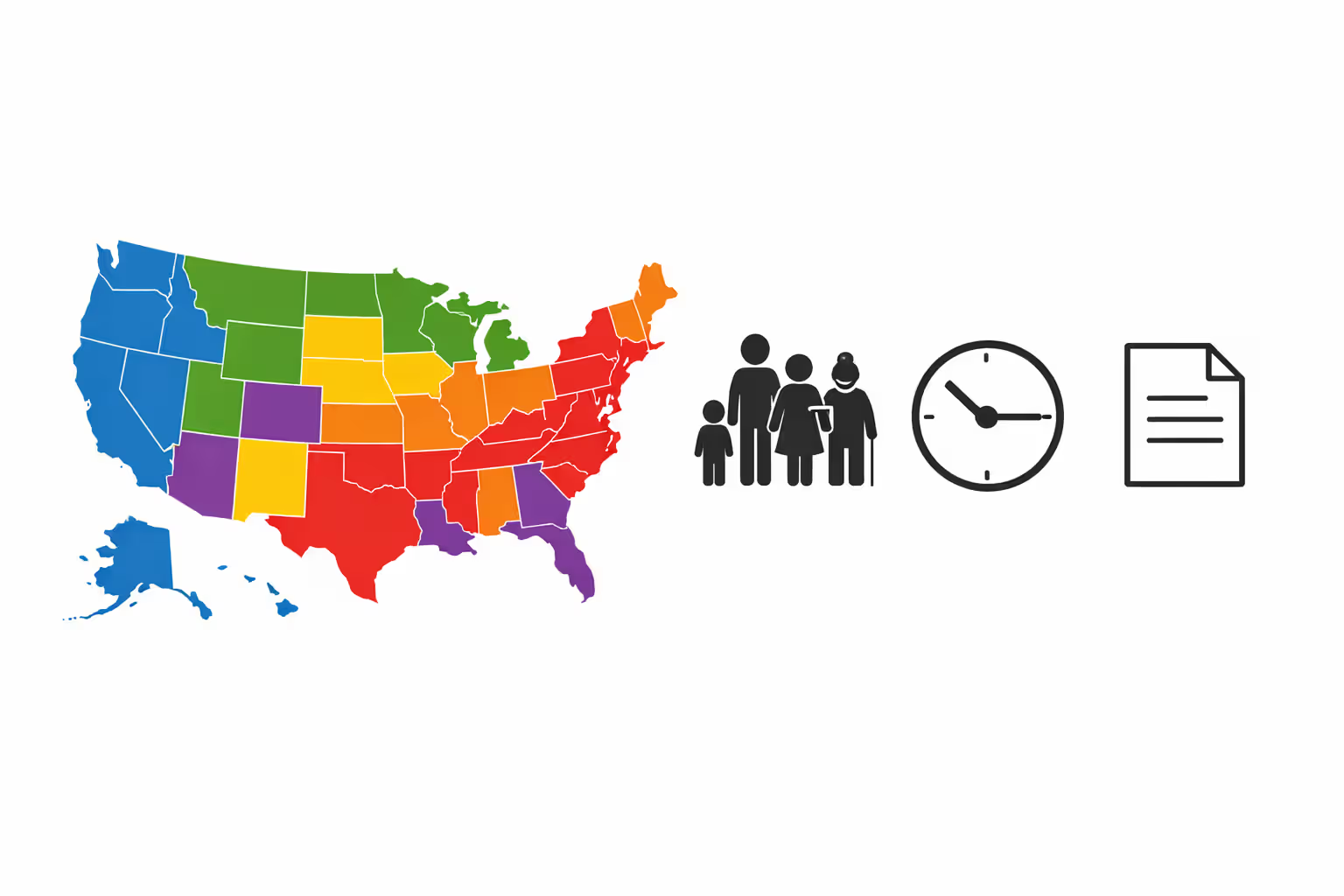
Which family members can actually file? That depends entirely on which state's laws apply—and the differences get pretty wild.
Take Florida. The law there says only the personal representative of the deceased person's estate can start the lawsuit. That's whoever the probate court appoints to handle the dead person's legal matters. This representative files on behalf of everyone who was harmed, then any money recovered gets split up among family members based on formulas written into state law.
California takes a different approach. Your surviving spouse can file directly. So can registered domestic partners, kids, and sometimes people who were financially dependent on the deceased. Each person can bring their own separate claim without waiting for estate paperwork to clear probate court.
Texas gives spouses, children, and parents the right to file either as a group or individually. If your sister got killed by a drunk driver in Dallas, you and your other siblings could file together, your brother-in-law could file his own case, or you could each pursue separate claims. State law allows all these options.
Some states set up a pecking order. The surviving spouse gets first shot at filing. If that spouse doesn't file or lets the deadline pass, adult children can step in. Then parents. In rare situations where someone has no close relatives left, siblings might qualify.
Live-in partners who never formalized the relationship? You're facing an uphill battle in most places. Thirty years together means nothing legally unless you registered as domestic partners. You might argue financial dependency, but courts rarely buy it.
Deadline? Absolutely rigid. Different states give you anywhere from one year to three years from the date of death. California says two years. Texas says two years. Miss your window and the courthouse door slams shut permanently. Courts almost never grant extensions—and "I was too devastated to think about lawyers" won't change their minds, even though it's the most legitimate reason imaginable.
Critical detail people miss: criminal charges against the driver don't pause your civil filing deadline. The prosecutor might spend eight months investigating before making an arrest. That investigation doesn't stop your statute of limitations clock. You've got to file your civil case within the deadline regardless of whether cops arrested anyone, whether criminal charges are pending, or whether a criminal trial is scheduled three years from now.
Author: Daniel Whitford;
Source: mannawong.com
Proving Driver Negligence in Fatal Pedestrian Accidents
A driver negligence death claim requires showing the driver's carelessness directly caused your family member's death. Lawyers talk about four legal elements, but let's skip the law school terminology: the driver owed a duty of care, violated that duty, that violation caused death, and your family suffered quantifiable harm.
Every driver owes pedestrians basic care. Don't speed excessively. Pay attention to the road. Follow traffic signals. Yield when you're supposed to. Don't get behind the wheel drunk. These aren't demanding expectations—they're baseline responsibilities. When drivers ignore these basic obligations, they've breached their duty.
Evidence Required to Establish Liability
Police reports help, but they're starting points, not gospel. Officers show up after everything happened, interview shaken witnesses, reach preliminary conclusions, then move on to the next emergency. Their reports contain mistakes. Important observations get missed. Fault assessments sometimes default to protecting drivers.
Eyewitness accounts can make or break your case. That person standing at the bus stop who watched the whole thing? Their description of vehicle speed, whether brake lights came on, whether the driver was looking down at something—that testimony becomes crucial. But here's the problem: witnesses move to different cities. They change phone numbers. Their memories fade within weeks. Getting their detailed statements immediately makes all the difference.
Video footage appears more often now and carries tremendous weight. Traffic cameras record collisions in real-time. Businesses have security systems covering adjacent sidewalks and parking areas. Ring doorbells capture street activity. Other drivers' dashcams document what happened. The catch? Most systems automatically delete recordings after 7 to 14 days. Wait a month to preserve that footage, and it's already erased.
Physical evidence constructs its own timeline. Skid marks show braking patterns and when braking started. Vehicle damage indicates impact angles and force. Where debris landed maps out the collision sequence. Road conditions explain visibility factors. Accident reconstruction experts examine these details to calculate speeds, reaction times, and stopping distances. They can often prove drivers had plenty of time to avoid the collision but failed to react.
Cell phone records reveal device activity at the moment of impact. Was the driver texting? Checking Instagram? On a phone call? You need court-issued subpoenas to get these records, which means bringing in an attorney early.
Medical records and autopsy reports establish the causation link. They confirm collision trauma caused the fatal injuries rather than, say, a heart attack that made the pedestrian collapse into traffic. Defense lawyers will hunt for alternative explanations. Thorough medical evidence shuts down those arguments.
Common Forms of Driver Negligence Leading to Death
Distracted driving contributes to pedestrian deaths constantly. Drivers glance at GPS screens, respond to text messages, eat hamburgers, or argue with passengers. Looking away for three seconds at 35 mph means traveling 154 feet blind. Pedestrians disappear within that distance.
Alcohol and drug impairment magnify every danger. Drunk drivers spot pedestrians later, react slower, and make terrible judgment calls. They're also vulnerable to punitive damages since they consciously chose to drive while impaired.
Failure to yield happens at intersections everywhere. Drivers roll through right turns on red without checking the crosswalk. They proceed through intersections assuming pedestrians will wait. They ignore pedestrians' legal right to cross. These violations breach fundamental duties.
Speed transforms survivable collisions into fatal ones. Hit a pedestrian at 20 mph and they've got about a 90% chance of surviving. At 40 mph? Death becomes 85% likely. Speed doesn't just reduce stopping distance—it turns cars into lethal weapons.
Reckless behavior like street racing, running red lights, or aggressive driving demonstrates gross negligence. These aren't momentary attention lapses. They're conscious decisions showing complete disregard for human safety. That distinction matters when punitive damages enter the picture.
"The first 72 hours after a pedestrian gets killed often determine whether families will have enough evidence to pursue their case. Surveillance systems erase footage. Witnesses relocate or their memories deteriorate. Weather washes away skid marks. Road crews clean up debris. I've watched strong cases fall apart because families waited a month to contact a lawyer, and by then, the proof they needed had simply disappeared." — Jennifer Martinez, Board Certified Personal Injury Trial Attorney
Types of Damages Available in Pedestrian Death Cases

Author: Daniel Whitford;
Source: mannawong.com
Wrongful death statutes let families pursue several categories of damages. Understanding available compensation helps you judge whether settlement offers come anywhere close to fair value.
Economic damages cover financial losses you can actually calculate. Medical bills from final emergency treatment—ambulance ride, trauma care, ICU, medications—get fully recovered even when health insurance paid them. (Your insurer might seek reimbursement later through subrogation, but that's their problem, not yours.)
Funeral and burial costs typically run $7,000 to $15,000 for basic arrangements, often substantially more for anything beyond minimal services. Every penny is recoverable.
Lost income represents what the deceased would have earned and contributed over their expected lifespan. Your 35-year-old healthy spouse worked as an engineer earning $90,000 annually with typical raises ahead? Economic experts will project 30+ years of lost earnings, benefits, and contributions. These calculations climb fast—often reaching seven figures for younger working professionals. Conversely, if your 75-year-old retired father was killed, economic damages shrink substantially since income had already stopped.
Lost services have real economic value even without paychecks attached. Childcare, home maintenance, financial management, yard work, cooking—these services would cost money to replace. Courts recognize this even when the deceased wasn't paid for providing them.
Non-economic damages compensate losses that don't come with price tags. Loss of consortium means losing your life partner, best friend, emotional foundation. Loss of parental guidance for kids means growing up without someone to mentor them, support them, celebrate their milestones. Loss of a child for parents means giving up relationships they expected to enjoy for decades.
Mental suffering and emotional trauma qualify for compensation. Sudden, violent deaths produce particularly severe psychological damage. Many surviving relatives develop PTSD symptoms, clinical depression, or anxiety disorders after learning how their loved one died.
Some states cap damages, others don't. California imposes zero caps on wrongful death compensation whatsoever. Texas limits non-economic damages to $500,000 per claimant in specific situations, though gross negligence exceptions often eliminate those caps. Your state's particular rules dramatically impact case value.
Punitive damages punish and deter outrageous conduct. A driver with three prior DUI convictions who kills a pedestrian during another drunk driving episode? That's exactly what punitive damages exist for. Not every state allows punitives in wrongful death cases, and states that do typically require clear and convincing evidence of malicious, willful, or grossly negligent behavior.
| Damage Category | What It Covers | How You'll Document It | How Lawyers Calculate Value |
| Economic/Financial | Emergency medical bills, funeral and burial costs, lost income and benefits, household services the deceased provided | Original bills and invoices, employment records and tax returns, contracts and pay stubs, testimony about household contributions | Adding up verified expenses, then hiring economic experts to project lifetime earnings based on age, health, career trajectory, and life expectancy statistics |
| Non-Economic/Emotional | Lost spousal companionship and intimacy, grief and mental anguish, lost parental guidance and presence, destroyed family relationships | Family testimony describing the relationship, therapy records, photos and videos showing family bonds, expert testimony from mental health professionals | Using either per diem methods (assigning daily value then multiplying by years of lost relationship) or multiplier approaches (multiplying economic damages by severity factor); juries have wide discretion evaluating relationship significance |
| Punitive/Punishment | Punishing defendant's egregious conduct and deterring similar future behavior | Criminal conviction records, toxicology results, evidence of repeated similar violations, testimony showing deliberate safety disregard | Examining defendant's total wealth and conduct severity; constitutional protections prevent excessive ratios compared to actual compensatory damages |
How Crosswalk Accidents and Right-of-Way Laws Affect Your Case
Crosswalk accident death cases turn heavily on specific traffic laws that dramatically shift liability depending on circumstances.
Marked crosswalks give pedestrians strong legal protections. When pavement markings clearly show designated crossing areas, drivers must yield to anyone lawfully there—whether traffic signals control the crossing or not. A driver who hits someone properly using a marked crosswalk faces serious challenges arguing they weren't negligent.
Intersections without painted lines? Crosswalks still legally exist there under most state laws. Many drivers have no clue about this. Generally, wherever sidewalks would naturally extend across an intersecting road, an unmarked crosswalk exists by legal definition. Your father crossing at a regular four-way intersection without painted stripes? He had the same legal crossing rights as if bright yellow lines marked the spot.
Mid-block crossings create murkier liability questions. When pedestrians cross outside designated areas, they usually must yield to vehicles. However—and this matters enormously—drivers still have duties to avoid hitting pedestrians even when pedestrians break traffic rules. A driver who sees someone crossing mid-block can't just maintain speed and hit them while claiming the pedestrian was at fault.
Traffic signal compliance dramatically impacts liability. A pedestrian crossing with an illuminated "Walk" signal who gets hit by a driver running a red light has an incredibly strong case. A pedestrian crossing against a "Don't Walk" signal may bear considerable fault, though driver negligence often remains a major factor.
Comparative fault rules determine outcomes when the pedestrian shares blame. Pure comparative negligence states (California, Florida, New York) reduce your recovery proportionally but don't eliminate it. Your loved one was 40% responsible and total damages equal $1 million? You'd recover $600,000.
Modified comparative negligence states (Texas, Illinois, Pennsylvania) bar recovery when the pedestrian's fault hits or exceeds a threshold—usually 50% or 51%. In these places, proving majority driver fault becomes essential.
Contributory negligence states (North Carolina, Virginia, Maryland, Alabama, DC) apply brutal standards: any pedestrian fault at all, even 1%, completely wipes out recovery. In these jurisdictions, proving the driver had the "last clear chance" to prevent the collision can sometimes overcome pedestrian fault defenses, but these arguments face tough odds.
Visibility and lighting significantly influence fault analysis. Someone wearing dark clothes crossing mid-block on an unlit rural highway at 2 a.m. presents different liability considerations than someone hit in a marked crosswalk at noon. Still, drivers must adjust speed and attention to match conditions.
Distracted pedestrians have become common defense tactics given smartphone prevalence. Pedestrians staring at phone screens while crossing may share fault. But a driver who was also texting when hitting the pedestrian still bears massive, potentially complete, liability—two wrongs don't cancel the driver's fundamental duty.
The law does not require perfection from pedestrians. It requires drivers to exercise the care that a reasonable person would under the circumstances. A pedestrian’s momentary inattention does not grant a driver license to kill. The duty to avoid striking a human being remains the most fundamental obligation of anyone operating a two-ton machine on public roads
— Trial Advocacy Statement
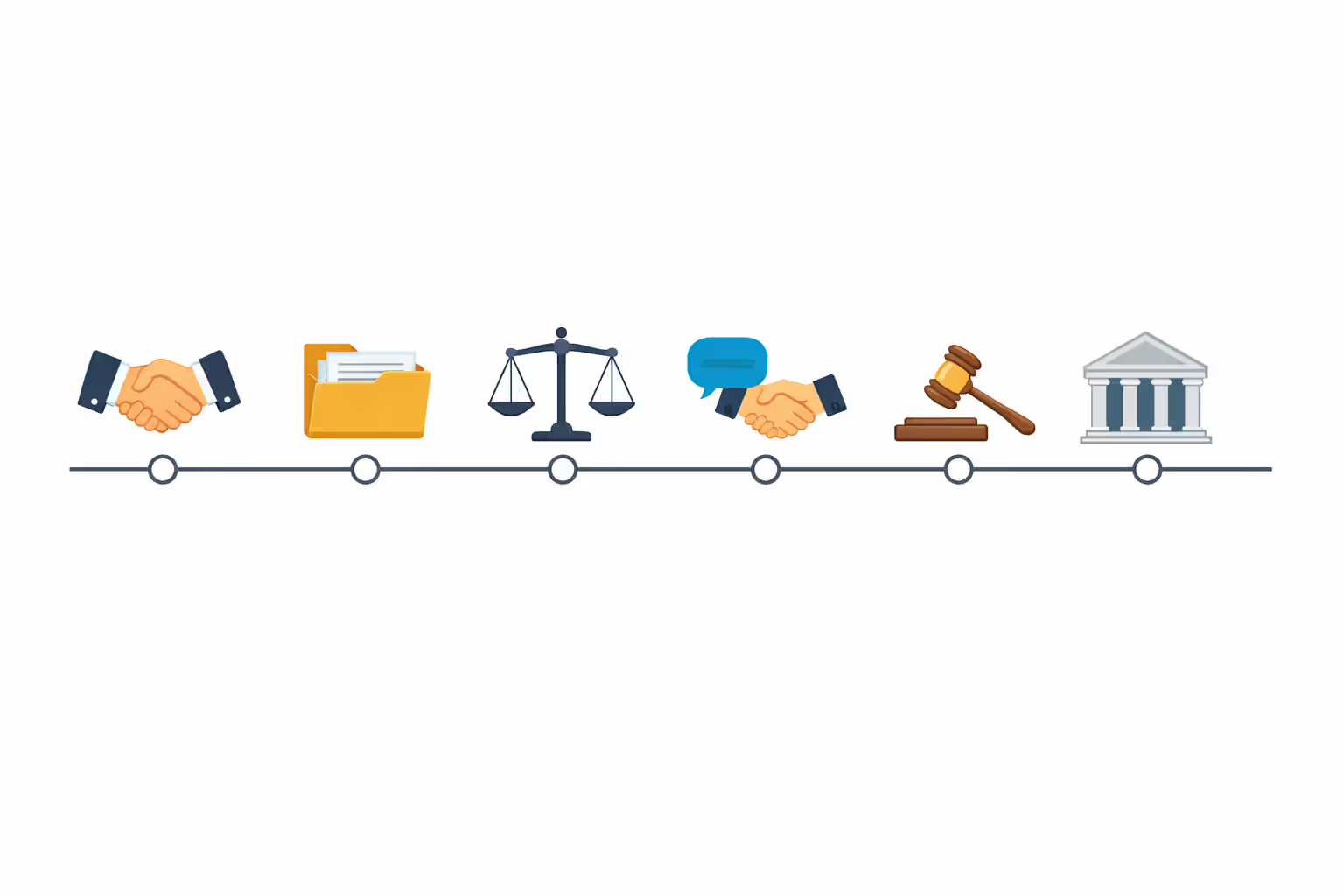
The Legal Process: From Filing to Settlement or Trial
Understanding what's ahead helps families prepare emotionally and practically for litigation that spans months or years.
Initial Consultation and Case Evaluation
Everything starts with meeting a wrongful death attorney. Most offer free consultations, meaning you'll pay nothing to learn about your options and case strength.
Bring whatever you have: the police report, medical records from final treatment, the death certificate, any insurance letters, crash scene photos, and witness contact details. More information up front means better case assessment.
Contingency fees are standard in wrongful death cases. The attorney takes 33-40% of any recovery, and nothing if you recover nothing. No hourly bills or upfront retainers. You can pursue accountability regardless of your current financial situation.
Once you hire them, investigation starts immediately. The attorney will secure complete crash documentation, interview every available witness, obtain surveillance footage before automatic deletion, consult accident reconstruction specialists, and compile comprehensive medical and financial records. What gets done in these first weeks often determines results months later.
Discovery and Investigation Phase
Filing the complaint kicks off formal legal proceedings. The complaint identifies defendants (the driver, possibly the vehicle owner, maybe the driver's employer, sometimes government entities responsible for dangerous road conditions), lays out your legal theories, explains how negligence caused death, and specifies damages you're seeking.
Discovery lets both sides gather evidence through formal legal tools. Interrogatories are written questions answered under oath. Document requests force production of papers, photos, video recordings, phone records, and other physical items. Depositions involve in-person questioning under oath with court reporters transcribing everything.
Defense attorneys will depose you, asking about your relationship with the deceased, financial dependence, emotional closeness, and how the death has impacted you. These depositions prove emotionally draining but remain legally necessary to establish your damages.
Expert witnesses become indispensable. Accident reconstruction specialists analyze physical evidence to explain collision mechanics and assign fault. Economists calculate lifetime earning losses. Doctors review records and testify about injury causation. Depending on specifics, biomechanical engineers, human factors researchers, or other specialists may join your team.
Discovery usually takes six to eighteen months, varying with case complexity, court backlogs, and opposing counsel's cooperation.
Negotiation vs. Litigation
Most cases settle before trial. Negotiations might happen before filing, throughout discovery, during court-ordered mediation, or right before jury selection.
Insurance companies represent most defendants. Their adjusters evaluate cases considering liability strength, injury severity, and whether you'll actually go to trial. First offers almost always lowball cases significantly. Insurers know many claimants will accept inadequate amounts to avoid litigation stress.
Mediation brings everyone together with a neutral mediator facilitating discussions. Many courts require mediation before allowing trial. Skilled mediators help everyone recognize risks they're overlooking and identify acceptable compromises. Success rates exceed 70% in many jurisdictions.
Settlement decisions are agonizing. Accept the offer, and you get certainty and faster money, but you'll always wonder if a jury would have awarded much more. Go to trial, and you might win substantially more—or substantially less, or potentially nothing if the jury rules against you. Only you can decide which uncertainties you're willing to accept.
Trial preparation intensifies when negotiations fail. Your attorney will craft opening statements, witness examination plans, exhibits, jury instructions, and closing arguments. Some firms use mock trials or focus groups to test presentation strategies.
Trials typically last three days to two weeks. You'll watch jury selection, opening statements, witness testimony (including your own), expert presentations, closing arguments, and jury instructions. Then waiting while the jury deliberates—sometimes hours, sometimes days.
Even after verdict, it might continue. Losing parties can appeal, potentially adding one to three years before final resolution. Post-verdict motions might challenge outcomes or argue excessive damages.
From initial filing to complete resolution, expect 18 months to three years for most pedestrian wrongful death cases. Complex litigation involving multiple defendants, disputed liability, or appeals can stretch four to six years.
Author: Daniel Whitford;
Source: mannawong.com
Author: Daniel Whitford;
Source: mannawong.com
Common Mistakes That Weaken Pedestrian Wrongful Death Claims
Grieving families understandably make errors that damage their legal rights. Understanding these pitfalls helps you avoid them.
Waiting too long to contact an attorney represents the most damaging mistake. Evidence vanishes within days or weeks. Walmart's parking lot cameras overwrite footage every fourteen days. That Ring doorbell across the street? Seven days before automatic deletion. Witnesses move to different states. Memories fade. Skid patterns wash away. Debris gets cleared. Families who wait two or three months to consult a lawyer often discover essential evidence no longer exists. Meeting with a lawyer within days—even while still in profound shock—preserves evidence that determines outcomes.
Accepting quick settlement offers without legal advice almost guarantees inadequate compensation. Insurance adjusters contact families within days of the death, expressing sympathy while extending offers that sound substantial to people who've never seen wrongful death verdicts. These offers rarely reflect full economic losses, never adequately compensate emotional damages, and typically arrive before families understand the scope of their losses. Once you sign the release, it's final—you can't come back for more money when you later realize the settlement barely covered funeral costs.
Talking to insurance adjusters without attorney representation creates numerous risks. Adjusters seem friendly. They're trained to come across that way. But they're working to minimize their company's payout. They record calls. They'll use your statements against you later. An offhand comment like "He'd been having vision problems lately" or "She was stressed at work and not sleeping well" gets twisted to reduce damages. Politely declining recorded statements until you consult legal counsel protects your interests without being rude.
Social media activity about the case, your grief, or even normal daily life generates discoverable evidence. That photo of you smiling at your nephew's birthday? Defense lawyers will show it to jurors while arguing your emotional suffering isn't that severe. Posts discussing the crash or the driver can be wildly misconstrued. Privacy settings provide zero protection—defense attorneys will subpoena your social media history. The only safe approach is posting nothing case-related whatsoever.
Failing to document damages as they happen undermines compensation arguments. Keep every receipt for crash-related costs: medical bills, funeral and burial charges, mileage to lawyer meetings, grief counseling costs, missed work time. Document your relationship through photos, videos, correspondence, and written memories demonstrating your connection's depth. Mental health treatment records substantiate emotional injury claims—without them, defense lawyers argue your distress isn't genuinely serious.
Skipping medical or therapy appointments gives defense attorneys ammunition. Claim severe psychological trauma but haven't seen a therapist? Expect them to argue you're exaggerating. Following through with recommended treatment both supports your healing and strengthens your legal position.
Discussing the case with anyone besides your attorney risks compromising attorney-client privilege. Conversations with friends, extended family, coworkers, or others about what your lawyer said, legal strategies, or case details may become discoverable. Limit legal discussions exclusively to your attorney.
Ignoring your attorney's advice damages cases. Your lawyer gives direction based on handling dozens or hundreds of similar claims. When they advise avoiding social media, attending all therapy sessions, or refusing to talk with adjusters, real reasons exist. Ignoring this guidance weakens your position and makes their job substantially harder.

Author: Daniel Whitford;
Source: mannawong.com
FAQ: Pedestrian Wrongful Death Lawsuits
No lawsuit brings back the person you lost. The legal process can't erase your pain or fill the emptiness their absence created. But here's what it can do: provide financial stability for those left behind, force accountability on negligent parties, and occasionally prevent similar tragedies by highlighting dangerous behaviors or conditions requiring correction.
Families who pursue wrongful death litigation describe the experience as difficult but often meaningful. Investigation and litigation force confronting painful details about how your loved one died. Depositions can prove emotionally exhausting. Trials require publicly reliving the trauma. Yet many families report that seeking justice provided purpose during grief and ensured their loved one's death meant something beyond loss.
Recovered compensation serves real purposes. It replaces lost income families depended on for housing, education, and daily expenses. It covers funeral costs that often create immediate financial strain. It funds counseling and mental health treatment that helps families heal. For children who lost a parent, settlements provide educational resources and stability throughout critical developmental years.
Beyond money, wrongful death litigation establishes accountability. Drivers who caused fatal crashes through negligence face consequences for their actions. Insurance companies that might otherwise minimize payouts must provide fair compensation. Sometimes these cases identify dangerous road conditions or systemic failures, prompting changes that protect future pedestrians.
Choosing the right attorney significantly impacts results. Look for lawyers with specific pedestrian wrongful death experience, not just general personal injury backgrounds. Ask about their trial history—insurance companies settle for higher amounts when they know the lawyer is fully prepared to try the case. Verify they have resources to handle complex litigation, including access to top expert witnesses and thorough investigation capabilities. Most importantly, find someone who treats you with genuine compassion and explains the process in language you actually understand.
Deciding whether to pursue a claim remains deeply personal. Some families prefer moving forward without litigation. Others find that seeking accountability helps with healing. There's no wrong choice. But understanding your legal rights ensures you're making informed decisions rather than losing options by default through inaction.
If you've lost someone you love in a pedestrian crash, consulting an experienced wrongful death attorney soon after the tragedy protects your rights while evidence remains available. Most offer free consultations and work on contingency, so learning about your options costs nothing and commits you to nothing. What you discover during that conversation may help you make decisions that provide security and accountability for your family during an unimaginably difficult time.