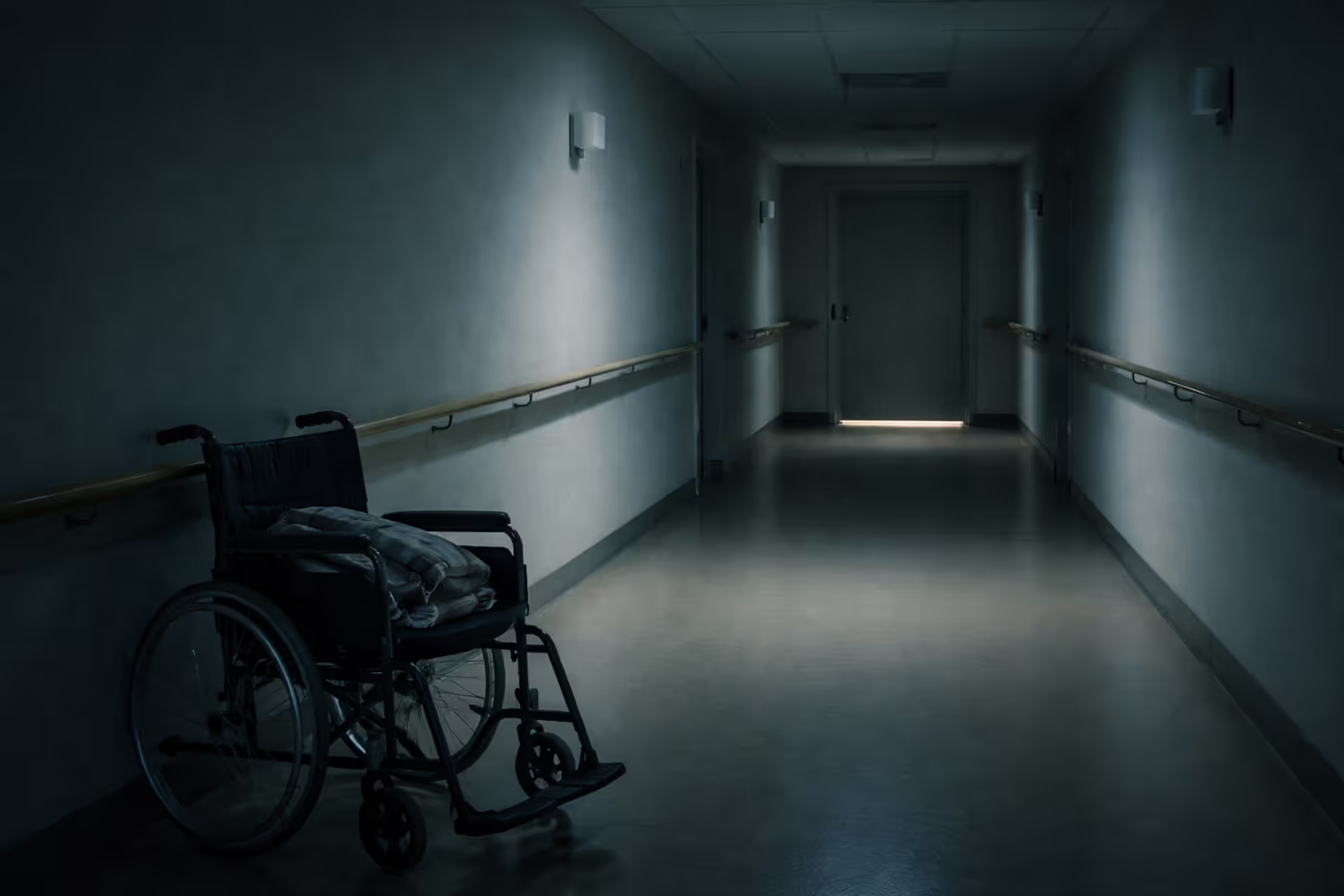
Empty nursing home hallway with wheelchair and dim lighting conveying isolation and concern
How Nursing Home Wrongful Death Cases Work

Content
Losing a parent or spouse in a nursing home leaves families wondering: Was this death inevitable, or could it have been prevented? That question haunts survivors, especially when something feels wrong about the circumstances. Maybe your mother lost 40 pounds in three months. Perhaps your father developed massive bedsores nobody mentioned. Or the facility called to say your spouse died "unexpectedly" despite no previous warning signs.
These situations raise legitimate legal questions. Nursing homes accept responsibility for protecting residents who can no longer protect themselves. When facilities break that promise through neglect, incompetence, or deliberate indifference—and someone dies because of it—the law provides recourse. But here's the challenge: proving a death resulted from negligence rather than natural causes requires specific evidence, strict procedural compliance, and understanding complex legal distinctions most families have never encountered.
This guide explains what separates actionable wrongful death from unavoidable decline, how to build a compelling case, and what you can realistically expect from the legal process.
What Qualifies as Wrongful Death in a Nursing Home Setting
Here's the core legal principle: wrongful death in long-term care happens when negligent, reckless, or intentional acts by facility personnel directly cause a resident's death. You'll need to prove four specific things: first, the facility had a legal duty to properly care for your loved one; second, they failed that duty somehow; third, that failure directly caused death (not some unrelated condition); and fourth, measurable harm resulted.
Natural aging and terminal illness don't create liability, even in nursing home settings. Consider this: an 89-year-old resident with end-stage dementia catches pneumonia and dies within days despite receiving prompt antibiotics, oxygen therapy, and physician oversight. That's tragedy, but probably not wrongful death. Now flip the scenario—same resident, same age, same diagnosis, but she develops pneumonia because understaffed aides left her lying flat in bed for three days straight, causing her to aspirate food into her lungs. That's potentially actionable negligence.
What makes the difference? Preventability and professional standards. Courts ask whether the death could have been avoided through competent care. Would a reasonably skilled facility have prevented this outcome? Did the facility's conduct fall below what the industry recognizes as acceptable practice?
Negligence shows up in countless ways at these facilities. Chronic understaffing means residents wait 45 minutes for toilet assistance and soil themselves, developing severe skin infections. Inadequate training leads to medication mix-ups—giving one resident another's heart medication or doubling insulin doses. Facilities skip implementing fall protocols for high-risk residents because it takes extra time staff don't have. Or they ignore obvious symptoms of serious medical problems, hoping issues resolve on their own.
The measure of a society is found in how they treat their weakest and most helpless citizens. A nation’s greatness is more truly measured by its compassion and care for the elderly than by any other factor
— Hubert H. Humphrey
Abuse cases are more straightforward but thankfully less common. Staff members who hit residents, slam them against walls during transfers, or sexually assault them commit clear misconduct that can lead to fatal consequences.
Watch out for facilities that label preventable deaths as "unexpected complications." A resident dying from sepsis after developing a Stage IV pressure ulcer that exposed bone didn't experience a complication—she experienced months of documented neglect. Medical records will show the ulcer progressively worsening while staff documented insufficient wound care, inadequate repositioning, and poor nutrition that prevented healing.
Common Causes of Fatal Injuries in Long-Term Care Facilities
Preventable Medical Emergencies
Nursing homes house medically fragile people who need vigilant monitoring. Staff who don't recognize deteriorating conditions or delay getting emergency help turn manageable situations into fatal ones.
Take urinary tract infections. In elderly people, UTIs can escalate to life-threatening sepsis frighteningly fast without treatment. Trained staff should recognize the warning signs—confusion beyond the resident's normal baseline, fever, refusal to eat—and push for immediate antibiotic treatment. Instead, some facilities brush off these symptoms as "just aging" or "typical dementia behavior" until the infection reaches the bloodstream, triggering septic shock and organ failure that kills within hours.
Heart attack and stroke recognition failures kill residents too. Imagine a resident complaining of chest pressure and left arm pain. Staff give him Tums and tell him to rest. Three hours later, he's dead from a massive myocardial infarction. Every minute counts with cardiac events. Facilities that lack rapid assessment protocols or whose staff dismiss serious cardiac symptoms as heartburn or anxiety fail their fundamental duty.
Breathing emergencies from aspiration, COPD flare-ups, or pneumonia require immediate response. When residents struggle to breathe while call buttons go unanswered for 30 minutes, or oxygen equipment malfunctions overnight without anyone noticing, those are fatal monitoring failures.

Author: Michael Thornton;
Source: mannawong.com
Physical Abuse and Assault
Some wrongful deaths involve direct violence, though these cases are less common than neglect-related fatalities. Staff members who physically strike residents, throw them roughly during transfers, or apply restraints that cause asphyxiation commit acts that sometimes prove fatal. These cases reveal catastrophic facility failures—inadequate background checks, zero supervision, and toxic workplace cultures that tolerate abuse.
Resident-on-resident violence creates liability when facilities ignore obvious risks. Memory care units sometimes house residents with documented aggressive tendencies alongside frail, defenseless residents without adequate supervision. If the aggressive resident attacks and kills a vulnerable one, the facility faces legitimate wrongful death claims for ignoring known dangers.
Sexual assault primarily causes psychological trauma but can indirectly contribute to death when elderly victims develop severe depression, stop eating and taking medications, or suffer cardiac events triggered by assault-related stress.
Severe Malnutrition and Dehydration
People shouldn't starve to death in facilities with fully stocked kitchens, paid dining staff, and detailed nutrition protocols. Yet it happens with disturbing regularity when profit takes priority over care.
Residents who can't feed themselves need help at every meal. Basic math: facilities that assign one aide to feed nine residents during a 25-minute meal period guarantee malnutrition. The aide gives each resident maybe three spoonfuls before rushing to the next person. Over weeks and months, residents shed dangerous weight, develop vitamin deficiencies, and experience immune system collapse that leaves them vulnerable to fatal infections.
Dehydration typically accompanies malnutrition. Residents with swallowing difficulties need specialized thickened liquids and constant intake monitoring. Those with dementia forget to drink or actively resist. Proper protocols require documenting every beverage consumed, watching for dehydration signs (concentrated urine, dry mouth, increasing lethargy), and arranging IV fluids when oral intake proves insufficient.
When a resident enters at 145 pounds and dies six months later weighing 91 pounds, that's not "failure to thrive." That's systematic starvation. The medical records will show it—declining weight measurements every week that nobody addressed.
Pressure ulcers progressing to fatal sepsis stem from immobility without repositioning. Stage IV pressure sores—wounds so deep they expose muscle and bone—don't develop overnight. They take weeks or months of lying or sitting in one position without movement. Competent care means turning immobile residents every two hours minimum, using pressure-redistributing mattresses, maintaining clean dry skin, and treating early-stage sores aggressively before they crater deeper. Residents dying from sepsis that started in massive bedsores endured extended periods of profound neglect.
Falls cause immediate trauma that can kill—shattered hips, brain bleeds, internal injuries. Not every fall is preventable, true. But facilities must assess each resident's fall risk and implement appropriate safeguards: bed alarms for confused residents who wander at night, non-slip footwear, bright lighting, assistance with bathroom trips and transfers. A resident with documented high fall risk who's left unattended in a wheelchair without a lap belt, subsequently tumbles out and sustains a fatal head injury—that death was preventable.
Author: Michael Thornton;
Source: mannawong.com
Medication errors span wrong drugs, incorrect doses, missed critical medications, or dangerous drug combinations. Anticoagulant overdoses causing fatal hemorrhages. Skipped insulin doses triggering diabetic ketoacidosis. Giving a resident someone else's cardiac medication that causes lethal arrhythmias. Facilities need rigorous medication protocols with double-checking systems and properly trained staff.
Choking deaths happen when residents with swallowing problems get inappropriate food textures or eat unsupervised. A resident with documented dysphagia (swallowing difficulty) in her care plan who receives whole grapes or tough steak, then chokes to death while staff tend to other residents—that's negligence, plain and simple. The care plan specifically warned about choking risks, and staff ignored it.
Who Can File an Elder Fatal Injury Claim and Within What Timeframe
Each state's laws determine who can file wrongful death lawsuits. Most states create a priority list of eligible parties, usually starting with the deceased's spouse, then adult children, then parents or siblings if no closer family exists. In certain jurisdictions, the estate's personal representative must file on everyone's behalf. Other states let individual family members file their own claims directly.
You'll encounter two distinct legal actions: wrongful death claims and survival actions. They're different. Wrongful death claims compensate surviving relatives for their losses—the companionship, emotional support, and guidance they lost. Survival actions compensate the deceased's estate for losses the person themselves experienced—pain endured before death, medical bills, lost wages during the period between injury and death. Usually the estate's representative files survival actions, with proceeds distributed per inheritance laws.
Depending on your state, either one consolidated wrongful death action must include all family members' claims (preventing multiple lawsuits over the same death), or different family members can file separate claims that courts often combine for efficiency.
Adult children typically file elder neglect death lawsuits after a parent dies in a nursing home. If a surviving spouse exists, that spouse generally holds primary standing, though incapacitated spouses often can't pursue claims themselves. Then adult children may file as next-in-line or as representatives protecting the spouse's interests.
Statutes of limitations impose harsh deadlines for filing wrongful death claims, varying dramatically by state. Common timeframes range from one to three years from death, though some states calculate the period from when families discovered or reasonably should have discovered that negligence caused death.
A two-year statute of limitations from date of death means you must file suit within 24 months of your loved one's passing. Missing this deadline by one day typically destroys your legal rights permanently, regardless of how strong your case is. Certain states provide exceptions for fraud or concealment—if the facility actively hid negligence evidence, the limitations period might pause until you discovered the concealment.
Discovery rules can extend filing deadlines when families initially believed death resulted from natural causes, then later obtained records or expert opinions revealing negligence. A death certificate listing "cardiac arrest" might not alert families to underlying medication errors that triggered the arrest. Upon discovering the error months later, the limitations period may begin from that discovery date rather than the death date—depends on your state's specific laws.
Wrongful death claims against government-operated facilities (like state veterans homes) often require filing administrative claims before lawsuits, with much shorter deadlines—sometimes just six months. Missing these prerequisite notices can permanently bar your lawsuit.

Author: Michael Thornton;
Source: mannawong.com
Building Your Case: Evidence Needed to Prove Caregiver Negligence Death
Winning wrongful death claims require comprehensive evidence showing both what actually happened and what should have happened. Medical records provide your foundation, but you'll need multiple evidence types to paint the complete picture.
Your loved one's medical chart from the nursing home contains critical details: admission assessments, individualized care plans, daily nursing notes, medication administration records, incident reports, weight logs, and physician orders. These documents frequently reveal neglect patterns—medication doses marked "missed" repeatedly, days with zero repositioning documentation for immobile residents, weekly weight measurements showing steady decline nobody addressed, or documentation gaps suggesting inadequate monitoring.
Careful chart review sometimes exposes falsified records. Entries claiming a resident was turned every two hours despite developing Stage IV pressure ulcers. Documentation showing adequate meal consumption while weight plummeted 30 pounds in eight weeks. Those contradictions suggest fabrication. Look for different ink colors on entries with identical dates, compare handwriting samples, notice physically impossible documentation where one nurse supposedly performed simultaneous care on multiple residents in different building wings.
Facility inspection reports from state health departments and Centers for Medicare & Medicaid Services provide context about systemic problems. Facilities with repeated citations for inadequate staffing, medication errors, or failure to prevent pressure ulcers demonstrate patterns of substandard care. Recent inspection reports showing the same exact deficiencies that contributed to your loved one's death strengthen arguments that the facility knew about problems but refused to fix them.
Witness testimony from other staff, residents, or visiting family members who observed conditions or specific incidents adds powerful firsthand evidence. A certified nursing assistant who quit over dangerous understaffing can testify about impossible workloads. A roommate who witnessed abuse or heard your loved one crying for help without response provides direct accounts. Family members who photographed injuries, documented concerns in visitor logs, or complained to management create contemporaneous evidence of problems.
Expert witnesses prove essential for establishing standard of care and causation. Board-certified geriatricians testify whether the facility's treatment met accepted medical standards. Nursing experts explain whether care practices aligned with professional standards. Wound care specialists demonstrate how proper protocols would have prevented fatal pressure ulcers. These experts review all records, compare facility practices against industry standards, and provide professional opinions on whether negligence caused death.
Photographic evidence documenting injuries, facility conditions, or your loved one's physical deterioration provides visceral impact that clinical notes can't match. Pictures of severe bedsores, emaciated bodies, or unsafe conditions (broken equipment, filthy environments, obviously inadequate staffing) help juries understand reality behind sanitized documentation.
Staffing records showing how many nurses and aides worked each shift, compared against resident numbers and their care needs, can prove understaffing. Expert testimony about safe staffing ratios, combined with actual data showing the facility operated with half the recommended staff, demonstrates that management prioritized profits over safety.
Corporate documents—budgets, internal emails, policy manuals—sometimes reveal management knew about dangerous conditions but chose not to allocate resources for fixes. Emails discussing cost-cutting measures that eliminated positions. Internal audits identifying problems that management ignored for months. These documents support corporate negligence claims and justify punitive damages.
Start collecting evidence immediately when you suspect wrongful death. Facilities occasionally "lose" records. Witnesses' memories fade fast. Hiring an attorney quickly ensures proper evidence preservation, including sending formal letters demanding the facility preserve all relevant documents and electronic records.
Justice delayed is justice denied. When families lose a loved one to preventable neglect, every piece of evidence preserved and every witness interviewed brings them closer to the truth they deserve. Documentation is the language of accountability.
— Robert N. Butler
Damages You Can Recover in an Elder Neglect Death Lawsuit
Wrongful death compensation addresses both measurable financial losses and intangible harms families suffer. Understanding available damage categories helps you pursue complete recovery.
Economic damages compensate quantifiable financial losses. Medical expenses treating injuries negligence caused—emergency room visits, hospitalizations, surgeries, medications—are recoverable. If your loved one required expensive sepsis treatment for infections caused by untreated pressure ulcers, those costs constitute economic damages.
Funeral and burial expenses, including caskets, cemetery plots, memorial services, and related costs, are recoverable in most jurisdictions. These expenses frequently total $10,000 to $15,000 or more, creating real financial burden.
Lost financial support applies when the deceased provided income or services to surviving family. Many nursing home residents are retired, true, but some continued contributing financially through pensions, Social Security, or investment income that supported a spouse or dependent adult children. The value of lost future financial contributions, calculated based on remaining life expectancy, can be recovered.
Non-economic damages address intangible losses that profoundly affect families but can't be precisely quantified. Loss of companionship, guidance, and consortium compensate surviving spouses and children for the relationship they've lost. A spouse losing 40 years of marriage partnership. Adult children losing their parent's presence at future weddings, graduations, births. These losses carry real value deserving compensation.
Pain and suffering damages in wrongful death cases get complicated. The decedent's pain and suffering before death—the agony of untreated bedsores, terror during abuse, suffering from starvation—typically fall under survival actions rather than wrongful death claims. These damages belong to the deceased's estate, compensating what the person personally endured.
Mental anguish experienced by surviving family members, however, constitutes wrongful death damages in many states. The trauma of discovering your loved one died from neglect. Guilt over facility placement. Grief compounded by knowledge the death was preventable. This psychological harm deserves recognition.
Punitive damages get awarded in particularly egregious cases to punish defendants and discourage similar conduct. Not every state permits punitive damages in wrongful death cases. Those that do typically require proving willful misconduct, gross negligence, or reckless disregard for residents' safety.
Facilities that ignored repeated warnings about dangerous understaffing, falsified records concealing neglect, or prioritized profits while knowingly providing substandard care may face punitive damages. These awards frequently exceed compensatory damages, sometimes reaching multiple millions in cases involving systematic abuse or corporate indifference.
This table breaks down which damages apply to wrongful death claims versus survival actions:
| Type of Damage | Wrongful Death Claim | Survival Action | Important Notes |
| Medical expenses | In some cases | Yes | Wrongful death might include post-injury treatment costs; survival action covers medical costs from injury until death |
| Funeral costs | Yes | No | Covers family's burial and memorial service expenses |
| Decedent's pain & suffering | No | Yes | Personal suffering before death belongs to the estate through survival action |
| Loss of companionship | Yes | No | Covers family members' loss of the relationship |
| Punitive damages | Depends on state law | Depends on state law | Some states permit these in wrongful death claims, others only in survival actions, some in neither |
| Lost future income | Yes | Limited | Wrongful death covers financial support to family; survival action only covers lost earnings between injury and death |
State law creates significant variation in available damages. Certain states impose caps on non-economic damages in medical malpractice or wrongful death cases, restricting pain and suffering awards to predetermined amounts regardless of actual harm severity. Other states prohibit punitive damages completely in wrongful death cases. You'll need an attorney familiar with your specific state's rules to understand realistic recovery expectations.
How to Choose a Wrongful Death Attorney for Nursing Home Cases
Not every personal injury attorney possesses specialized knowledge required for nursing home abuse fatality cases. These claims involve complex medical issues, detailed regulatory frameworks governing long-term care, and defendants with substantial resources and battle-tested legal teams.
Prioritize attorneys with demonstrated experience in nursing home negligence and wrongful death cases specifically. General personal injury practices handling fender-benders and slip-and-falls lack the specialized expertise these cases demand. Ask potential attorneys directly: How many nursing home wrongful death cases have you personally handled? What were the results? Have you taken cases to trial or settled everything pre-trial?
Trial experience matters tremendously. Facilities and their insurers often lowball settlement offers to families represented by attorneys known for avoiding courtrooms. Attorneys willing and able to try cases typically secure superior settlements because defendants recognize the attorney will pursue full compensation through verdict if settlement negotiations fail.
Seek attorneys who work with established networks of expert witnesses, particularly geriatricians, nursing experts, and forensic pathologists. Building compelling cases requires experts who can scrutinize records, identify care standard violations, and testify convincingly. Attorneys regularly handling these cases maintain ongoing relationships with credible experts.
Contingency fee arrangements make legal representation accessible without requiring upfront payment. Under contingency agreements, attorneys receive a percentage of recovery (usually 33-40%) only if they win your case. If the case loses, you owe nothing for attorney fees, though case expenses like expert witness fees might be your responsibility depending on agreement terms.
Review fee agreements carefully. Understand whether the percentage applies to gross recovery or net recovery after expenses. A 40% fee on gross recovery means the attorney takes 40% of the total award, then expenses come from your remaining 60%. A 40% fee on net recovery means expenses get deducted first, then the attorney takes 40% of what remains—a more favorable arrangement for clients.
Watch for red flags suggesting you should look elsewhere: attorneys who guarantee specific outcomes (ethics rules prohibit guaranteeing results), those pressuring immediate decisions without allowing time to review agreements, or those seeming unfamiliar with nursing home regulations and care standards.
During consultations, ask pointed questions: How many nursing home wrongful death cases have you personally handled? What were the specific outcomes? Will you personally handle my case or delegate it to junior associates? How do you communicate with clients—should I expect weekly updates or only contact when something happens? What's your honest assessment of my case's strengths and weaknesses? How long do these cases typically take? What expenses should I anticipate?
Credible attorneys provide honest assessments, acknowledging both strengths and challenges in your situation. Those promising easy victories or enormous settlements without thoroughly reviewing evidence may prioritize signing clients over providing quality representation.
State bar associations can verify attorneys' licenses, confirm they're in good standing, and reveal any disciplinary history. Online reviews provide limited value—opposing parties sometimes post negative reviews—but patterns of complaints about communication, ethics, or competence warrant attention.

Author: Michael Thornton;
Source: mannawong.com
Many families benefit from attorneys demonstrating genuine compassion and understanding of the emotional dimensions these cases carry. While legal skill matters most, an attorney treating your loved one's death as just another file number rather than a profound tragedy may not provide the representation you deserve.
Frequently Asked Questions About Nursing Home Abuse Fatality Claims
Losing a family member to nursing home neglect or abuse creates trauma compounded by betrayal. You trusted a facility with your loved one's care. They accepted that responsibility. Then they violated it in the worst way imaginable. No legal outcome brings your loved one back or fully heals that wound. But pursuing accountability serves purposes beyond compensation.
Wrongful death claims expose dangerous facilities by creating public records of their failures. They force systemic changes by making negligence financially painful, creating real incentives for improved care. They validate your loved one's dignity and worth, affirming their suffering and death mattered. And they provide resources addressing financial hardships the death created while acknowledging the immeasurable value of the relationship you lost.
Deciding whether to pursue a claim is deeply personal. Some families need justice and accountability to process grief effectively. Others find litigation retraumatizing and prefer focusing forward without reliving painful memories. Neither choice is wrong—only you know what's right for your family. If you decide to investigate potential claims, consulting an experienced attorney costs nothing and provides information to make truly informed decisions about proceeding.
The statute of limitations creates real urgency, but don't rush into representation agreements without careful consideration. Take time interviewing multiple attorneys, understanding all your options, and choosing representation you genuinely trust. Your loved one deserves justice, and you deserve an advocate who'll fight for it with skill, tenacity, and respect for the profound loss you've suffered.
Facilities providing substandard care count on families accepting that "these things happen" in nursing homes. They don't happen—not when facilities maintain adequate staffing, train employees properly, follow established care protocols, and prioritize residents over quarterly earnings. Holding negligent facilities accountable protects future residents from suffering similar fates and honors your loved one's memory by ensuring their death prompts meaningful change.