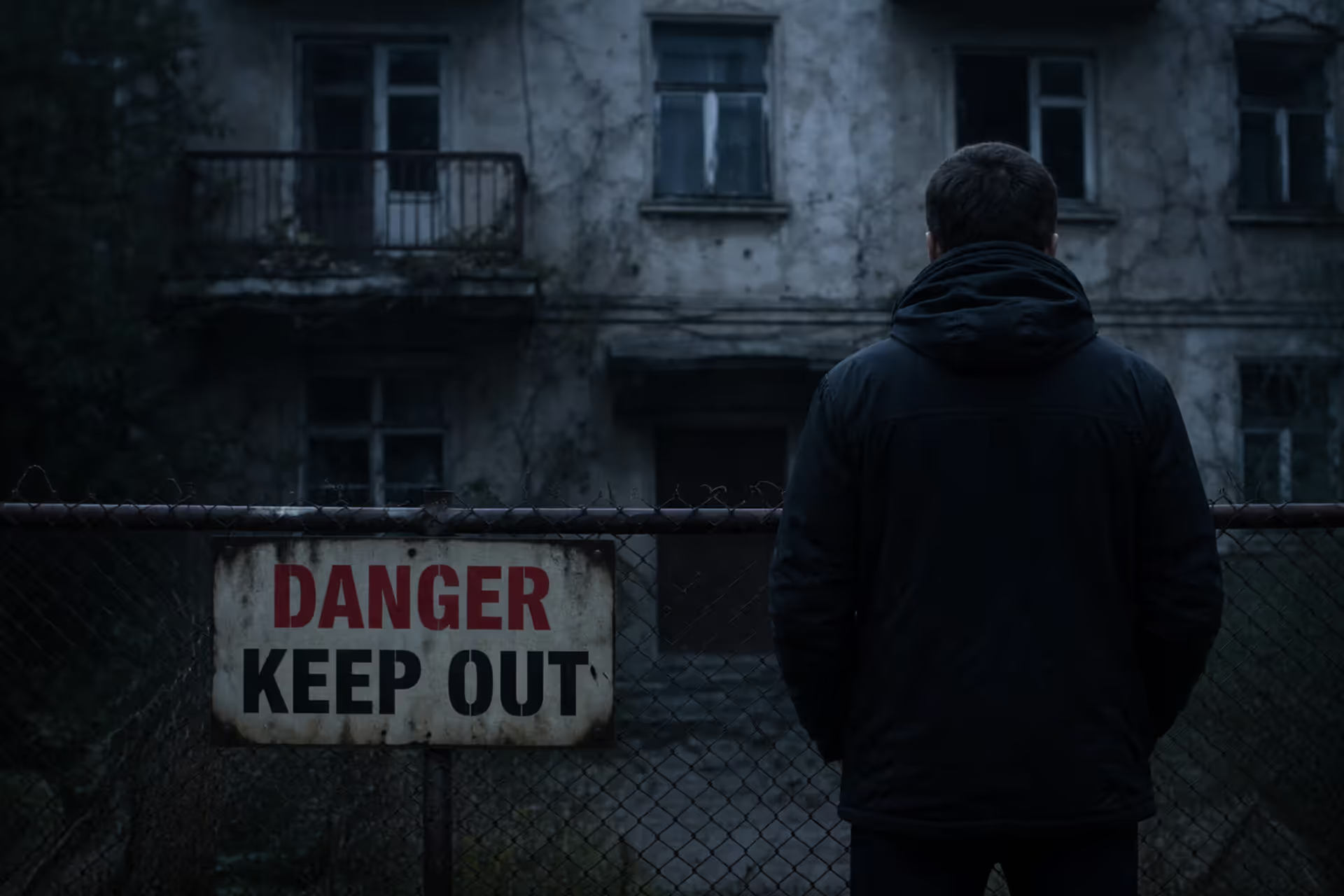
Person standing near a deteriorating residential building with cracked facade and a danger warning sign
Property Owner Liability in a Fatal Accident Guide

Content
Losing someone you love to a preventable accident on someone else's property brings devastating grief—and urgent questions. Could this have been stopped? Should someone have fixed that hazard? Where do you even start seeking answers? The law recognizes that people who own property can't just ignore dangerous conditions and walk away when someone dies. But determining whether you've got a valid case requires understanding some technical distinctions that aren't always obvious.
What Makes a Property Owner Responsible for a Death on Their Premises
Here's something most people don't realize: the law doesn't treat all property visitors the same way. Your legal relationship with the property determines how much protection you receive.
Invitees get the most protection under the law. Who counts as an invitee? Anyone there for the property owner's benefit—shoppers browsing a store, diners at a restaurant, clients visiting an office, patients at a medical facility. For this group, owners carry serious obligations. They need to conduct regular safety checks, repair anything dangerous, and post warnings about hazards they can't fix immediately. If you're injured (or killed) by something the owner should have discovered during routine maintenance, that's likely negligence.
Licensees occupy a middle ground. Think of your neighbor stopping by for coffee, or a postal worker making deliveries. They're allowed to be there, but the property isn't benefiting commercially. For these visitors, owners must warn about hidden dangers they actually know about—but they don't have to go looking for problems. That rotted deck board the owner knew about for six months? Should've warned the visitor. The termite damage hidden inside the wall that no one knew existed? Probably not liable.
Trespassers receive the least protection, though even uninvited visitors can't be deliberately harmed. You can't dig a camouflaged pit or set up tripwires just because someone might trespass. The major exception involves kids, thanks to the "attractive nuisance" rule. If something on your property naturally draws children—a swimming pool, construction equipment, an abandoned refrigerator—you've got heightened duties to secure it, even for trespassing kids.
When does property cross from "not perfect" to "legally dangerous"? Courts look at whether the risk was unreasonable and whether the owner knew (or should've known) about it. A sidewalk crack that developed yesterday differs fundamentally from one that's been widening for eight months. The key question: did the owner have enough notice—either actual awareness or sufficient time that they should've discovered it—to do something?
Establishing property owner negligence means showing the owner ignored building codes, skipped necessary maintenance, knew about specific hazards and did nothing, or failed to provide adequate security despite obvious crime risks. Courts don't demand perfection. They ask: would a reasonable property owner, facing these same circumstances, have done something different?
The duty of a property owner is not merely to refrain from causing harm, but to take affirmative steps to ensure that those who enter the premises are protected from foreseeable dangers. Negligence is not just about what you did wrong—it is equally about what you failed to do when the risk was staring you in the face
— Thomas C. Galligan Jr
Common Property Hazards That Lead to Fatal Accidents
Deaths on someone else's property happen in patterns. Some hazards appear repeatedly in wrongful death lawsuits.
Structural Failures and Building Code Violations
Balconies don't typically collapse without warning. Roofs don't suddenly cave in if they've been properly maintained. Yet these catastrophes kill people every year—usually after years of ignored maintenance or brushed-aside engineering concerns. That apartment balcony that hadn't been inspected since the building opened in 1997? The warehouse roof with documented water damage from 2015 that the owner kept meaning to address? The wooden staircase with visible rot that finally gave way? These represent failures that often span years.
Building codes exist for a reason—they're literally minimum safety requirements. When an owner ignores code violations or keeps using a structure after receiving official violation notices, that's not just negligence. It's the type of reckless behavior that courts take very seriously. Code violations serve as ready-made evidence that the owner knew exactly what standard they needed to meet and chose not to.
In wrongful death litigation, time is never neutral—it always works against the plaintiff. Evidence deteriorates, witnesses relocate, and property conditions get repaired. The families who act decisively in the first weeks after a tragedy consistently achieve better legal outcomes than those who wait months to seek counsel
— Robert L. Habush
Inadequate Security and Violent Crime
Can property owners be liable when criminals hurt or kill people on their property? Sometimes, yes—particularly when the crime was foreseeable and the owner failed to take reasonable security precautions. That apartment complex where three armed robberies happened in the parking lot last year, but the owner removed security cameras to cut costs? The convenience store that's been robbed eight times, but the owner refuses to hire overnight security? These situations establish what lawyers call "foreseeability"—the owner had reason to know danger existed.
Context matters enormously. A single random assault in a normally safe suburban area doesn't create liability. But repeated violent incidents create a pattern that owners ignore at their legal peril. Broken lights, non-functioning door locks, absence of security personnel after multiple crimes—these failures can support liability when someone dies in a preventable attack.
Author: Michael Thornton;
Source: mannawong.com

Author: Michael Thornton;
Source: mannawong.com
Environmental Dangers and Toxic Exposures
Some property deaths don't look like traditional accidents at first. Carbon monoxide poisoning, toxic mold exposure, chemical contamination, Legionnaires' disease from poorly maintained water systems—these hazards kill slowly, and the connection to property conditions may not be immediately apparent.
These cases often involve owners who skipped mandatory HVAC inspections, ignored tenant complaints about concerning odors or health problems, or knew about contamination but never disclosed it. The timeline gets longer, the causation more complex, requiring medical experts to trace the fatal exposure back to specific property conditions. But when someone dies because a landlord disconnected the carbon monoxide detector or ignored repeated mold complaints from a tenant with respiratory issues, the law still recognizes that as preventable negligence.
| Hazard Type | Common Locations | Property Owner's Duty | Typical Warning Signs |
| Structural defects | Balconies, staircases, roof systems, foundation supports | Conducting regular safety inspections, maintaining code compliance, completing timely repairs | Visible cracking, sagging or bowing, rust formation, water damage patterns |
| Slip/fall hazards | Building entrances, parking facilities, walkways, interior corridors | Routine maintenance programs, weather-related response plans, sufficient lighting installation | Uneven pavement, persistent water pooling, inadequate drainage, dim lighting |
| Security failures | Multi-family residential complexes, parking structures, retail establishments | Conducting risk evaluations, ensuring functional locking mechanisms, maintaining lighting, providing security staff when warranted | History of previous criminal incidents, damaged security fixtures, poorly lit isolated sections |
| Toxic substances | Residential rental units, industrial facilities, older buildings | Regular testing protocols, professional remediation, disclosure to occupants | Unusual odors, occupant health complaints, surface discoloration, visible mold |
| Fire safety violations | Multi-tenant residential buildings, commercial structures | Maintaining operational alarm systems, keeping exits unobstructed, servicing sprinkler equipment | Missing or disabled safety equipment, blocked emergency exits, outdated inspection tags |
| Swimming pool dangers | Residential properties, hotel facilities, apartment amenities | Installing proper fencing barriers, providing supervision or supervision warnings, displaying depth markers, maintaining rescue equipment | Absent or damaged barriers, unclear depth indicators, missing life-saving equipment |
Proving Negligence in a Property-Related Fatality Case
Winning these cases requires proving four distinct elements. Miss even one, and the claim fails—no matter how sympathetic the facts.
Duty means establishing that the property owner owed your loved one a legal obligation. The visitor classifications we discussed earlier determine this. Was your family member an invitee, licensee, or trespasser? What protections applied?
Breach demonstrates the owner violated their obligation. You need evidence: copies of building code violations, failed inspection reports, written complaints the owner received and ignored, proof that industry standards weren't followed. Consider a landlord who received four separate written complaints over six months about a loose stair railing that eventually collapsed, killing someone. Those complaints document both the owner's knowledge and their decision to do nothing.
Causation connects the owner's failure directly to the death. The dangerous condition must have actually caused the fatality, and the connection must be reasonably direct. If someone has a fatal heart attack while walking past a hazardous condition that they never encountered, causation fails. But if someone falls because of that hazard and the trauma triggers a fatal heart attack, causation likely exists. This element requires careful documentation and often medical expert testimony.
Damages encompasses the losses suffered—the death itself and its impact on surviving family members.
"What makes these cases incredibly difficult is establishing that the property owner actually knew—or should have known—about whatever killed your client," notes Michael Torres, who's spent two decades handling premises liability claims. "You're essentially reconstructing history: when did this hazard first develop? Who observed it? What complaints were lodged? Which inspections got skipped? Everything hinges on documentation. We dig through maintenance logs, tenant complaint files, city inspection records, even Facebook posts where someone photographed the condition months before the death occurred."
Evidence collection can't wait. You need photographs and video footage of the accident scene before anyone repairs or cleans anything. Witness statements from people who saw the hazard or complained about it previously establish notice. Maintenance records—or their conspicuous absence—reveal whether the owner took safety seriously. Building department files may contain violation notices or failed inspections that nobody has connected to your case yet. For security-related deaths, crime reports and statistics demonstrate whether violence was foreseeable.
Expert witnesses become critical. Structural engineers determine whether building collapses resulted from deferred maintenance or fundamental design defects. Security experts evaluate whether protective measures met accepted industry standards given the location and crime patterns. Medical professionals establish the link between property conditions and the specific cause of death.
Civil cases use a "preponderance of evidence" standard—basically, more likely than not (anything over 50%). This lower bar than criminal cases (beyond reasonable doubt) means families can win civil wrongful death claims even when prosecutors decline to file criminal charges against the property owner.

Author: Michael Thornton;
Source: mannawong.com
Who Can File a Wrongful Death Claim for Property Accidents
State laws dictate who's legally allowed to bring an unsafe property wrongful death case. It's not automatic—specific family relationships matter, usually following a priority ranking.
Surviving spouses typically get first priority. In many jurisdictions, they file on behalf of all eligible family members, including kids and sometimes the deceased's parents.
Children of the person who died can usually file claims, either independently (if adults) or through a surviving parent serving as legal guardian.
Parents may file in situations where their unmarried, childless son or daughter dies. Some states only extend this right when the deceased was still a minor; others allow parents to file even for adult children.
Personal representatives or estate executors file wrongful death claims in states that structure these cases through the estate rather than direct beneficiaries. Whatever's recovered becomes estate property, distributed according to inheritance laws.
Life partners and financial dependents face an uphill battle in many states. While some jurisdictions have expanded legal standing to include domestic partners or people who relied financially on the deceased, many still restrict claims to legally recognized family relationships.
Here's something that confuses people: wrongful death claims differ from survival actions, and understanding the distinction matters. Wrongful death claims compensate survivors for what they've lost—financial support, companionship, guidance their loved one would've provided. Survival actions compensate the estate for what the deceased person experienced—medical expenses before death, their pain and suffering, wages lost between injury and death. Some states permit both types of claims; others consolidate them into one action.
Time limits create real urgency. Statutes of limitations for premises liability fatality lawsuits typically range anywhere from one to three years, depending on your state. The clock generally starts ticking on the death date, though some states count from the injury date if those dates differ. Discovery rules occasionally extend deadlines when hazards weren't immediately apparent—think toxic exposure deaths, where connecting property conditions to the fatality takes considerable time and investigation.
Missing these deadlines destroys your case permanently, regardless of how strong the merits might be. Courts almost never grant extensions. This reality makes early attorney consultation absolutely essential.
Damages Available in Premises Liability Wrongful Death Lawsuits
Compensation in hazard liability lawsuits addresses both concrete financial losses and intangible harms survivors endure.
Economic damages cover losses you can calculate with reasonable precision. Medical bills from the final illness or injury, funeral and burial expenses, and the income your loved one would have earned throughout their expected working life all fit this category. Projecting future lost earnings requires expert economists who testify about career trajectory, anticipated promotions and raises, benefits packages, and working years remaining. A 35-year-old software engineer with strong earning potential represents vastly larger economic damages than a retired person, though both lives hold equal intrinsic value, obviously.
The value of lost household services also counts as economic damages. Childcare, home maintenance, financial management, and countless other contributions the deceased made to the household can be quantified and included in damages.
Non-economic damages address the losses that don't come with receipts. The companionship, guidance, and emotional support spouses and children have lost; the parental guidance minor children will grow up without; the emotional trauma of losing someone to an entirely preventable property hazard—these justify substantial compensation. These damage awards vary dramatically depending on relationship closeness, the deceased's role in survivors' daily lives, and frankly, how sympathetic juries find the case.
Many states cap non-economic damages in wrongful death lawsuits, imposing recovery limits no matter how devastating the actual impact. These caps—commonly ranging from $250,000 to $1 million—remain controversial, but they constrain what's realistically recoverable when evaluating cases.

Author: Michael Thornton;
Source: mannawong.com
Punitive damages serve to punish especially outrageous conduct and discourage similar behavior by others. Property accident death cases involving deliberate code violations, repeatedly ignored warnings, or reckless disregard for glaringly obvious dangers might justify punitive awards. Think about a landlord who physically disconnected smoke alarms to avoid buying replacements, or an owner who kept using a building after engineers declared it structurally unsafe. These scenarios invite punitive damages. But recovering them requires clear and convincing evidence of willful misconduct or gross negligence—a substantially higher proof standard than ordinary negligence.
| Damage Category | What It Covers | How It's Calculated | Typical Range |
| Medical expenses | Emergency treatment, hospital stays, medical care between injury and death | Documented medical bills and treatment records | $10,000–$500,000+ |
| Funeral costs | Burial or cremation, memorial services, related final expenses | Documented funeral expenses, reasonable cost standards | $5,000–$25,000 |
| Lost income | Salary, employment benefits, projected career earnings through expected working years | Employment history, age, education level, career path analysis | $500,000–$5,000,000+ |
| Loss of companionship | Emotional support, guidance, relationship contributions | Relationship quality, deceased's family role, survivor testimony | $100,000–$1,000,000+ |
| Pain and suffering | Deceased's awareness and suffering between injury and death (survival action) | Injury duration, pain severity, level of consciousness | $50,000–$500,000 |
| Punitive damages | Punishment for extreme conduct and deterrence of similar future behavior | Defendant's financial resources, conduct severity, deterrence requirements | Highly variable; frequently subject to statutory caps |
Numerous factors influence final compensation amounts. The deceased's age and earnings capacity, how many dependents they supported and their ages, how egregious the owner's negligence was, whether your jurisdiction caps damages, and the strength of your evidence all matter. Clear documentation showing a pattern of ignored warnings and code violations supports significantly larger awards than a single isolated oversight.
Insurance policy limits frequently represent the practical ceiling on recovery. A residential property owner carrying $300,000 in liability coverage may lack personal assets to pay a $2 million judgment, making that policy limit the realistic recovery maximum regardless of what the jury awards.
Common Mistakes That Weaken Property Death Claims
Grieving families often make understandable decisions that inadvertently damage their legal cases.
Delaying attorney consultation causes more problems than almost anything else. Evidence vanishes quickly. Properties get repaired (destroying proof of the hazard). Witnesses' memories fade. Documents disappear or get thrown out. Property owners have powerful incentives to fix dangerous conditions immediately after fatal accidents—which eliminates evidence of what the condition actually looked like. Wait six months to call an attorney? You may discover that critical proof no longer exists.
Accepting fast settlement offers before understanding the full value of damages leaves money on the table—often substantial amounts. Insurance adjusters sometimes approach grieving families within days of a death, presenting settlement offers designed to close cases quickly and cheaply. These initial offers rarely reflect anything approaching the claim's true worth. Once you accept and sign a release, that's typically the end—you can't come back later demanding more money after discovering your damages exceeded the settlement.
Posting on social media creates a goldmine of evidence for defense attorneys. Photos of family gatherings, vacation posts, statements about coping with the death—all can be screenshot, taken out of context, and used to argue damages weren't as severe as claimed. Defense lawyers routinely monitor plaintiffs' social media profiles hunting for contradictory evidence. That post about enjoying a weekend trip three months after the death? Expect it blown up on a courtroom screen to argue you've recovered from your grief.

Author: Michael Thornton;
Source: mannawong.com
Author: Michael Thornton;
Source: mannawong.com
Destroying evidence by cleaning up the accident scene, throwing out the deceased's belongings, or tossing correspondence with the property owner eliminates proof you'll need later. It's natural to want to move forward and not be surrounded by painful reminders. But preserving everything connected to the property and the accident protects your legal rights. Take photos before cleaning. Keep every document, email, and text message. Don't repair or throw anything away until your attorney says it's safe.
Talking to insurance adjusters without your own lawyer present is dangerous territory. Adjusters receive training in asking questions that elicit answers minimizing their company's liability or your damages. Recorded statements can be selectively edited or interpreted in ways you never intended. Simply saying "I don't want to give a statement until I've consulted with my attorney" is perfectly legal and appropriate.
Failing to document financial impacts makes proving economic damages harder later. Keep meticulous records of every expense related to the death. Calculate lost income accurately. Track how losing this person affects your household finances practically. This documentation provides the foundation for damage calculations.
Missing opportunities to authorize records limits what your attorney can obtain. Signing authorizations allowing your lawyer to get the deceased's medical records, property maintenance files, and government inspection reports is essential. Some families view these requests as invasive during an already painful time. But without these records, building a strong case becomes nearly impossible.
FAQ: Property Owner Liability in Fatal Accidents
When property owners neglect basic safety obligations and their carelessness causes someone's death, they must answer for it legally. These cases demand fast action to preserve disappearing evidence, careful analysis of complex legal duties and violations, and thorough documentation of both financial and emotional damages. No legal victory brings back your loved one—nothing can. But wrongful death claims provide financial security for surviving family members and send a clear message that fatal negligence carries real consequences. Families navigating this tragedy benefit tremendously from early consultation with experienced attorneys who can evaluate their unique circumstances, explain how their state's specific laws apply, and guide them through the legal system while they focus on healing and remembering.