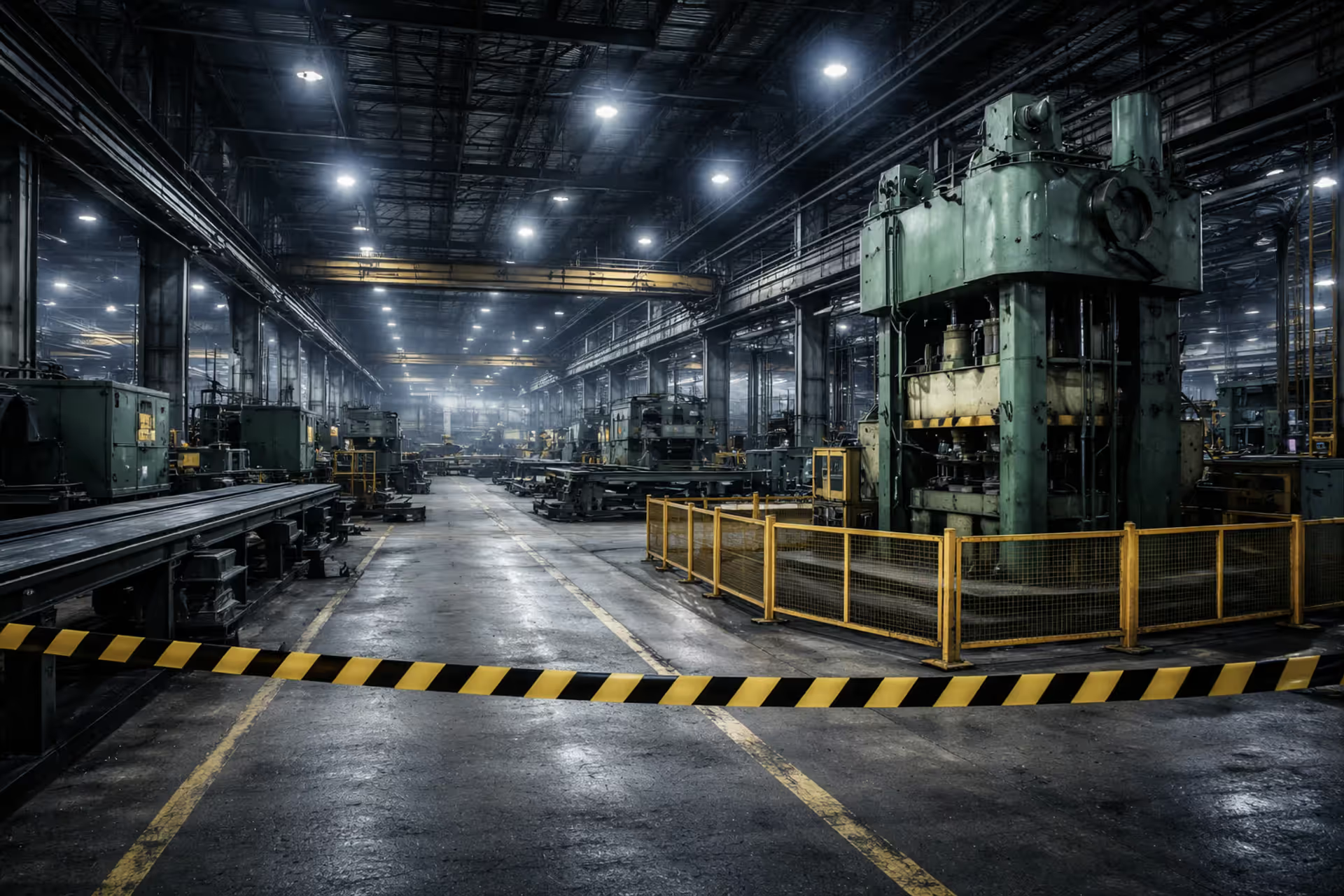
Industrial factory floor with heavy machinery, conveyor belts, and yellow-black caution tape blocking access to a large press machine
Workplace Machinery Death Claim Guide

Content
Hundreds of workers don't come home each year because of machinery accidents. Their families face impossible questions: Could this have been prevented? Who's responsible? What happens now? The answers matter—not just for closure, but for holding employers accountable and protecting other workers from the same fate.
Common Causes of Fatal Machinery Accidents in US Workplaces
Walk through any factory or warehouse, and you'll see the machines that kill workers most often. Industrial presses that shape metal with thousands of pounds of force. Conveyor systems stretching hundreds of feet through production lines. Forklifts moving pallets around crowded spaces. Table saws and wood planers in cabinet shops. Tractors and combines on farms. The Bureau of Labor Statistics tracks these deaths year after year—manufacturing, agriculture, and construction lead the count.
Metal components wear out. That's basic physics. But here's what turns normal wear into a workplace machinery death: nobody replaces the part until it fails catastrophically. The hydraulic seals on a press leak slowly for months. Maintenance logs note "minor seepage" but schedule replacement for the next shutdown. Before that happens, the seal ruptures completely and several tons of pressure release without warning onto whoever's standing nearby.
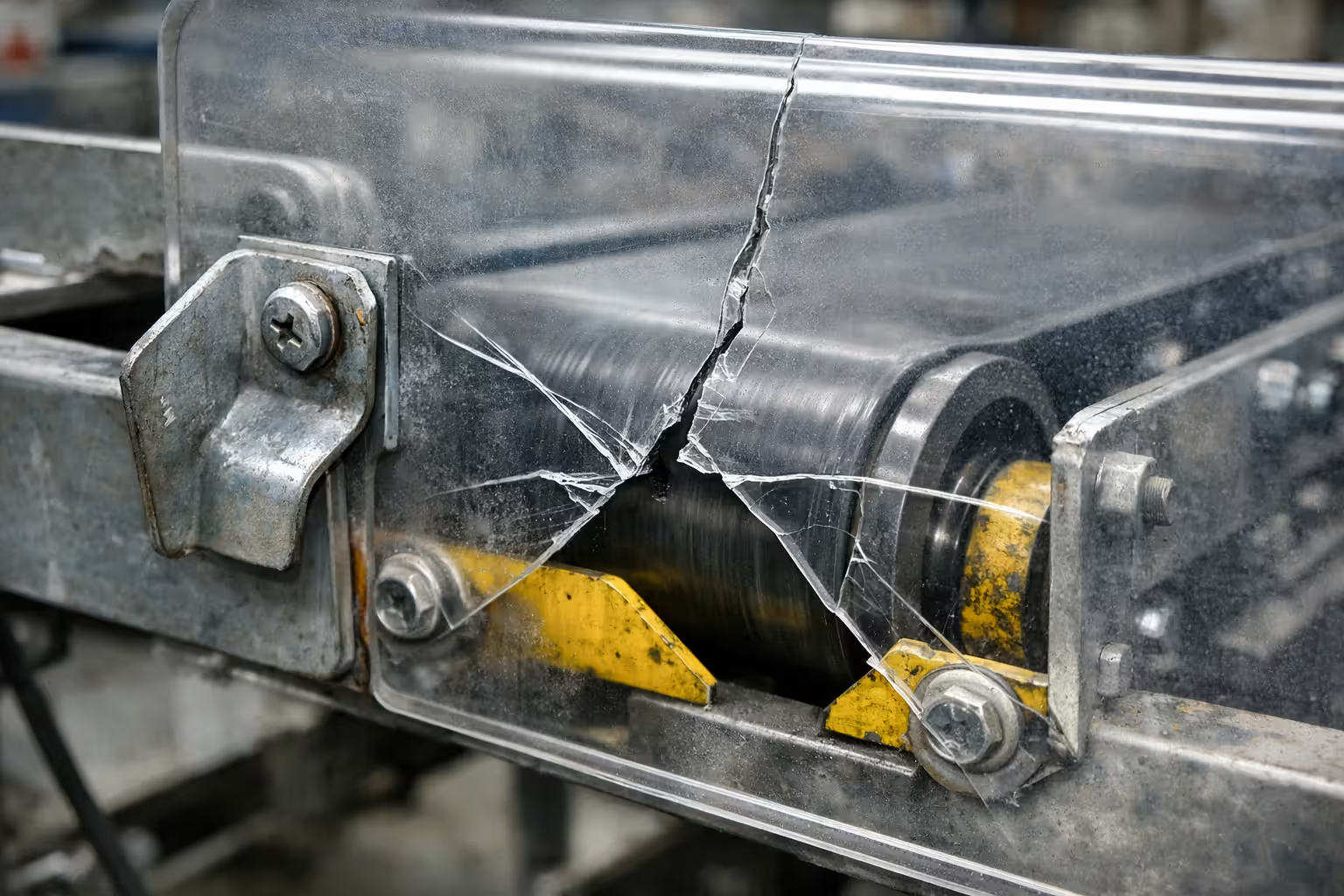
Guards on conveyor systems crack from repeated impact and temperature swings. The cracks spread. Eventually a guard breaks completely, exposing the pinch point where the belt wraps around the roller. These failures don't surprise engineers—they follow predictable patterns that regular inspections would catch.
Author: Daniel Whitford;
Source: mannawong.com
The "human error" explanation falls apart under scrutiny. Sure, a worker bypassed the safety gate on a packaging machine. But did anyone ask why? Production quotas that can't be met with safety protocols in place create pressure to take shortcuts. Supervisors who look the other way when workers disable interlocks send clear messages about real priorities. A worker transferred from assembly to operating a power press with twenty minutes of instruction isn't committing "operator error" when something goes wrong—they're a victim of inadequate training.
We tend to blame the worker who made the last decision before the accident, but the real failures happened weeks, months, or years earlier — in the boardroom, in the maintenance budget, in the training program that was never funded. Human error is almost always a symptom of system failure, not its cause
— Dr. Sidney Dekker
Different equipment kills in specific ways. Power presses amputate limbs, and workers bleed out before help arrives. Agricultural equipment—especially older tractors without rollover protection—crushes operators during tip-overs. Power take-off shafts on farm machinery spin at 540 RPM and catch loose clothing, pulling workers into the mechanism in seconds. Commercial printing presses trap workers between massive rollers. Packaging machines draw people into nip points when they reach in to clear jams.
How Equipment Malfunction Leads to Worker Fatalities
Machines don't typically fail without warning. They get louder, hotter, or slower. They vibrate differently. They develop leaks. Workers notice these changes and mention them to supervisors. Then nothing happens until the equipment malfunction fatality makes headlines.
Warning Signs of Dangerous Equipment
That bearing making noise? It's destroying itself from the inside. The fragments will eventually seize the shaft or fly apart—maybe into someone's body. Excessive vibration means something's loose, bent, or unbalanced. Any of those conditions can throw components across the room at lethal velocity.
Hydraulic fluid pooling under machinery means seals are failing. Systems lose pressure gradually, then suddenly. Unexpected movement kills workers who thought the equipment was secured. That burning smell from electrical panels? Wires are overheating, insulation is melting, and an arc flash could happen any moment.
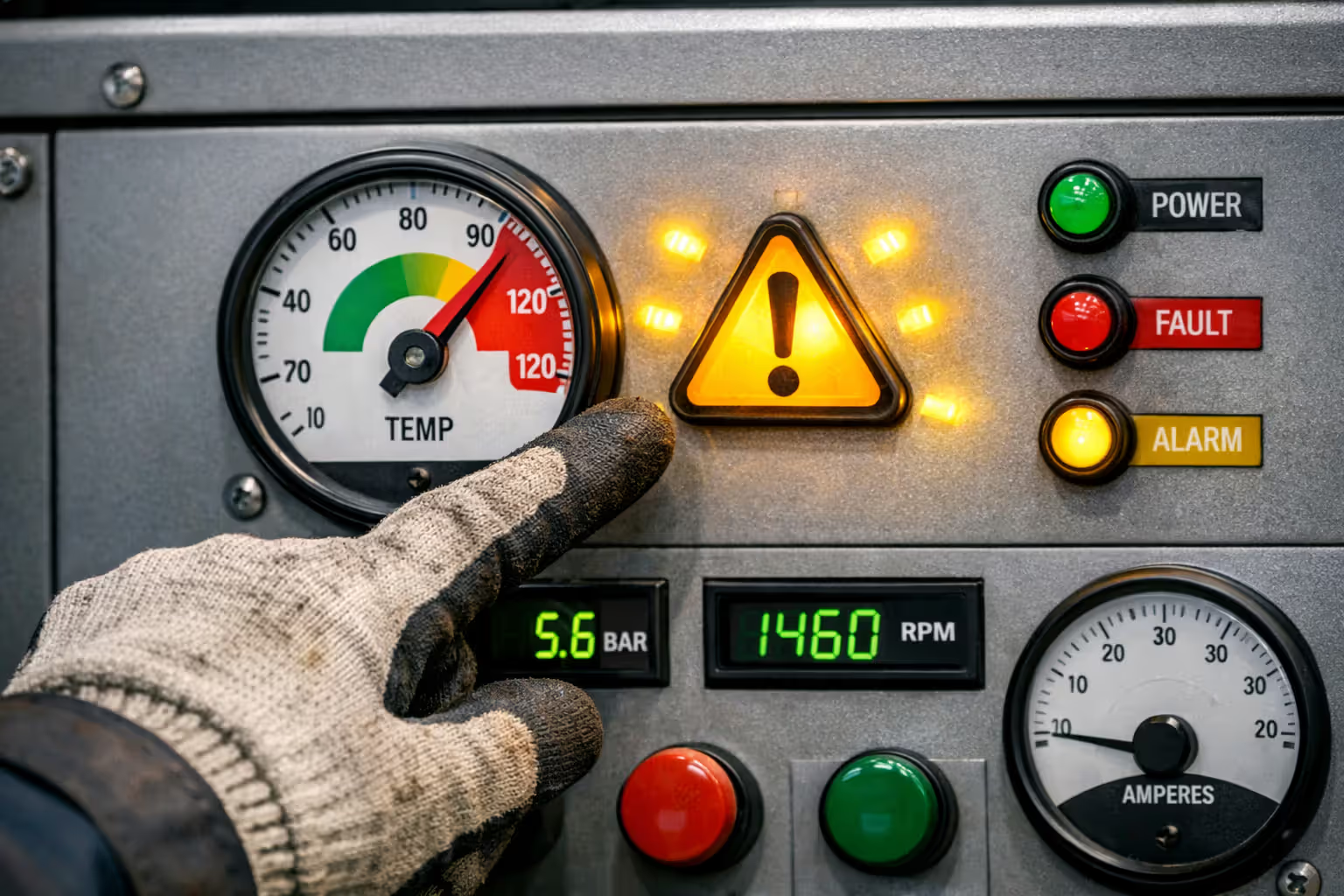
Motors running hot are working too hard. Something's binding mechanically, or electrical problems are developing. Either way, the motor will fail—possibly catching fire, possibly seizing suddenly and causing mechanical failures elsewhere in the system.
Author: Daniel Whitford;
Source: mannawong.com
Equipment that used to start smoothly now hesitates and lurches. Machines that stopped reliably now coast to a halt over several seconds. Control systems are failing. When emergency stops don't work during an actual emergency, you get an industrial machine accident.
Physical damage to safety devices telegraphs the next disaster. Bent safety gates don't interlock properly. Cracked light curtains develop blind spots. Emergency stops corroded from exposure won't trip when someone hits them. Every damaged safety device is a workplace machinery death waiting to happen.
Maintenance Failures That Turn Deadly
"We'll fix it during the scheduled shutdown next month" becomes an epitaph. The hydraulic system that needed new seals fails today, crushing an operator against the machine frame. Crane brakes worn past their service intervals can't hold the load, which drops onto workers below. Emergency stops corroded into uselessness don't stop anything when someone gets pulled into the machinery.
Pull maintenance records during a fatality investigation and you'll see the story. Facilities that can't produce documentation showing regular inspections, timely repairs, and parts replacement according to manufacturer specs have demonstrated a pattern. They knew equipment needed attention and didn't provide it.
Sometimes there are maintenance records, but they document the wrong work. Incorrect replacement parts that don't meet original specifications. Repairs that ignore manufacturer procedures. These create new hazards that didn't exist before the "maintenance."
Outsourced maintenance creates accountability gaps. The equipment owner assumes the contractor handles everything. The contractor only performs what's specifically listed in the contract. Critical safety inspections that each party thinks the other is handling don't happen at all. Nobody discovers this until investigating an industrial machine accident.
Employer Responsibilities and Liability When Factory Accidents Occur
Employers don't just have to avoid actively harming workers. They must actively protect them. These obligations start before machinery arrives and continue throughout its operational life.
The duty of care means identifying hazards before exposing workers to them. Job hazard analyses. Reviewing manufacturer safety manuals. Implementing controls that eliminate dangers or reduce them to minimum levels. Skip these steps and cause a worker's death? Employer liability machinery cases succeed because the negligence is obvious.
Training once during orientation doesn't satisfy legal requirements. Workers need comprehensive initial instruction with supervised hands-on practice. Periodic refreshers to reinforce critical procedures. Retraining after incidents or equipment changes. All of it documented with dates, instructor names, specific content covered, and competency verification methods. Employers who can't produce these records for a deceased worker face substantial liability exposure.
Maintenance creates ongoing obligations. Schedules must reflect manufacturer recommendations and actual operating conditions—not budget constraints or production quotas. Qualified personnel must perform the work. Equipment with identified defects must be locked out until repairs are completed. Operating machinery with known safety defects that contribute to a factory accident death crosses into willful negligence territory.
Multiple parties can share responsibility. Manufacturing companies that designed or made defective equipment face product liability claims. Contractors whose sloppy repair work created hazards can be sued for negligence. Companies that own the property where the death occurred sometimes share liability for dangerous conditions they controlled.
Staffing agencies placing temporary workers at client facilities must verify those workers receive proper safety training. They can't assign people to dangerous tasks without ensuring qualifications. Agencies that prioritize speed over safety share responsibility when workers die.
Author: Daniel Whitford;
Source: mannawong.com
OSHA Standards for Machinery Safety and Common Violations
The Occupational Safety and Health Administration publishes detailed requirements for machinery safety. Machine guarding standards. Lockout/tagout protocols. Point-of-operation protection. Equipment-specific rules for power presses, woodworking tools, and dozens of other machine categories.
Machine guarding rules (29 CFR 1910.212) require physical barriers preventing worker contact with hazardous moving parts. Point-of-operation guards, barrier guards, interlocks, two-hand controls—employers must select appropriate protection and ensure it stays in place and functional. Removing guards or disabling safety interlocks violates federal law.
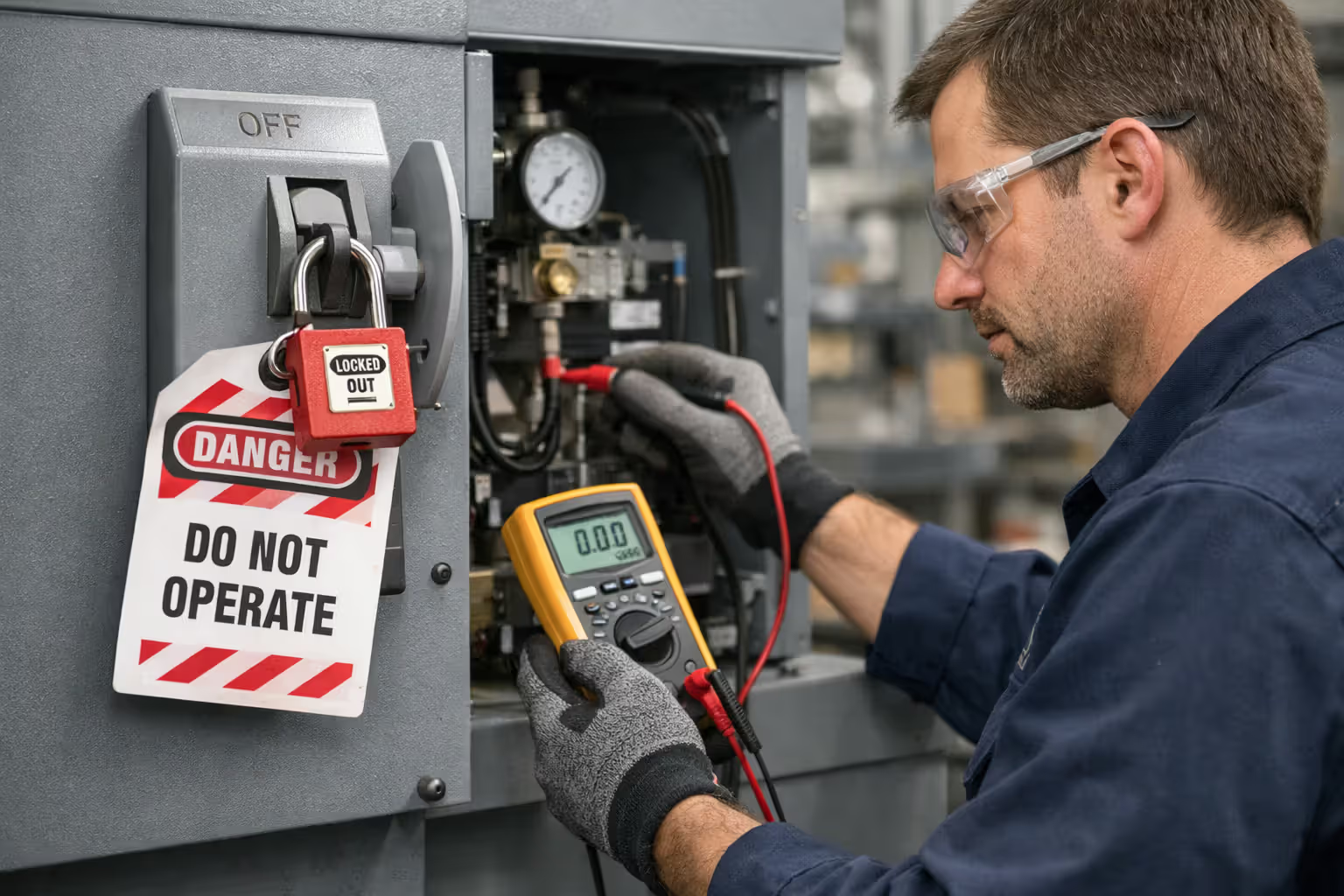
Lockout/tagout regulations (29 CFR 1910.147) mandate specific energy control procedures during servicing and maintenance. Shut down equipment following prescribed sequences. Isolate every energy source—electrical, hydraulic, pneumatic, mechanical. Apply personal locks and warning tags. Verify zero-energy state before starting work. Follow strict protocols before re-energizing. OSHA machinery violations in lockout/tagout appear constantly in fatality investigations.
Penalties scale with violation severity. Other-than-serious violations—where injury is possible but death or serious harm isn't likely—bring fines up to $15,625 each. Serious violations, where substantial probability of death or serious injury exists, also reach $15,625 per violation. Willful violations—intentional disregard for requirements or deliberate indifference to worker safety—can hit $156,259 per violation. Repeat violations after prior citations carry enhanced penalties.
Criminal penalties apply when employers' conduct is egregious enough. Willful violations causing worker deaths can trigger criminal prosecution. Convictions bring up to six months imprisonment and $250,000 fines for individuals. Companies convicted of these crimes can be fined up to $500,000 per violation.
Author: Daniel Whitford;
Source: mannawong.com
Machinery Safety Standard Violations: Most Common Citations and Penalties (2023)
| Safety Standard Category | Regulation Number | Total Citations | Typical Penalty |
| Lockout/Tagout Procedures | 1910.147 | 2,932 | $4,483 |
| General Machine Guarding | 1910.212 | 1,284 | $3,927 |
| Power Press Safety | 1910.217 | 892 | $5,614 |
| Forklift Operation | 1910.178 | 8,471 | $4,019 |
| Grinding Wheel Guards | 1910.215 | 467 | $3,201 |
| Woodworking Equipment | 1910.213 | 318 | $4,156 |
| Forging Equipment | 1910.218 | 124 | $6,782 |
| Operation Point Protection | 1910.212(a)(3)(ii) | 743 | $4,891 |
| Machine Anchoring | 1910.212(b) | 289 | $2,976 |
| Energy Control Training | 1910.147(c)(7) | 1,657 | $3,845 |
Legal Options for Families After an Industrial Machine Accident
Losing someone to a workplace machinery death brings immediate financial crisis alongside grief. Funeral arrangements need payment. Bills keep arriving. Future income disappears. Understanding legal remedies helps families secure compensation while holding responsible parties accountable.
Workers' Compensation vs. Third-Party Claims
Workers' compensation pays benefits without requiring proof of fault. Medical bills from the final injury. Funeral expenses, though states typically cap this at $5,000-$15,000. Death benefits to surviving dependents. These benefits come relatively quickly, but accepting them normally prevents suing the employer.
Death benefits usually equal a percentage of what the deceased worker earned weekly. Each state calculates this differently. Most cap total benefits or limit how long payments continue. While these benefits provide crucial immediate support, they rarely reflect the full economic impact of losing a family member.
Third-party lawsuits become possible when someone besides the direct employer shares blame. Did defective machinery cause the death? The manufacturer faces product liability claims. Did negligent equipment repairs create the hazard? That maintenance contractor can be sued. Did a staffing agency fail to ensure proper training? They face liability claims. Did the property owner control dangerous conditions? They share legal responsibility.
These outside claims don't face workers' compensation restrictions. Families can pursue complete economic damages—every dollar of lost future wages, benefits, and retirement contributions. Non-economic damages for losing companionship, guidance, and the relationship itself. When conduct was especially reckless, punitive damages become available to punish and deter similar behavior.
Wrongful Death Claims in Machinery Cases
State wrongful death statutes differ in details but follow similar patterns. Specific family members—usually surviving spouses, children, sometimes parents or siblings—can file claims when negligence or wrongful conduct causes death.
Winning requires proving four elements. First, duty—the defendant owed the deceased person a legal obligation. Second, breach—they violated that obligation. Third, causation—their violation directly caused the death. Fourth, damages—the family suffered measurable harm.
Evidence makes or breaks these cases. OSHA investigation reports documenting violations. Maintenance records showing deferred repairs. Training documentation revealing inadequate instruction. Witness statements about what actually happened. Expert testimony explaining industry safety standards and how defendants fell short. All of this builds the case piece by piece.
In wrongful death litigation involving industrial machinery, the evidence tells the story that the deceased worker no longer can. Every maintenance log entry ignored, every safety inspection skipped, every training shortcut taken becomes a thread in the narrative of preventable tragedy. Families deserve attorneys who can weave those threads into accountability
— Kenneth R. Feinberg
Spoliation of evidence—defendants destroying maintenance logs, security footage, or the equipment itself after an incident—can result in severe sanctions. Courts may instruct juries to assume the destroyed evidence would have proven the plaintiff's case.
Statutes of limitations create hard deadlines. Most states give families one to three years from the death date to file wrongful death lawsuits, depending on claim type and jurisdiction. Workers' compensation death benefit claims often have even shorter windows—sometimes just 30 days to notify the employer and one year to file. Miss these deadlines and legal remedies disappear forever, regardless of how strong the case was.
Settlement negotiations often involve multiple defendants pointing fingers at each other. Manufacturers blame inadequate maintenance. Employers blame equipment defects. Maintenance contractors cite poor operator training. Skilled attorneys navigate these dynamics to maximize recovery for families.
Preventing Machinery Deaths: What Employers Must Do
Prevention demands systematic approaches, not Band-Aids applied after someone dies. Employers who treat safety as central to operations rather than a compliance burden create workplaces where machinery fatalities become rare.
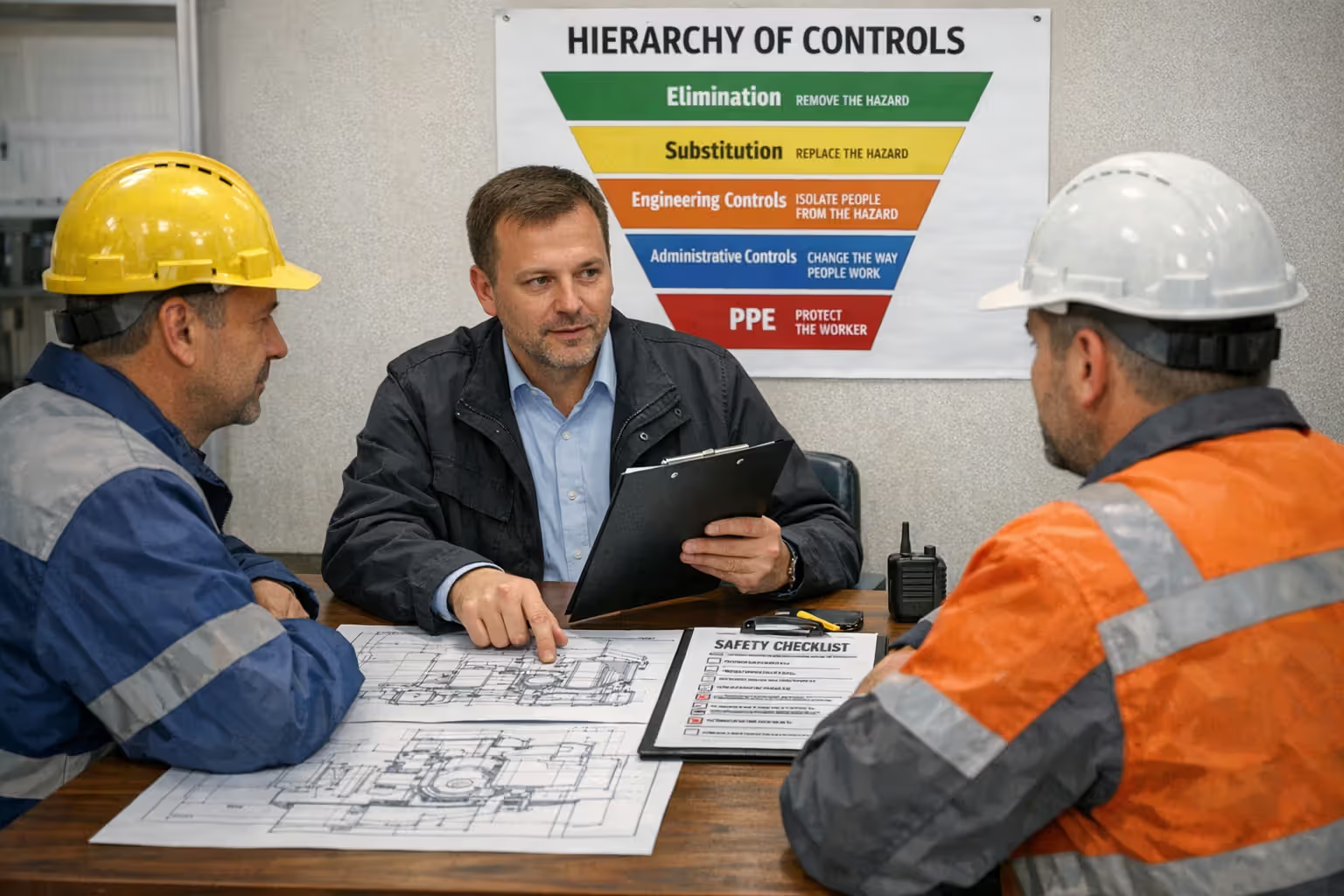
Effective machine guarding starts with comprehensive hazard identification. Every piece of equipment gets assessed for pinch points, rotating parts, projectile risks, and other hazards. Engineering controls—physical guards, barriers, interlocks—provide primary protection. Administrative controls like restricted access areas supplement physical safeguards. Personal protective equipment serves as backup, not the main strategy.
Lockout/tagout programs must be machine-specific. Generic procedures fail in practice because every piece of equipment has unique energy sources and shutdown sequences. Each machine needs documented steps for shutdown, energy isolation, and zero-energy verification. Authorized employees who service equipment need detailed procedure training. Affected employees working nearby need awareness training so they understand what's happening. Annual retraining keeps everyone current.
Training programs should verify competency, not just attendance. Sitting through presentations doesn't mean someone can safely operate industrial machinery. Effective training includes demonstration, supervised practice with the actual equipment, verification of understanding, and documented competency sign-off before independent operation. Training documentation should specify exact content covered, instructor identity, date, and how competency was verified.
Maintenance scheduling must be mandatory, not aspirational. Preventive maintenance following manufacturer specifications and reflecting actual use patterns prevents gradual degradation that leads to catastrophic failures. Predictive maintenance using vibration analysis, thermal imaging, and other diagnostic tools identifies developing problems before they become dangerous.
Near-miss reporting provides early warning of system failures. Guard almost failed? Equipment behaved unexpectedly? Worker narrowly avoided injury? These incidents deserve investigation equal to actual injuries. Organizations that encourage reporting without punishment gain visibility into fixable problems before they kill someone.
"Every machinery fatality I've investigated traced back to predictable failures. Not freak accidents—predictable failures in safety systems, maintenance execution, or organizational commitment. Employers treating safety investments as costs rather than values create conditions where workers die needlessly. Organizations that embed safety into operations, empower workers to stop unsafe work, and maintain equipment as if lives depend on it—because lives do depend on it—essentially eliminate machinery deaths." — Michael Rodriguez, Certified Safety Professional and former OSHA Regional Administrator
FAQ: Workplace Machinery Fatalities
Workplace machinery deaths expose failures across multiple systems—engineering design, maintenance execution, training delivery, supervision quality, and organizational priorities. Families thrust into this nightmare face complex legal processes while processing devastating losses. Understanding causes, legal frameworks, and prevention strategies won't restore what was lost, but knowledge creates pathways toward accountability and systematic change. Industries that genuinely learn from these tragedies and implement rigorous safety protocols honor the deceased by protecting workers who remain. For families, pursuing available legal remedies addresses immediate practical needs while serving the broader purpose of preventing future tragedies from shattering other families the same way.