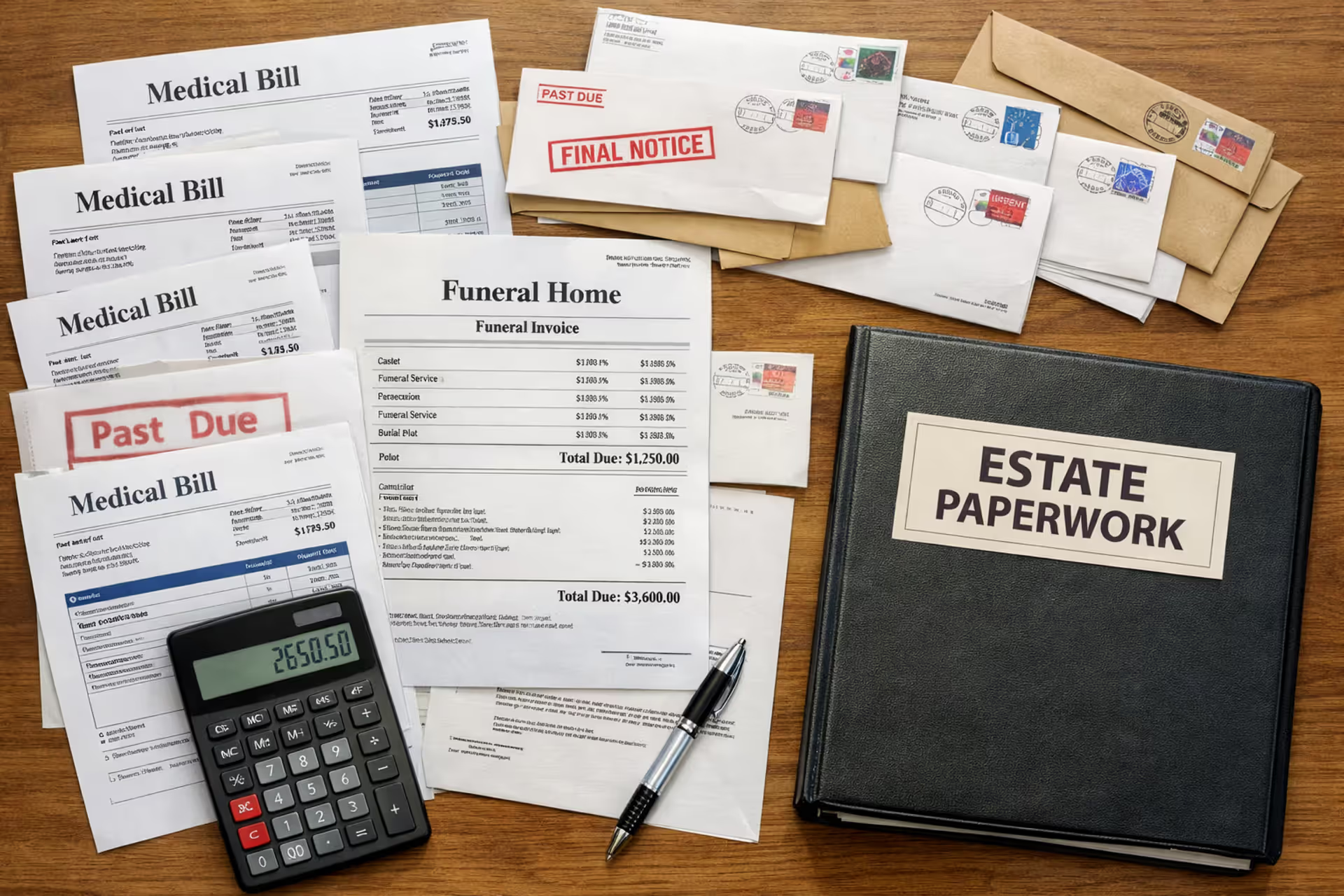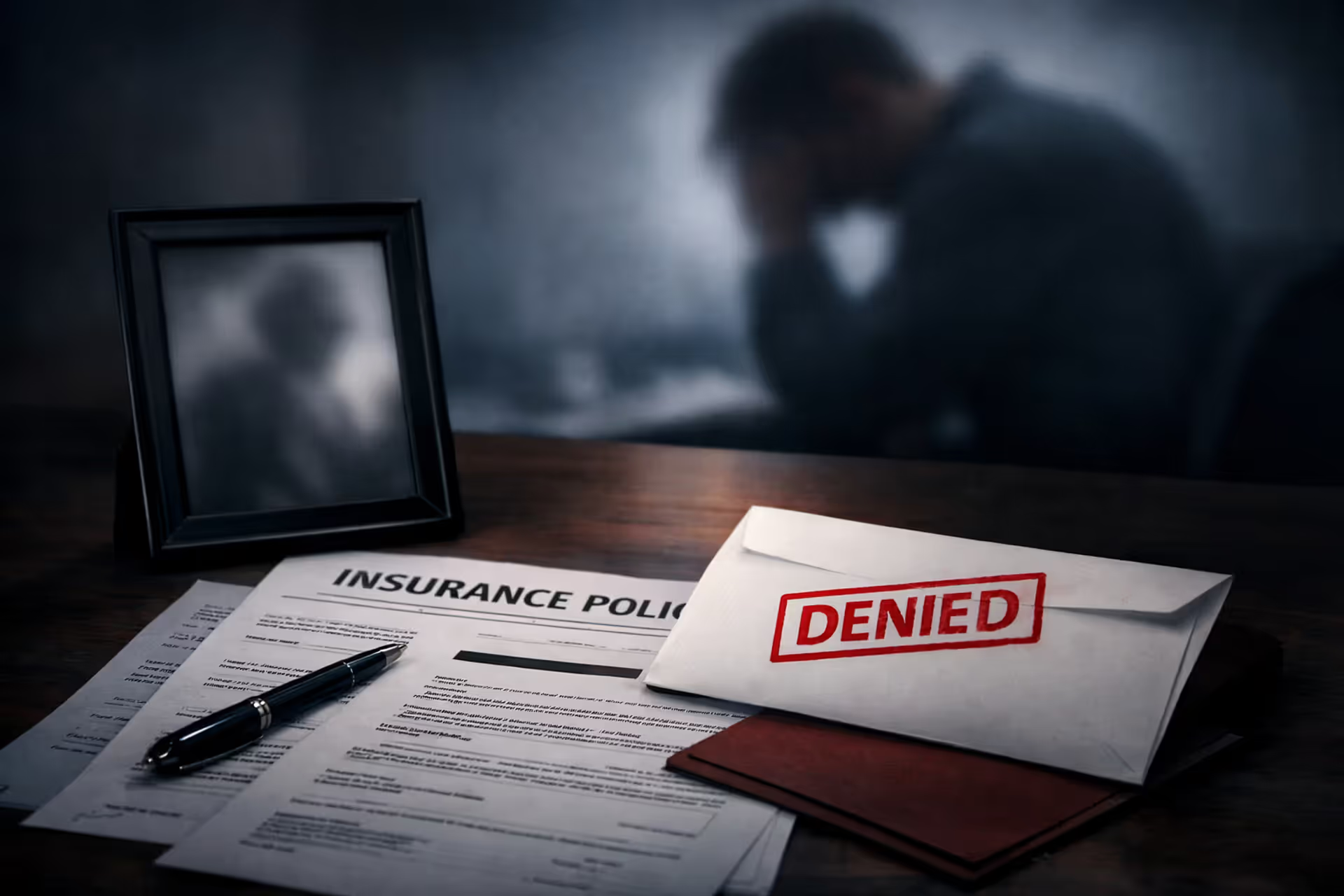
Denied insurance claim letter on a desk next to a mourning photo frame symbolizing wrongful death insurance bad faith
Insurance Bad Faith in Wrongful Death Cases Guide

Content
The death of a family member tears a hole in your world. Then the insurance company—the one you've paid premiums to for years—refuses to pay out. Suddenly you're fighting on two fronts: grieving your loss while battling adjusters who seem more interested in protecting corporate profits than honoring a contract.
This scenario plays out thousands of times each year across the United States. Families expecting $250,000 or $500,000 in life insurance benefits get denial letters instead. The reasons vary—sometimes laughably thin, other times deliberately misleading—but the result is always the same: beneficiaries lose homes, drain retirement accounts, and suffer additional emotional trauma during an already unbearable period.
You have more power than insurers want you to know. When companies violate their contractual duties through unreasonable denials or deliberate delays, state laws allow you to pursue damages far exceeding the original policy amount. But first, you need to recognize what bad faith actually looks like.
What Constitutes Bad Faith in Wrongful Death Insurance Claims
Legal definition of bad faith conduct
Every insurance contract in America includes an unwritten promise: the insurer will treat your claim fairly and honestly. Legal scholars call this the "implied covenant of good faith and fair dealing." It's not just empty words—courts enforce it aggressively.
Here's what insurers must do under this covenant:
- Actually investigate your claim instead of rubber-stamping a denial
- Explain their decisions using real evidence, not vague boilerplate language
- Treat your financial interests as seriously as their own bottom line
- Pay valid claims within reasonable timeframes spelled out in state regulations
- Make settlement offers that reflect what the policy actually says, not what saves them money
Bad faith happens when insurers trash these obligations. We're not talking about legitimate disagreements over coverage—those happen. Bad faith means the company took a position so unreasonable that even their own industry experts would call it indefensible.
The Comunale decision from California's highest court established a principle that courts nationwide now follow: insurance contracts contain an implicit promise that neither side will sabotage the other's ability to receive what the agreement provides.
An insurance policy is a contract of adhesion, drafted by the insurer and accepted by the policyholder on faith. When that faith is betrayed through deliberate denial of a valid claim, the law must respond with remedies severe enough to restore the balance of power between grieving families and billion-dollar corporations
— William M. Shernoff
Common scenarios in wrongful death contexts
Most wrongful death insurance disputes involve three policy types: traditional life insurance, accidental death coverage, or third-party liability claims following an accident or medical error. Bad faith shows up differently in each context, but certain patterns repeat endlessly.
Invoking exclusions that clearly don't apply. Your husband dies in a car crash. The insurer denies the accidental death claim, asserting he committed suicide by deliberately driving into oncoming traffic. Police reports, accident reconstruction, and witness statements all show he swerved to avoid a deer. The company never explains how avoiding wildlife equals suicidal intent.
Twisting policy language beyond recognition. Your mother's life insurance policy says it covers "death from any cause after the two-year contestability period." She dies in year five. The insurer quotes Section 12(b)(iii) about "material misrepresentations" and launches an investigation into whether she accurately reported a doctor's visit from 2015. The death was from stroke—completely unrelated to anything on her application. They know it. You know it. But they're betting you'll give up before hiring a lawyer to read the whole policy.
Creating impossible documentation hurdles. The adjuster needs medical records from your brother's pediatrician—who retired in 1998. They want witness statements from his college roommate—who died three years ago. Every time you explain why a request is impossible, they add two more. When you finally can't produce something, they deny the claim for "incomplete information."

Author: Daniel Whitford;
Source: mannawong.com
Burying their own investigators' conclusions. The company's field investigator submits a report concluding the death clearly falls within policy coverage. Two weeks later, you get a denial letter citing "insufficient evidence of a covered loss." Your lawyer's discovery requests later unearth the investigator's report—which the claims manager deliberately ignored.
These tactics share common DNA: the insurer knows it owes you money but figures denying the claim costs less than paying it, especially if you lack the resources to fight back.
How Insurers Violate Good Faith Obligations After a Wrongful Death
The industry has developed a playbook for wearing down beneficiaries. Insurance executives don't write memos saying "commit fraud." They use sanitized corporate language about "claims management" and "loss mitigation." The result is the same: valid claims denied through systematic bad faith.
Strategic delay bleeds families dry. You submit everything within two weeks: death certificate, policy documents, medical examiner's findings. The acknowledgment letter promises an adjuster will contact you within ten business days. Six weeks pass. You call repeatedly. Finally, an adjuster is assigned—who immediately requests documents already in your file. Another month disappears. When you call for updates, you get voicemail. When the adjuster finally calls back, she requests your loved one's employment records from 2009. Why? No explanation.
Meanwhile, funeral home bills hit collections. Your mortgage payment bounces. Credit card interest compounds. After four months, the insurer offers 40% of the policy value "to resolve this matter quickly." You're desperate enough to consider it.
One widow I learned about through court records submitted impeccable documentation within days of her husband's industrial accident. The insurer sat on the complete file for eleven weeks without assigning it to anyone. When an adjuster finally reviewed it, he requested information already provided. Four months after the death—with the widow facing foreclosure—the company denied the claim citing an "ongoing investigation." That investigation? A single phone call to the employer's HR department, placed seventy-two hours before the denial went out.
Information asymmetry becomes a weapon. Claims adjusters handle hundreds of policies. They know every exclusion, every procedural requirement, every legal loophole. You're dealing with this once in your life, during emotional chaos. Insurers exploit this knowledge gap ruthlessly:
- "Your policy only covers $100,000 for accidental death"—when the policy actually pays the full $500,000 for any death, with no accident limitation
- "We're within our rights to investigate potential fraud"—invoking the two-year contestability period on a policy that's eight years old
- "Section 7 clearly excludes this type of claim"—hoping you won't notice Section 7 addresses something completely different, or that Section 14 explicitly covers exactly this situation
Pretextual denials hide the real motive. Your lawyer demands the claim file through discovery. Emails between adjusters and supervisors discuss "exposure management" and "reserve reduction strategies." Translation: finding reasons to deny valid claims to hit quarterly financial targets.
One case that went to trial revealed supervisors instructing adjusters to "get creative" on all wrongful death claims over $250,000. Another produced an internal spreadsheet tracking "savings" from denied claims, with adjusters receiving performance bonuses based on their denial rates. The families whose claims they denied? Just numbers on a spreadsheet affecting someone's year-end bonus.
The measure of a society’s justice is not found in how it treats the powerful, but in how it protects the vulnerable. When an insurer exploits a widow’s grief to avoid a contractual obligation, the courtroom becomes the last line of defense for ordinary people against institutional bad faith
— John Grisham
Real-World Examples of Bad Faith Wrongful Death Lawsuits
The fall that "looked intentional"
Robert worked construction for nineteen years without serious injury. At forty-two, he fell four stories when a scaffold support failed. His accidental death policy promised double benefits for workplace accidents—$600,000 total. The insurer denied the claim based on a co-worker's statement that Robert "seemed down lately." Their theory: he jumped.
The police report concluded equipment failure. OSHA's investigation cited the general contractor for safety violations that directly caused the collapse. Robert's widow hired an attorney who obtained these documents—none of which the insurer had requested during its supposed investigation. Turns out the company never contacted OSHA, never reviewed the police findings, never inspected the failed equipment. They built their entire denial on one co-worker's vague impression about Robert's mood.
A jury took four hours to award full benefits plus $2.3 million in punitive damages. Jurors later told reporters the insurance company's "investigation" was insultingly inadequate.

Author: Daniel Whitford;
Source: mannawong.com
When the victim becomes the perpetrator
Sarah died in a head-on collision. The other driver—legally drunk at 2:00 PM on a Tuesday—crossed the center line at sixty miles per hour. Sarah's blood alcohol: 0.00. She was driving home from her nursing shift.
Her life insurance company denied the claim. The exclusion they cited: deaths "while intoxicated." When Sarah's family's attorney pointed out she wasn't intoxicated—the drunk driver was—the company pivoted to a new theory. Sarah was using her vehicle "for commercial purposes" because she'd been driving home from work. The policy supposedly excluded commercial vehicle use.
Two problems: First, commuting isn't commercial use under any standard definition. Second, the policy contained no such exclusion anyway.
The insurer's internal emails revealed they knew both arguments were nonsense. They were buying time, hoping the family would accept a nuisance-value settlement. The case settled mid-trial for policy limits plus $1.8 million.
The investigation that never ended
Marcus died of a heart attack at thirty-eight. Sudden, shocking, but not mysterious—the medical examiner identified a congenital defect in his coronary artery. Marcus had carried his term life policy for six years.
The insurer invoked the contestability period, which allows fraud investigations for two years after policy issuance. Marcus's policy was four years past that deadline. Didn't matter to the company—they launched a full investigation anyway, requesting medical records going back to his childhood, employment history, financial documents unrelated to his health.
Eleven months of document requests followed. Every time the family provided materials, the company found something new to request. Finally, a bad faith lawsuit forced disclosure of the insurer's internal files. The medical examiner's report sat in their system from day seven after Marcus's death. It conclusively showed a genetic defect with no connection to anything Marcus reported on his application.
Why the delay? The company was hemorrhaging money that quarter. Senior management had instructed claims to postpone all payouts over $200,000. Marcus's policy: $350,000.
The court awarded three times the policy value under the state's unfair trade practices statute, plus attorney fees and costs approaching $180,000.
Lowball and stall
The drunk driver who killed Emily had $1 million in liability coverage. Emily left behind a husband and two children under ten. Clear liability. Adequate insurance. Should've been a straightforward settlement.
The insurer offered $75,000. Their justification: Emily "contributed to the accident" by driving at night. Police assigned 100% fault to the drunk driver. Didn't matter.
When Emily's family rejected the insulting offer, the adjuster stopped returning calls. Weeks became months. Finally, the family sued for bad faith. Discovery revealed company emails instructing adjusters to "start low and go silent" on wrongful death claims to "protect reserves." Adjusters who settled claims too quickly faced performance reviews.
The jury awarded full policy limits plus $4.2 million in punitive damages. Several jurors appeared angry during the verdict, according to the court reporter.
Damages Available in Bad Faith Wrongful Death Claims
Compensatory vs. punitive damages
When you win a bad faith case, you don't just get the original policy benefit. The law allows recovery for every consequence of the insurer's misconduct.
Compensatory damages include:
- The full policy amount they should've paid in the first place
- Interest calculated from when payment was due—sometimes at penalty rates of 10% or more
- Economic losses caused by the delay: foreclosure costs, damaged credit scores, medical bills from stress-related conditions
- Emotional distress damages reflecting the additional suffering caused by fighting the insurer
- Every dollar you paid your attorney to force the company to honor its contract
A $250,000 life insurance policy wrongfully denied for twenty-six months can easily generate $425,000 in compensatory damages once you add interest, consequential losses, and legal fees.

Author: Daniel Whitford;
Source: mannawong.com
Punitive damages work differently. They're not about reimbursing your losses—they're about punishing the company and scaring them (and their competitors) into better behavior.
Courts calculate punitive awards based on:
- How evil the conduct was (negligent mistake versus deliberate fraud)
- The company's size (a $10 million penalty means nothing to a Fortune 500 insurer)
- How much money they made or saved through their bad faith
- Whether they've done this before
A billion-dollar insurance company that systematically denies valid claims as corporate policy might face $20 million in punitives on a $200,000 policy. That ratio shocks people unfamiliar with bad faith law, but it's necessary—small penalties just become the cost of doing business.
When courts award punitive damages
Not every bad faith case gets punitives. You need to show the insurer's conduct crossed from unreasonable into reprehensible.
Executive involvement matters. A single rogue adjuster who denies a claim against company policy might generate compensatory damages but not punitives. Emails from regional managers or corporate executives encouraging aggressive denials? That's punitive-worthy.
Financial motive drives bigger awards. If the company saved $80 million by wrongfully denying claims but only faced $12 million in compensatory judgments, they still made money from their fraud. Punitive damages eliminate that profit and then some.
Repeat offenders pay more. First-time violation by a company with an otherwise clean record? Modest punitives or none. Company with three previous bad faith verdicts and ongoing regulatory sanctions? Juries throw the book at them.
Stubbornness makes it worse. Insurers that reverse course when confronted with clear evidence of their error sometimes avoid punitives entirely. Companies that double down on indefensible positions through trial—forcing families to spend hundreds of thousands proving the obvious—face the harshest penalties.
Most states cap punitive damages at some multiple of compensatory damages. Three-to-one or five-to-one ratios are common, though states like Alabama and Mississippi allow unlimited punitives for intentional fraud. California caps most punitives at 9:1 but allows higher ratios for particularly egregious misconduct. A handful of states prohibit punitive damages in contract cases altogether, limiting bad faith remedies to compensatory awards and statutory penalties.

Author: Daniel Whitford;
Source: mannawong.com
Steps to Take When an Insurer Denies or Delays Your Wrongful Death Claim
Create a paper trail immediately. Everything goes in one place—I recommend both a physical folder and a cloud backup:
- Every page of the insurance policy including the fine print riders nobody reads
- Death certificate, autopsy report, medical examiner findings
- Every letter, email, and text message involving the claim
- Phone log: date, time, who you spoke with, what was said, what they promised
- Financial records showing hardship caused by non-payment: foreclosure notices, bounced check fees, creditor demands
You'll forget details. Trust me—six months from now, you won't remember whether the adjuster promised to call back on Tuesday or Thursday. Write it down in real time.
Send a formal demand within thirty days of denial. Don't treat the first denial as the final word. A detailed attorney letter often changes minds, especially when it:
- Quotes specific policy sections requiring coverage
- Attaches evidence the insurer apparently didn't review
- Cites state regulations the company violated
- Explicitly preserves your right to seek bad faith damages
- Sets a deadline for response (typically fifteen to thirty days)
Some companies—the ones that denied claims through adjuster error rather than corporate policy—reverse course at this stage. It's cheaper than litigation.
Talk to a bad faith specialist within sixty days. Your neighbor who handles real estate closings isn't qualified to evaluate this. You need someone who:
- Handles insurance coverage disputes regularly, not as occasional side work
- Actually tries cases in court—insurers settle faster when they know you'll go the distance
- Works on contingency so you're not burning savings on hourly fees during a financial crisis
- Knows your specific state's insurance code and case law
Most bad faith lawyers offer free consultations. Bring your complete file. They'll tell you honestly whether you have a case.
File a regulatory complaint. Contact your state's department of insurance (sometimes called the insurance commissioner). File a formal complaint detailing the company's conduct.
Will this get you paid directly? No. But it creates an official record of misconduct. Companies with multiple complaints face investigations, penalties, and increased regulatory scrutiny. Some states require insurers to disclose complaint histories in public filings, creating reputational pressure.
Know the litigation timeline. If you file a bad faith lawsuit, expect eighteen to thirty-six months before resolution. Here's the process:
- Discovery phase (6-12 months): Exchanging documents, deposing adjusters and company executives, reviewing internal emails that companies desperately wish stayed private
- Expert reports (3-4 months): Industry professionals evaluate whether the insurer's conduct met professional standards
- Mediation (1-2 sessions): Court-ordered settlement negotiations with a neutral mediator
- Trial (1-3 weeks): If mediation fails, which is rare—most cases settle once the insurer sees the evidence you've gathered
Ninety percent of bad faith cases settle before trial. But you only get fair settlement offers when the company knows you're prepared to try the case.
Watch the statute of limitations like a hawk. Every state imposes deadlines for filing lawsuits. For bad faith claims, it's typically two to four years from the denial date. Miss that deadline—even by a day—and you lose the right to sue forever, regardless of how strong your case is.
If you're approaching the deadline and haven't resolved things, file the lawsuit to protect your rights. You can continue settlement discussions after filing, but you can't undo a missed deadline.
How to Prove Bad Faith in a Wrongful Death Insurance Dispute
Winning requires showing the insurer's conduct was objectively unreasonable. Not just wrong—unreasonable in a way no competent professional would defend.
The claims file tells the real story. Insurance companies must document everything: investigations, communications, decisions. Your attorney will demand:
- Internal emails and instant messages about your claim (adjusters often say things in writing they'd never admit in court)
- Training materials and claim-handling manuals showing company policies
- All communication between the adjuster and supervisors
- Any analysis or legal review of coverage questions
- Similar claims and how they were handled
The gold mine? Contradictions between the official denial reason and internal discussions. If the denial letter says "insufficient medical evidence" but emails show adjusters discussing "how to avoid paying this claim," you've proven intentional misconduct.
Timeline documentation reveals the game. Create a spreadsheet mapping every interaction:
- Day 0: Filed claim
- Day 8: Insurer acknowledged receipt
- Day 22: Adjuster requested documents
- Day 25: You provided documents
- Day 71: Adjuster requested same documents again
- Day 74: You provided documents again, noting previous submission
- Day 118: Insurer requested additional documents
- Day 155: Claim denied
Those gaps—weeks with zero activity, repeated requests for materials already in the file, new demands appearing right before deadlines—demonstrate the delay was strategic, not investigative.
Expert testimony establishes the standard. You'll need an insurance industry professional who reviews claims for a living to testify about:
- Normal investigation procedures for this type of claim
- Reasonable processing timelines in the industry
- Whether the insurer's policy interpretation makes any sense
- Red flags distinguishing legitimate coverage questions from bad faith
When a former claims manager from another company tells the jury "I've handled 3,000 death claims in my career, and this denial has no justification whatsoever," that testimony wins cases.
Comparative evidence shows patterns. Subpoena the insurer's records for similar claims over the past five years. If they routinely pay comparable claims within forty-five days but took nine months on yours, that disparity suggests targeted bad faith.
If the company approved every other accidental death claim filed that year but denied yours using an exclusion they've never invoked before, the comparison speaks volumes.
Regulatory violations provide objective proof. Most states have detailed insurance codes specifying:
- Maximum acknowledgment timeframes (often 10-15 days)
- Investigation requirements
- Response deadlines after receiving documentation (typically 30-60 days)
- Mandatory disclosures in denial letters
Violations of these regulations constitute bad faith automatically in many jurisdictions. The burden shifts to the insurer to explain why they ignored state law.
Financial motive evidence shows intent. Discovery might uncover:
- Corporate directives to reduce claim payouts chain-wide
- Adjuster performance metrics rewarding high denial rates
- Company financial struggles making them reluctant to pay large claims
- Bonuses or promotions tied to "savings" from denied claims
Proving the company had a financial incentive to deny your claim—beyond the normal desire to avoid paying claims—supports punitive damages by showing the bad faith was calculated and profit-driven, not just negligent.
| Insurer Action | Good Faith Practice | Bad Faith Red Flag |
| Initial response time | Acknowledgment within 5-10 days with assigned adjuster name and contact info | Radio silence for three weeks; claim bounced between departments with no clear owner |
| Investigation thoroughness | Single comprehensive document request; independent verification of facts | Same documents requested multiple times; contradictory evidence ignored completely |
| Communication frequency | Updates every 10-15 days without prompting; calls returned same business day | Weeks without contact; voicemail black hole; vague "we're still reviewing" responses |
| Documentation requests | Relevant materials with clear explanation of why needed; realistic deadlines | Irrelevant demands; impossible-to-obtain records; constantly moving goalposts |
| Settlement offer timing | Made within 30-45 days of receiving complete information | Six months of silence then lowball offer; only offered after attorney gets involved |
| Denial explanation | Multi-page letter citing specific policy sections, evidence reviewed, and reasoning | Generic form letter; vague policy references without explanation; contradictory justifications |
Frequently Asked Questions About Insurance Bad Faith and Wrongful Death
Families coping with wrongful death shouldn't have to battle insurance companies that owe them money. Recognizing bad faith tactics—unreasonable delays, baseless denials, ignored evidence, communication blackouts—gives you power to fight back effectively.
Money won't replace who you lost. Nothing will. But enforcing insurance contracts and punishing companies that violate them serves two critical purposes: providing the financial security the policy promised and deterring insurers from inflicting the same pain on other grieving families.
If an insurer denied or delayed your wrongful death claim without reasonable justification, document everything meticulously, consult a bad faith attorney promptly, and understand that the law provides remedies reaching far beyond the original policy benefits. Companies that put quarterly earnings ahead of contractual promises face substantial liability when beneficiaries stand up for their rights. Insurance policies represent binding promises—and when insurers break those promises during families' darkest hours, the legal system holds them accountable.