Family silhouettes walking through courthouse corridor toward wrongful death hearing in California
California Wrongful Death Law Guide for Families

Content
When someone you love dies because another person was careless or reckless, you're dealing with grief and confusion at the same time. California's legal system lets certain family members file claims for compensation—but there's a catch. You need to know exactly who's allowed to file, which damages you can actually recover, and most importantly, when your time runs out to take action.
Here's what California families need to understand about wrongful death claims, including the pitfalls that cause people to lose their rights entirely.
What Qualifies as Wrongful Death Under California Law
California's approach to wrongful death comes from Code of Civil Procedure Section 377.60. Think of it this way: when someone dies because of another person's negligence or intentional harm, the law shifts the victim's legal rights to their surviving family. The deceased can't sue anymore, obviously—so the statute hands that power to specific relatives.
Three things must be true for a case to qualify. First, someone died. Second, their death happened because someone else acted negligently or intentionally caused harm. Third, the surviving family members lost something measurable—financial support, companionship, guidance.
Here's a key point people miss: if the victim could've filed a personal injury lawsuit while alive, that same incident probably qualifies as wrongful death after they die.
Real-world examples? A driver texting behind the wheel kills a pedestrian. A surgeon makes a catastrophic error during routine surgery. A defective space heater causes a house fire that kills a family. An employer ignores safety protocols and a worker dies in machinery. A nursing facility staff member neglects a resident who dies from infected bedsores. Bicycle accidents where drivers fail to yield. Slip-and-fall deaths at poorly maintained properties.
Something families don't always realize: criminal and civil cases are separate tracks. Your relative's death might trigger a criminal prosecution against the defendant, but that's the state's case. Your wrongful death lawsuit is yours. The defendant could be acquitted in criminal court (where prosecutors must prove guilt beyond reasonable doubt) but still lose your civil case (where you need only prove it's more likely than not they caused the death).
Who Can File a Wrongful Death Claim in California
California doesn't let just anyone file these claims. The law creates a specific ranking system.
First in line: the surviving spouse or registered domestic partner. If there are children, they share equal footing with the spouse. We're talking biological kids, adopted kids, and even babies born after death if they were conceived beforehand. Stepkids and foster kids usually can't file unless they prove financial dependency.
No spouse or kids? Then the deceased's parents get the right to file. If both parents are gone too, California's intestate succession laws kick in—typically siblings, then more distant relatives inherit the right.
Here's where it gets interesting: putative spouses. California recognizes someone as a putative spouse if they genuinely believed they were legally married, even when the marriage turns out to be invalid for some reason. These people can have the same wrongful death rights as legal spouses.
Financial dependents create another category entirely. Let's say your elderly mother lived with your brother, and he paid for everything—housing, food, medical care, utilities. She relied on him for more than half her financial support. Even though she's not his spouse or child, she might qualify to join the wrongful death case. This provision has helped unmarried long-term partners, dependent parents, and others who genuinely relied on the deceased.
The law does not pretend that only spouses and children suffer when a life is wrongfully taken. Anyone who genuinely depended on the deceased—emotionally, financially, or both—deserves a seat at the table. The challenge for the legal system is drawing that line fairly without opening the door so wide that claims lose meaning
— Professor Margaret Radin
Primary vs. Secondary Beneficiaries Explained
California splits potential claimants into two groups with very different requirements.
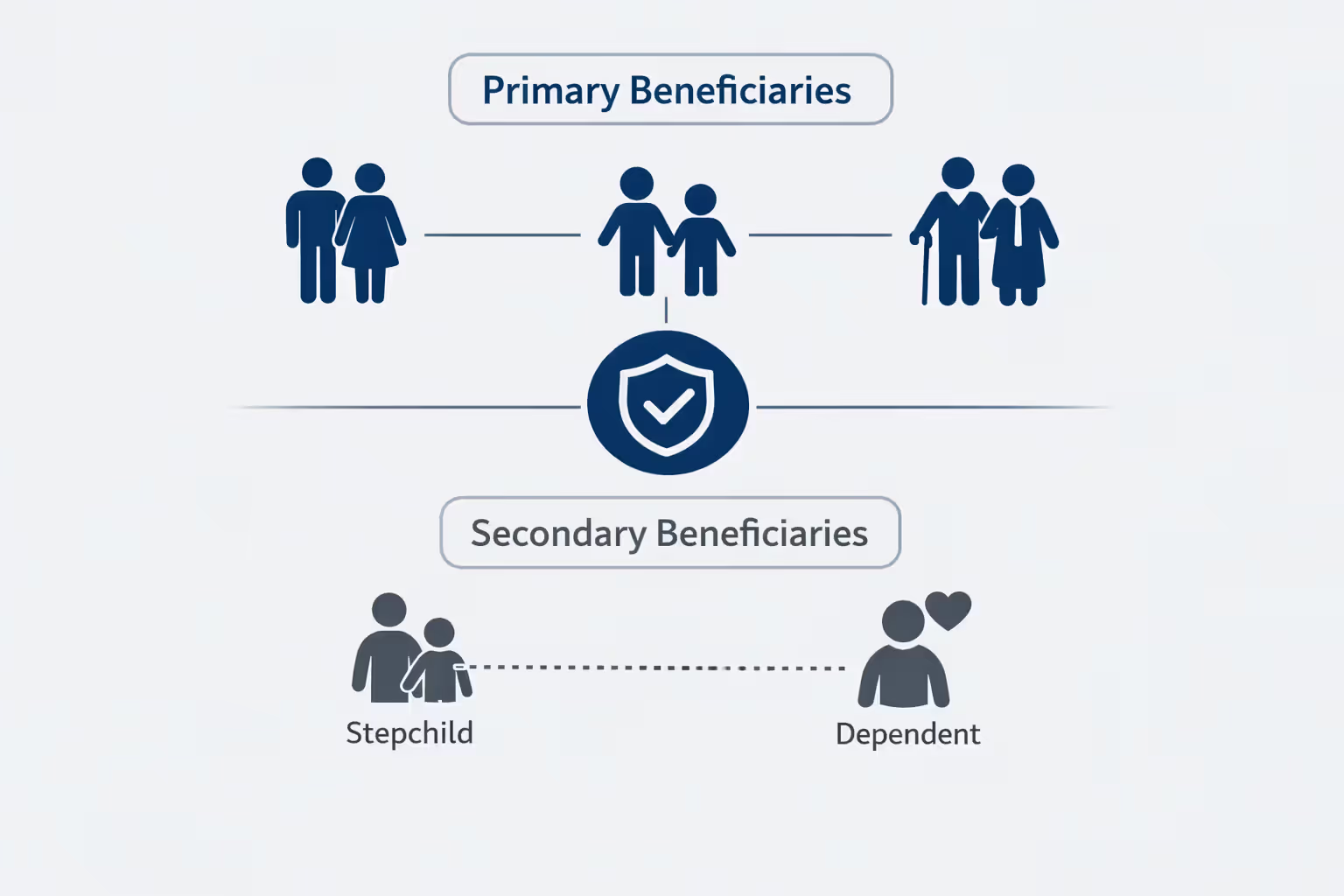
Primary beneficiaries get automatic standing. The spouse, domestic partner, children, and sometimes parents don't need to prove the deceased supported them financially. Their relationship alone gives them the right to file.
Secondary beneficiaries must demonstrate actual dependency. That stepchild who received substantial financial support? They'll need tax returns, bank records, proof of living arrangements. The younger sibling who depended on an older sibling's income? Same thing. Courts examine financial documents, household bills, who paid what.
Why does this matter? Because a financially independent adult child can still file as a primary beneficiary—they're recovering for emotional loss and companionship. But a financially independent stepchild has no standing at all.
Author: Daniel Whitford;
Source: mannawong.com
What Happens When Multiple Family Members Want to File
California law prevents multiple lawsuits from the same death. Imagine the chaos otherwise—a spouse files one case, three adult children file three more, both parents file separately. Defendants would face six trials for one death. Courts won't allow it.
Instead, everyone joins one lawsuit. Usually one person acts as the representative plaintiff, but the complaint lists all beneficiaries. When there's a settlement or verdict, the money gets divided based on each person's actual losses. A spouse who lost 40 years of companionship and substantial income typically receives more than an adult child who lived independently across the country.
Family disputes make these cases exponentially harder. I've seen cases where siblings disagreed about whether to accept a settlement offer. One wanted to settle for $800,000; another insisted on going to trial for potentially millions. When minor children are involved, courts sometimes appoint guardians ad litem to protect the kids' interests. Some families need mediation just to move forward.
Smart attorneys get families to agree early about decision-making authority and how any recovery will be split. Without those agreements, internal fighting can destroy otherwise solid cases.
Statute of Limitations: Filing Deadlines You Cannot Miss
California gives you two years from the date of death. Not from when the accident happened—from when your family member actually died. Miss that deadline, and your case vanishes. It doesn't matter how strong your evidence is or how clearly the defendant caused the death. The courthouse doors close permanently.
That two-year clock keeps ticking even when minor children are the primary beneficiaries. Some states pause deadlines for minors, but California generally doesn't. The adult representative must file within 24 months.
There's a limited exception called the discovery rule. Sometimes the cause of death isn't immediately obvious. An autopsy months later reveals medical malpractice. A toxicology report shows exposure to a chemical that killed someone slowly. In those situations, the two-year period might start when the family discovered (or reasonably should have discovered) the wrongful cause. But courts interpret this narrowly. You can't extend deadlines just because you didn't hire a lawyer quickly enough.
Now here's where things get really tight: government claims. If a city bus driver, county hospital staff, state employee, or any government worker or entity caused the death, different rules apply. You must file an administrative claim with the appropriate government office within six months of the death. Not two years—six months.
After filing that administrative claim, the government has 45 days to respond. If they deny it (and they usually do), you have six more months to file the actual lawsuit. If they simply ignore your claim for 45 days, you can treat that as a denial and proceed to court.
These government deadlines are absolutely unforgiving. File your lawsuit without completing the administrative claim process first? Automatic dismissal. Miss that initial six-month administrative deadline? You've lost your right to sue the government entity, period. Even if the two-year wrongful death deadline hasn't passed yet.
Talk to an attorney within weeks of the death, not months later. Evidence disappears. Witnesses forget details or move away. Calculating which deadline applies—especially with government claims or discovery rule questions—requires legal expertise.
Damages Available in California Wrongful Death Cases

Author: Daniel Whitford;
Source: mannawong.com
California divides wrongful death damages into two baskets: economic and non-economic. Unlike personal injury cases where the injured person recovers for their own suffering, wrongful death damages compensate survivors for what they've lost.
Economic damages cover financial losses you can calculate. Lost financial support typically represents the largest component. Consider a 35-year-old parent earning $85,000 annually with good benefits. Economists calculate what that person would've earned over their remaining work life—probably 30+ years—accounting for likely raises and promotions. They reduce that figure to present value (a dollar today is worth more than a dollar in 30 years). For high earners, this alone can reach several million dollars.
Funeral and burial costs are recoverable—cremation, memorial services, burial plots, headstones. The reasonable value of household services the deceased provided also counts as economic loss. Who's going to provide the childcare the deceased parent handled? Who's managing finances, maintaining the home, doing all the work the deceased contributed? Those services have real economic value.
Medical bills incurred before death usually fall under a related "survival action" rather than the wrongful death claim itself, but they're often pursued simultaneously.
Non-economic damages address losses that don't come with price tags. Loss of companionship and comfort. Loss of affection, moral support, guidance, protection. A spouse loses their life partner. Children lose a parent's love and guidance. These losses are absolutely real, though putting dollar amounts on them remains subjective.
Loss of consortium specifically addresses the intimate aspects of marriage—companionship, affection, sexual relations. Spouses recover separately for this.
One important distinction: the deceased person's own pain and suffering before death, or their lost future earnings and life enjoyment, belong to a survival action, not the wrongful death claim. California law allows both types of claims, but they're technically separate.
Types of Recoverable Damages in CA Wrongful Death Claims
| Damage Type | Economic Losses | Non-Economic Losses |
| What's Included | Future income and employment benefits, funeral and burial expenses, value of household services the deceased provided, pre-death medical costs (through survival action) | Loss of love and companionship, loss of guidance and moral support, loss of protection and care, loss of intimate marital relations |
| How It's Calculated | Economic experts project earnings, employment data establishes work-life expectancy, receipts document expenses | Juries consider relationship quality, how close family members were, severity of loss, testimony about daily interactions |
| Who Typically Receives It | Spouse and children who depended on the income | All qualifying family members based on their specific relationship with the deceased |
| Evidence Needed | W-2s, recent pay stubs, benefits statements, receipts for funeral costs, expert economist reports | Family testimony, photos and videos, text messages and emails, letters, witness accounts of relationships |
One crucial note about caps: California doesn't limit damages in most wrongful death cases. But medical malpractice cases fall under MICRA (Medical Injury Compensation Reform Act), which caps non-economic damages at $250,000. That cap only applies to non-economic losses—economic damages remain unlimited. Legislation to change this cap has been proposed repeatedly.
Punitive damages (meant to punish particularly egregious conduct) generally don't apply to wrongful death actions in California, though a survival action filed alongside might include them.
Step-by-Step: How to File a Wrongful Death Claim in California
Filing these claims involves distinct phases, each with specific requirements.
Start investigating immediately. Your attorney needs to gather police reports, medical records, autopsy reports, witness contact information, photos of the scene, and physical evidence. In car accidents, get the police report and any video footage—dashcams, traffic cameras, business surveillance cameras. Medical malpractice cases require comprehensive medical record review, often needing independent medical experts to analyze the care.
Identify every potentially responsible party. A drunk driver might be the obvious defendant, but what about the bar that kept serving them when they were visibly intoxicated? In workplace deaths, third-party equipment manufacturers or subcontractors might share liability beyond what workers' compensation covers. A complete investigation finds all defendants before settling with any of them.
File the complaint to start the lawsuit. California requires the complaint to name all beneficiaries, identify defendants, describe exactly what the defendants did wrong, and specify the damages you're seeking. Wrongful death complaints must be verified—meaning you sign under oath that the facts are true.
The discovery phase involves information exchange. Both sides conduct depositions (recorded testimony under oath), send interrogatories (written questions), request documents, and disclose expert witnesses. This typically takes six to eighteen months. Defense attorneys often argue the defendant wasn't liable, claim the deceased was partly at fault, or dispute damage amounts.
Settlement negotiations usually happen throughout the case. Most wrongful death claims settle before trial, often during formal mediation sessions. Any settlement involving minor children requires court approval—judges review proposed settlements to ensure they adequately compensate the minors.
Trial happens when settlement negotiations fail. Wrongful death trials involve witness testimony, expert opinions, and evidence presentation to a jury. Juries determine whether defendants are liable and what damages to award. These trials can last anywhere from a few days to several weeks depending on complexity.
Documents you'll need include: the death certificate, proof showing your relationship to the deceased (marriage license, birth certificates), financial records demonstrating dependency if you're a secondary beneficiary, evidence of the deceased's income and benefits, all medical records and the autopsy report, and receipts for funeral and burial expenses.

Author: Daniel Whitford;
Source: mannawong.com
Never speak directly with insurance adjusters representing the at-fault parties. Adjusters are trained to get statements they can use later to reduce or deny claims. Everything you say gets recorded and analyzed for inconsistencies.
Common Mistakes That Jeopardize California Wrongful Death Claims
Missing deadlines destroys cases. Families grieving a sudden loss don't think about lawsuits for months. By the time they consult an attorney a year and a half later, critical evidence has disappeared—witnesses have moved, surveillance footage has been deleted, memories have faded. Plus you're dangerously close to the statute of limitations.
Accepting early settlement offers typically leaves money on the table. Insurance companies sometimes approach grieving families within weeks of the death, offering what sounds like substantial money—maybe $100,000 or $200,000—in exchange for signing away all claims. For a family facing immediate funeral expenses and lost income, that sounds tempting. But when the deceased was a 40-year-old earning $75,000 annually, the true value of lost future support alone might be $2 million or more. Once you sign that release, you can't reopen the case later when you realize the settlement was grossly inadequate.
Inadequate documentation undermines your case. Families who throw away financial records, lose funeral receipts, or don't track the deceased's contributions to the household weaken their own claims. Keep organized records of everything—every expense, every financial document showing what the deceased earned or contributed.
Failing to pursue all responsible parties limits your recovery. When multiple parties share fault—like a drunk driver and the bar that overserved them, or a negligent physician and the hospital that employed them—going after only one defendant can leave significant compensation unclaimed. Thorough investigation matters, and it needs to happen before statutes of limitations cut off claims against some defendants.
Excluding eligible beneficiaries creates legal problems. If someone with legal standing gets left out of the lawsuit, they might lose their rights entirely. Courts want all potential claimants identified upfront. This prevents defendants from facing multiple lawsuits over the same death.
Social media posts become ammunition for defense attorneys. That family vacation photo you posted on Facebook? Defense attorneys screenshot it and argue your loss wasn't as devastating as you claim. Pictures of you smiling at a wedding? They'll use it to suggest you've moved on just fine. Defense teams routinely monitor plaintiffs' social media profiles hunting for anything that contradicts claimed damages.
Handling claims without attorneys almost guarantees lower recovery. Insurance companies employ professional adjusters and attorneys whose entire job involves paying as little as possible. Unrepresented families don't know how to calculate lifetime economic losses, don't understand procedural requirements, and lack negotiation leverage. Wrongful death attorneys work on contingency fees—meaning they only get paid if you recover money—so professional representation doesn't require upfront costs.
The wrongful death statutes California enacted give families a path to financial recovery after negligence kills someone they love. But these rights evaporate when families miss filing deadlines or accept lowball settlements before understanding what their claims are actually worth. The single most important decision families make is acting quickly enough to preserve evidence and protect legal rights while deadlines still allow it
— David Chen
Frequently Asked Questions About California Wrongful Death Law
California's wrongful death statutes give families real legal recourse after negligence or intentional wrongdoing kills someone they love. But these legal protections only help families who act within strict time limits and follow proper procedures. That two-year statute of limitations, the special government claim requirements, the complicated beneficiary hierarchy—all of it means taking action early matters enormously.
Understanding who qualifies to file under California law, what damages you can actually recover, and how to avoid the mistakes that sink claims gives your family a foundation for making informed decisions. Whether your loss came from a vehicle collision, medical error, workplace incident, or another wrongful act, documenting your relationship to the deceased, preserving evidence, and getting experienced legal advice quickly protects your rights.
Obviously no financial recovery brings your family member back or makes the grief easier. California's wrongful death statutes acknowledge that families shouldn't carry the financial devastation of losing someone when negligence caused that loss. Pursuing appropriate compensation protects your family's financial security and holds responsible parties accountable for the harm they caused.