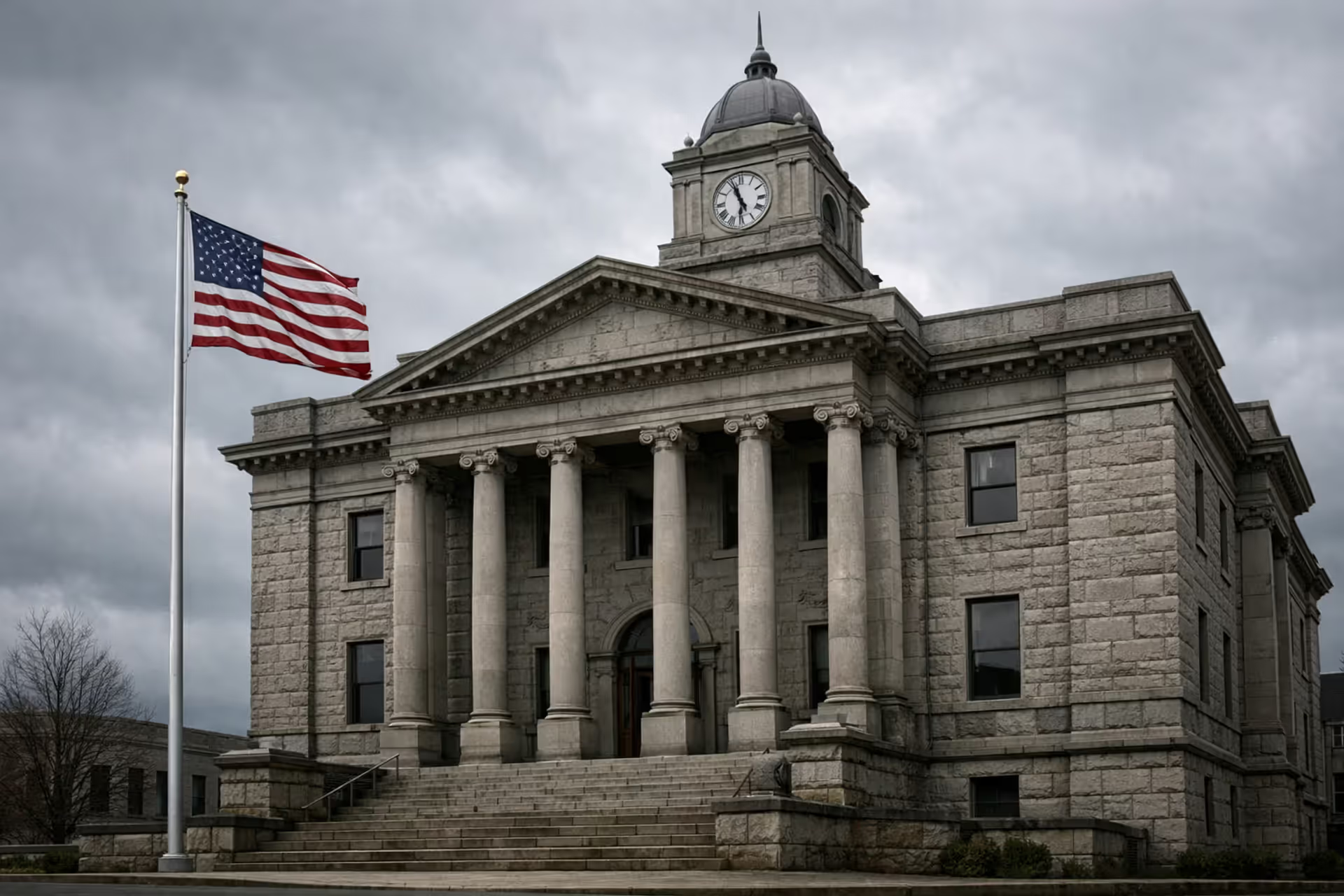
New Mexico courthouse entrance with adobe architecture and scales of justice under clear blue sky
New Mexico Wrongful Death Statute Guide

Content
Losing a family member to someone else's careless or reckless actions upends everything. Beyond the emotional devastation, New Mexico families face immediate legal questions: Can we hold the responsible party accountable? Who's allowed to file a lawsuit? How much time do we have?
NMSA § 41-2-3—New Mexico's wrongful death statute—answers these questions, but not always in ways families expect. The law sets rigid rules about who qualifies as a plaintiff, which relatives can receive compensation, and when the courthouse doors slam shut permanently. Get these details wrong, and even the strongest case dies before reaching a jury.
What Qualifies as Wrongful Death Under New Mexico Law
New Mexico recognizes a death as wrongful when someone's negligent behavior, reckless conduct, or deliberate actions cause it. Here's what matters: If your loved one had survived their injuries, would they have been able to sue? If yes, then NMSA § 41-2-3 likely applies after their death.
You won't find a requirement for criminal charges in the statute. Civil negligence alone opens the courthouse doors. A distracted driver who kills a pedestrian while texting faces wrongful death liability even without criminal prosecution. The legal standard sits lower than "beyond reasonable doubt"—you need only prove your case by "preponderance of evidence," essentially showing the defendant more likely than not caused the death.
Healthcare errors generate substantial wrongful death litigation in New Mexico. When a surgeon nicks an artery during a routine procedure and the patient bleeds out, that's actionable. When an emergency room sends someone home with "indigestion" that turns out to be a massive heart attack, and the patient dies hours later—that supports a claim. Medication errors, delayed diagnoses, surgical mistakes, and nursing home neglect all fit this category.
Traffic collisions—particularly those involving commercial vehicles on I-40 and I-25—create another major source of cases. A semi-truck driver who falls asleep after exceeding hours-of-service regulations, a drunk driver leaving a Santa Fe bar, a teenager racing on Albuquerque streets—each scenario potentially triggers liability.
Third-party workplace fatalities differ from standard workers' compensation cases. Yes, workers' comp covers most on-the-job deaths, but it doesn't compensate families fully and bars lawsuits against employers. However, when outside parties cause workplace deaths, separate wrongful death claims become available. That defective piece of equipment from an Ohio manufacturer? Fair game. The general contractor whose safety violations led to your loved one's fall? You can sue them while still collecting workers' comp.
Products liability extends wrongful death protection to deaths from defective goods. Exploding e-cigarettes, recalled airbags that deploy with deadly force, contaminated food products—manufacturers and sellers face exposure when their products kill.
Criminal acts don't prevent civil lawsuits; they enable them. O.J. Simpson's acquittal didn't stop the Goldman family from winning a massive civil judgment. New Mexico families routinely pursue wrongful death claims while criminal cases proceed separately. Did a bar overserve an obviously intoxicated patron who then caused a fatal crash? The bar faces civil liability regardless of the criminal case against the drunk driver.
Elder abuse in nursing facilities increasingly drives wrongful death litigation as Albuquerque's retirement communities expand. Bedsores that tunnel to bone, dehydration from understaffing, medication mix-ups, unexplained falls—when these "accidents" cause death, facilities answer in court.

Author: Michael Thornton;
Source: mannawong.com
Who Can File a Wrongful Death Claim in New Mexico
Here's where New Mexico law frustrates many families: You can't just hire an attorney and file suit because you're grieving and angry. The statute requires a personal representative appointed by the probate court to serve as plaintiff. Your spouse dies, and you want to sue immediately? Not until the court officially appoints you as personal representative—a process consuming weeks even when unopposed.
This personal representative files on behalf of specific statutory beneficiaries: surviving spouses, children, parents, and in limited circumstances, siblings. Notice who's missing? Domestic partners, even after decades together. Stepchildren without formal adoption papers. Fiancés weeks from their wedding. New Mexico courts won't stretch the statute to include these relationships, however sympathetic.
The Legislature wrote the beneficiary list, and courts refuse to expand it through interpretation. A 30-year domestic partnership with joint property and shared children? Under New Mexico law, the surviving partner has zero standing as a wrongful death beneficiary. It's harsh, but it's the rule.
Geographic location doesn't matter for beneficiary status. Parents living in Texas, adult children who relocated to Colorado, siblings across the country—all retain full rights if they fall within the statutory categories.
The statute of limitations is not simply a technicality—it is the gatekeeper of justice. Once the deadline passes, no amount of evidence, no depth of grief, and no degree of fault on the defendant’s part can reopen the courthouse doors. Time is the one resource grieving families cannot afford to waste
— Morris Dees
The Role of the Personal Representative vs. Beneficiaries
Think of the personal representative as the case's CEO. They're the named plaintiff on all court documents, they control major litigation decisions, and they hire and fire attorneys. But they don't pocket the money—beneficiaries receive the damages.
This creates interesting dynamics. A personal representative might want to settle for $500,000 while beneficiaries push for trial seeking millions. Or beneficiaries might want quick settlement money while the personal representative believes patience will yield better offers. The personal representative holds the legal authority to decide, but must act in beneficiaries' best interests—not their own.
Courts maintain oversight, especially when minor children stand to inherit. Before finalizing settlements, personal representatives typically petition for court approval, presenting the terms and explaining why the deal serves beneficiaries' interests. Judges scrutinize these settlements carefully, sometimes rejecting offers they consider inadequate.
Personal representatives who abuse their position—taking secret side payments from defendants, settling cases without beneficiary input, or mismanaging litigation—can be removed. Any beneficiary can petition the court for the representative's removal and appointment of a replacement.
What Happens When Multiple Family Members Disagree
Imagine this: Dad dies in a medical malpractice case. Mom wants to settle immediately for $750,000 to pay off the mortgage and stop reliving the trauma. The three adult children want to proceed to trial, believing the case is worth $3 million. The personal representative must choose, knowing any decision alienates part of the family.
New Mexico courts generally back the personal representative's judgment unless someone proves bad faith or gross negligence. Still, smart personal representatives seek consensus. Some form informal advisory committees of major beneficiaries to discuss strategy. Others schedule regular family meetings to explain developments and gather input.
When disagreements become irreconcilable, beneficiaries can petition for the personal representative's removal, though courts grant such requests sparingly. More commonly, a skilled mediator helps families work through conflicts by stress-testing assumptions, evaluating risk, and finding common ground.
Distribution calculations cause additional friction. New Mexico doesn't mandate that a surviving spouse gets 50% and three children split the remainder. Instead, courts distribute proceeds "in the proportion that the pecuniary loss of each bears to the total pecuniary loss of all"—legal speak for "it depends." A spouse who relied on the deceased's income receives more than financially independent adult children. A 10-year-old losing a parent's lifetime of support receives more than an 80-year-old parent losing an adult child. Juries or judges weigh financial dependency, emotional relationships, and individual circumstances.
Critical Deadlines for Filing NM Wrongful Death Claims
Three years from the date death occurs. That's your window under the New Mexico wrongful death statute. Day 1,096 arrives, and the courthouse doors lock permanently—no exceptions for sympathetic circumstances, no judicial discretion to grant extra time, no "we were still investigating" excuses.
The clock's starting point matters. Your loved one gets injured in a January car crash, lingers in ICU for eight weeks, then dies in March. The three years runs from March, not January. This distinction affects families who watch a loved one decline slowly after an initial incident.
A narrow exception called the discovery rule applies when families couldn't reasonably have discovered the wrongful conduct earlier. Say a surgeon leaves a sponge inside a patient, who dies months later from infection, but no one realizes the surgical error until an autopsy reveals it. The statute might not start running until that discovery. But New Mexico courts apply this exception stingily—you must prove diligent investigation wouldn't have uncovered the problem sooner.
Minor beneficiaries receive protection through tolling provisions. If a child loses both parents and becomes the sole beneficiary, the three-year clock might pause until that child turns 18. However—and this trips up families—tolling doesn't apply when adult beneficiaries exist alongside the minor. If Mom dies leaving Dad and three minor children, the personal representative must file within three years to protect everyone.
Government defendants trigger completely different rules under the New Mexico Tort Claims Act. You must provide written notice within 90 days—not three years, 90 days—describing the claim, identifying potential claimants, and stating damages sought. Miss that 90-day window, and your claim dies regardless of merit. Then, after providing proper notice, you have two years (not three) to file suit.
Medical malpractice wrongful death cases carry additional hurdles. New Mexico requires medical review commission screening before trial, adding six to twelve months to the process. Smart attorneys file complaints well before the deadline to accommodate these extra steps.

Author: Michael Thornton;
Source: mannawong.com
Damages Available in New Mexico Wrongful Death Cases
New Mexico wrongful death damages divide into categories with different rules and no statutory caps on most types:
| Damage Type | Examples | Calculation Method | Cap/Limitation |
| Financial losses | Emergency medical treatment, hospital bills, funeral services, burial plots, lost wages through working years, lost employment benefits, household service value | Hospital billing records, funeral invoices, expert economist projections using actuarial tables, vocational expert testimony | None under pure wrongful death statute |
| Relationship losses | Spousal companionship, parental guidance for children, consortium, emotional support, lost presence at life milestones | Jury evaluates relationship quality, duration, and circumstances with broad discretion | None for wrongful death claims |
| Survival components | Pre-death conscious pain, suffering between injury and death, punitive damages for willful/wanton conduct | Separate statutory claim with different standards; medical records document consciousness and suffering | Punitive damages require malice/fraud proof |
Financial damages start with medical bills accumulated between injury and death. Every ambulance ride, emergency room visit, surgery, ICU day, medication, and test gets included. These can reach hundreds of thousands before someone passes away after weeks of treatment.
Funeral expenses get recovered too—caskets, services, burial plots, headstones, cremation costs. New Mexico courts have approved recovery for culturally significant ceremonies exceeding typical expenses when families justify the costs. A traditional Native American ceremony costing $20,000 might be reasonable; a $100,000 extravaganza faces scrutiny.
Lost future income typically represents the largest financial component. Economic experts project earnings from date of death through retirement, adjusting for likely promotions, raises, and career progression. A 35-year-old petroleum engineer earning $120,000 annually generates millions in lost income projections. A 68-year-old retiree generates far less.
These calculations consider education, work history, industry trends, and demonstrated career trajectory. Someone with an established pattern of promotions and raises every two years gets higher projections than someone with stagnant employment. Experts factor in raises, bonuses, and inflation, then discount to present value.
Employment benefits beyond salary matter too—401(k) contributions, health insurance, stock options, profit sharing. For business owners, experts analyze financial statements to project lost income from the business.
Household services compensation acknowledges that stay-at-home parents, homemakers, and anyone managing household tasks provides economic value. Cooking meals, cleaning, maintaining the yard, managing finances, providing childcare, driving kids to activities—all have replacement cost value. Courts let families present evidence of what hiring help would cost: nannies, housekeepers, gardeners, accountants, drivers.
Relationship losses compensate intangible harms juries evaluate subjectively. A wife loses her husband's companionship, emotional support, and physical relationship. Kids lose their dad's guidance, presence at graduations and weddings, and daily involvement in their lives. Parents who bury children suffer profound grief without financial calculation methods.
New Mexico imposes no cap on these damages in standard wrongful death cases, unlike some states that limit "pain and suffering" or "loss of companionship" to arbitrary amounts. Juries have complete discretion to award $100,000 or $10 million based on evidence and argument.
Punitive damages require understanding a crucial distinction. The wrongful death statute itself doesn't authorize punitive damages—it's a compensation-focused remedy. However, a companion claim called a survival action allows estates to pursue the deceased's own claims, including punitive damages when defendant conduct was malicious, fraudulent, oppressive, or reckless.
Example: A drunk driver with four prior DUI convictions kills someone. The wrongful death claim seeks compensatory damages for the family's losses. The survival action seeks punitive damages for the deceased's own claims based on the driver's reckless disregard for safety. Both claims proceed together but serve different purposes.
Step-by-Step Process for Filing a Wrongful Death Claim in New Mexico
Start in probate court, not where you might expect. Before any wrongful death lawsuit gets filed, someone must petition for appointment as personal representative. You'll submit the death certificate, information about potential heirs, and other probate documents. Courts schedule hearings, and if unopposed, appointments happen within three to four weeks. Contested appointments take longer.
Once appointed, the personal representative receives letters testamentary—official documents proving authority to act on behalf of the estate. Without these letters, no attorney will file a wrongful death complaint.
Investigation consumes the next phase. Attorneys subpoena medical records, obtain accident reports, interview witnesses, collect employment records and financial documents. Expert witnesses—accident reconstructionists for vehicle cases, medical experts for malpractice, economists for damage calculations—review materials and form preliminary opinions.
This phase can last months. Medical malpractice investigations often take six to twelve months just gathering and reviewing records from multiple providers. Product liability cases might require engineering analyses of failed components. Complex cases demand thorough investigation before filing.
Filing the complaint launches the lawsuit officially. Personal representatives, through their attorneys, file detailed complaints in New Mexico district court—typically where death occurred or where defendants reside. Complaints must allege specific facts supporting each claim element and identify damages sought. You can't just say "defendant was negligent"—you must explain precisely how their conduct breached duties and caused death.
Discovery follows, letting both sides exchange information through several mechanisms. Depositions involve sworn testimony from witnesses, family members, defendants, and experts, usually in attorneys' offices with court reporters transcribing everything. Written interrogatories pose specific questions requiring written answers under oath. Document requests seek production of relevant records. Expert disclosures require each side to reveal their experts' opinions before trial.
Defense attorneys depose grieving family members about the deceased's life, health, relationships, income, and household contributions. It's uncomfortable but necessary. Plaintiff attorneys depose defendants about circumstances causing death, safety protocols, and what went wrong.
Settlement negotiations occur throughout litigation, not just at the end. Defense attorneys might extend offers during discovery. Mediators often get involved—neutral third parties who meet with both sides, evaluate case strengths and weaknesses, and facilitate compromise. Many wrongful death cases settle at mediation.
Evaluating settlement offers requires careful analysis. That $500,000 offer sounds substantial, but does it reflect full value when economic projections show $2 million in lost income alone? Or does trial risk—unpredictable juries, sympathetic defendants, comparative negligence arguments—make the certain settlement smarter than the risky trial?
Trial becomes necessary when settlement talks fail. New Mexico wrongful death trials typically last three days to three weeks depending on complexity. Juries hear opening statements, witness testimony, expert opinions, closing arguments, then receive judicial instructions before deliberating. Verdicts range from nominal (sometimes just funeral expenses) to eight figures.
Distribution to beneficiaries follows judgment or settlement. Personal representatives petition courts for approval to distribute proceeds according to each beneficiary's proportionate loss. Attorney fees (typically 33-40% on contingency) and litigation costs get deducted first, then remaining proceeds get allocated among beneficiaries per court order.
A wrongful death case is never just about money—it is about accountability, about sending a message that a human life had value and that those responsible must answer for their negligence. The legal process, however imperfect, remains the only civilized mechanism society offers for that reckoning
— Gerry Spence
Common Mistakes That Jeopardize New Mexico Wrongful Death Claims
Blowing the statute of limitations deadline destroys more valid claims than any other mistake. Families grieve for six months, spend another six months finding the right attorney, then more months investigating—suddenly two years have evaporated. Rush the investigation in year three, miss something crucial, and the case weakens. Courts show zero sympathy for blown deadlines absent extraordinary circumstances that almost never exist.
Filing suit without completing probate appointment gets complaints dismissed immediately. Some families, desperate to preserve evidence or beat deadlines, have attorneys file before the personal representative appointment finalizes. Defense counsel moves to dismiss for lack of standing, judges grant the motions, and now the clock's running on an invalid lawsuit. Refile properly, but you've lost valuable time.
Sloppy damage documentation undermines compensation. Families who throw away receipts, lose financial records, or fail to document the deceased's contributions to household and family life can't prove substantial damages later. Keep every funeral receipt, every medical bill, every financial statement. Document in writing the deceased's daily contributions to family life—who will verify these contributions two years later if you don't?
Jumping on early settlement offers costs families dearly. Insurance adjusters sometimes approach grieving families within days or weeks, offering quick settlements that sound large initially but represent a fraction of true value. "$200,000 right now, no hassle, no lawyers, just sign here" sounds appealing when you're overwhelmed. But that case might be worth $2 million, and once you sign the release, you're done. Never settle without legal counsel reviewing the offer.
Missing potential defendants limits recovery. The drunk driver has minimum insurance coverage—$25,000. That's insufficient for a death case, but what about the bar that overserved him? The vehicle manufacturer whose defective brakes contributed? The city whose poorly maintained intersection created hazards? Thorough investigation identifies every potential defendant and maximizes available insurance.
Letting evidence disappear sinks cases. Vehicles get repaired or junked. Accident scenes change as weather and time pass. Witnesses move or forget details. Surveillance footage gets recorded over. Medical records get archived. Social media posts get deleted. Document and preserve everything immediately—photograph scenes, download videos, secure vehicles, interview witnesses, obtain records.

Author: Michael Thornton;
Source: mannawong.com
Frequently Asked Questions About New Mexico Wrongful Death Law
This principle governs every wrongful death case in New Mexico. Courts won't stretch the statute beyond its explicit terms, won't add beneficiaries the Legislature omitted, and won't forgive procedural failures. Families must navigate within the statute's framework or lose their claims entirely.
New Mexico's wrongful death statute provides crucial accountability for preventable deaths, but its technical requirements and unforgiving deadlines demand immediate, informed action. Personal representatives must obtain probate appointments, conduct thorough investigations, identify all potentially liable parties, and build compelling cases documenting every element of damages—all within time constraints that show no mercy for delays.
Families confronting wrongful death situations should consult experienced New Mexico attorneys immediately after losing a loved one. Early consultation preserves crucial evidence, protects legal rights, and ensures compliance with procedural requirements that courts enforce strictly. The combination of overwhelming grief and complex legal technicalities creates nearly impossible challenges for families navigating alone, but understanding the wrongful death statute's framework provides a starting point for pursuing accountability and securing compensation families need to rebuild their lives.