
Judges gavel resting on legal documents next to a framed family photo representing wrongful death lawsuit concept
Wrongful Death Lawsuit Explained

Content
Losing a family member to someone else's carelessness or reckless behavior brings crushing emotional pain—and often, immediate money problems that make everything worse. There's the hospital bill from those final days. Funeral expenses you hadn't budgeted for. The paycheck that simply stops coming. Rent or mortgage payments that don't pause for grief.
A wrongful death lawsuit lets you hold responsible parties accountable and recover compensation when negligence kills someone you love. But here's what catches most families off guard: this isn't a criminal case. You're not sending anyone to jail. You're filing a civil claim seeking monetary damages for specific losses your family suffered—lost income, companionship, guidance, and the financial contributions your loved one would have made for years to come.
Every state handles these cases differently. Filing deadlines vary. Who's allowed to sue changes depending on where you live. Miss a procedural requirement, and you might lose your right to compensation entirely, no matter how strong your case looks. Understanding these rules before you start matters more than most people realize.
What Qualifies as a Wrongful Death Under US Law
You can file a wrongful death claim when someone dies because another person or company acted negligently, recklessly, or intentionally caused harm. Think of it this way: if your loved one had survived their injuries, would they have had a valid personal injury lawsuit? If yes, their death likely qualifies for a wrongful death case.
Car accidents kill thousands annually. A driver texting through a red light, a drunk driver swerving across lanes, someone speeding through a school zone—these crashes become wrongful death cases when they turn fatal. Medical errors account for significant deaths too. Surgeons operating on the wrong body part, emergency room doctors missing obvious heart attack symptoms, pharmacists dispensing incorrect medications at lethal doses—all potential grounds for claims.
Workplace deaths happen more often than you'd think. Construction workers fall from scaffolding that wasn't properly secured. Factory employees get caught in machinery their employer knew was dangerous. Warehouse workers die when supervisors ignore safety protocols to meet quotas. Nursing home residents suffer fatal neglect when facilities cut corners on staffing. Defective products—from exploding airbags to contaminated food—kill consumers who trusted they were safe.
Proving your case requires establishing four elements. First, the defendant owed your family member a duty of care. Drivers owe other motorists safe operation of vehicles. Doctors owe patients competent medical treatment. Employers owe workers reasonably safe working conditions. Second, they breached that duty through action or inaction. Third, their breach directly caused the death (not some unrelated factor). Fourth, your family suffered quantifiable damages as a result.
Here's an example: A trucking company requires drivers to make deliveries on schedules that force them to skip mandatory rest breaks. One exhausted driver falls asleep at the wheel and crosses the centerline, killing another motorist. That company had a duty to follow federal safety regulations. They breached it by creating impossible schedules. Their breach caused the fatigue that caused the crash that caused the death. The victim's family lost financial support and companionship.
One thing confuses people constantly—the difference between wrongful death claims and survival actions. They're separate lawsuits, though families often file both together. Survival actions seek compensation for what the deceased personally experienced between injury and death: their pain, suffering, medical bills, lost wages during that period. Those damages belonged to the person who died, so they become part of their estate. Wrongful death claims compensate survivors for losses they experience after the death: future lost income, loss of guidance and companionship, funeral costs. Some states combine these; others keep them completely separate with different rules for each.
Multiple parties might share liability. When a delivery driver dies in a collision, you might sue the other driver who ran the stop sign, the municipality that ignored complaints about obscured traffic signs at that intersection, and the auto manufacturer whose defective brakes prevented the other vehicle from stopping in time. Each defendant gets evaluated individually for their contribution to the fatal outcome.
The civil justice system exists not to punish, but to restore. When a family loses someone to another’s negligence, no verdict can undo the harm — but a wrongful death claim can ensure that the financial devastation doesn’t compound the emotional one. Accountability through the courts is how society says: this loss mattered, and it will not be ignored.
— Ralph Nader
Who Can File a Wrongful Death Claim in Your State
Not everyone affected by a death can file a lawsuit. State laws strictly limit who has "standing"—the legal right to bring a case. This matters tremendously because filing without proper standing gets your case dismissed immediately.
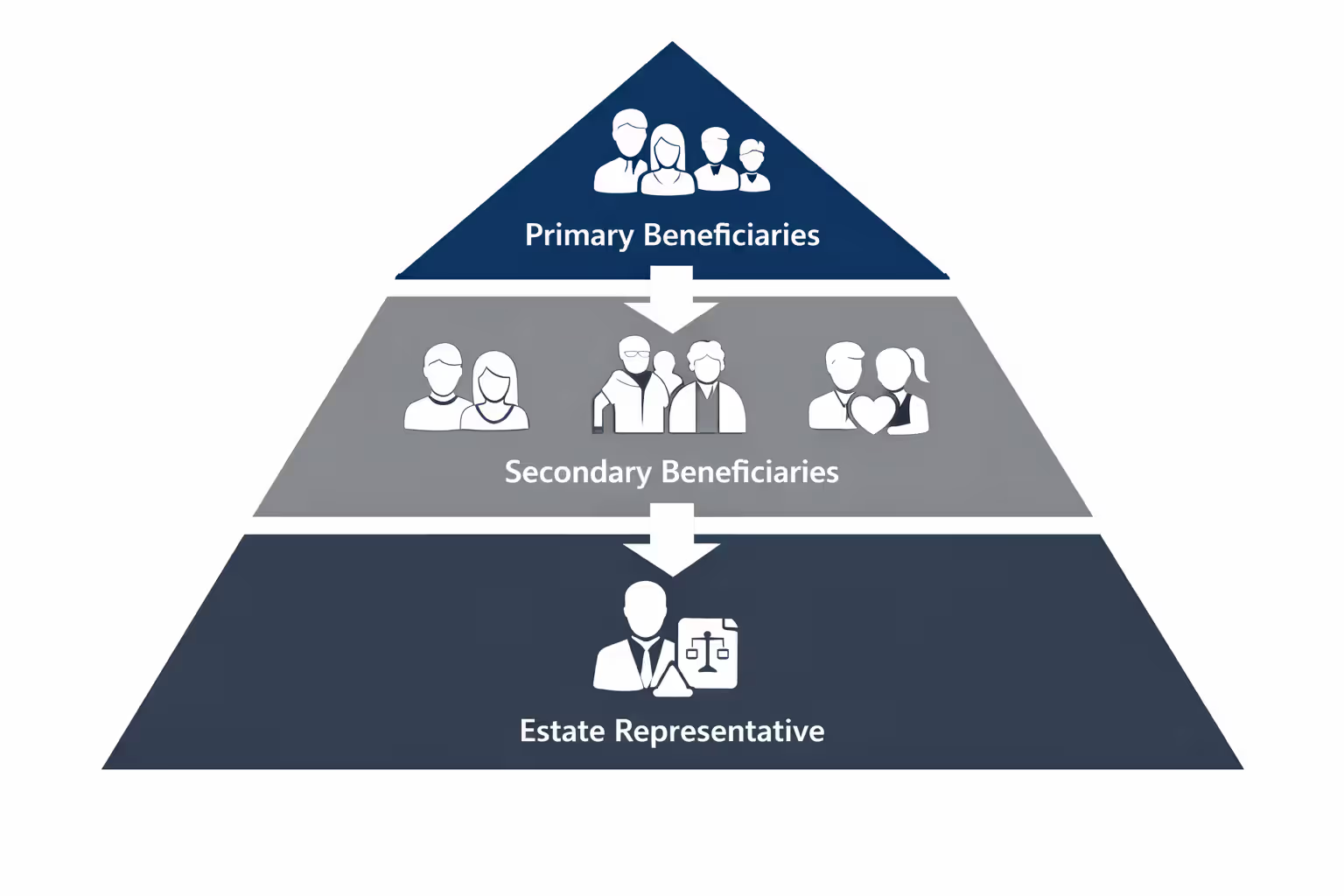
Primary vs. Secondary Beneficiaries
Most states give first priority to immediate family: spouses, children (biological and adopted universally, stepchildren sometimes if they depended financially on the deceased), and parents when the deceased wasn't married. These folks usually don't need to prove they depended on the deceased financially—their relationship alone establishes standing.
Secondary beneficiaries vary wildly by state. Some states recognize domestic partners if you shared a committed relationship, even without marriage. Siblings might qualify if they received financial support from the deceased. Grandparents who were raising the deceased or whom the deceased supported financially may have rights. Grandchildren sometimes qualify if their parent (who would have had standing) already died. A sibling who contributed to shared household expenses with their brother might establish standing in certain states.
Here's where it gets complicated: many states require that a personal representative or estate executor file on behalf of all beneficiaries, even when specific family members will ultimately receive the money. This prevents multiple lawsuits over the same death and ensures everyone's working from the same strategy. Other states let individual family members file their own cases, though courts usually consolidate them if several relatives sue separately.
Author: Michael Thornton;
Source: mannawong.com
State-Specific Eligibility Differences
Because Congress never created a federal wrongful death law, each state wrote its own statute. The differences are dramatic:
| State | Who Files | Extended Family Rights | Must an Estate Rep File? |
| California | Spouse, domestic partner, kids, grandkids (if their parent predeceased the victim) | Parents or siblings who can prove financial dependence | No |
| Texas | Only spouse, children, parents | No extensions beyond immediate family | No |
| Florida | Estate personal representative only | Compensation goes to spouse, children, parents, blood/adoptive siblings with some dependency | Yes—mandatory |
| New York | Estate personal representative only | Follows intestacy laws for distribution | Yes—mandatory |
| Illinois | Estate personal representative only | Spouse and next of kin receive distributions | Yes—mandatory |
| Ohio | Estate personal representative only | Determined by survival action statutes | Yes—mandatory |
| Pennsylvania | Estate personal representative only | Spouse, children, parents as beneficiaries | Yes—mandatory |
| Georgia | Spouse and children (equal priority), then parents, then estate if no family exists | No provisions past immediate family | Only if no immediate family |
| Michigan | Estate personal representative only | Spouse, children, descendants, parents, siblings, grandparents | Yes—mandatory |
| Arizona | Spouse, children, parents, or estate rep if no closer family | Guardians or others entitled to support/wages | Depends on situation |
Look at Florida versus California—completely opposite approaches. In Florida, even a grieving spouse can't file directly. They must get appointed as personal representative through probate court first, or convince whoever is appointed to file the case. California lets multiple qualifying relatives file individually or as a group.
Unmarried partners face the toughest obstacles. You could have lived with someone for twenty years, raised children together, shared every expense, and considered yourselves married in every way except legally—but in most states, you have zero standing to file. Some couples have successfully argued common-law marriage recognition where state law permits it, but that requires proving specific elements that vary significantly.
Step-by-Step Process for Filing a Wrongful Death Claim
Here's how these cases typically unfold, though timelines depend on your specific situation.
Start by figuring out who's legally allowed to file. Pull up your state's wrongful death statute—you can find it through a quick internet search or by asking a lawyer. If your state requires a personal representative to file, someone needs to petition the probate court for appointment, which takes several weeks minimum. Get family members on the same page early. Internal fights about whether to sue or which attorney to hire create delays you can't afford.
Gathering Evidence and Documentation
Strong cases depend on comprehensive proof assembled quickly, before crucial evidence disappears. Security camera footage gets erased after 30, 60, or 90 days. Witnesses move away or their memories fade. Physical evidence gets disposed of or altered.
You'll need the death certificate showing cause of death. Collect every medical record from treatments your loved one received before death—hospital stays, doctor visits, ER records, everything. Get the autopsy report and coroner's findings. Police reports if there was an accident or crime. Employment records showing your loved one's salary, benefits, and work history. Tax returns demonstrating financial contributions to family members. Photos of the accident scene, defective product, or hazardous condition that caused the death.
Car crash cases require the other driver's insurance information, surveillance footage if available, photos of vehicle damage, and toxicology reports if drugs or alcohol played a role. Medical malpractice situations need complete hospital charts, doctor's notes, test results, medication records, and expert physician review showing how the healthcare provider violated standard medical practices. Workplace deaths require OSHA investigation reports, safety inspection records, equipment maintenance logs, and employer accident reports.
Document your financial losses: funeral and burial invoices, medical bills from final treatment, proof of mortgage/rent payments and household expenses, records of your loved one's financial contributions to dependents, documentation of lost benefits like health insurance or retirement contributions.

Author: Michael Thornton;
Source: mannawong.com
Michael Burwick, a partner at Burwick Law who handles wrongful death cases, puts it bluntly: "The first 72 hours after someone dies are make-or-break for evidence preservation. Families are planning funerals and processing shock—completely understandable. But witnesses are forgetting details, surveillance systems are overwriting files, and physical evidence is disappearing. We've won cases because we got involved immediately and preserved evidence that would've vanished within a week. We've also seen families wait a month before calling us, and by then, crucial proof was gone forever."
Filing Deadlines and Statute of Limitations
Every state imposes rigid deadlines for filing—usually one to three years from the date of death. Miss that deadline by even one day, and you lose your right to sue permanently. Very few exceptions exist.
Two years is the most common deadline across states. The clock typically starts on the death date, not when the injury occurred or when you discovered negligence caused the death. So if your father got injured in March but died from complications in September, the deadline probably runs from September.
Certain situations modify standard deadlines. Some states pause the clock if defendants leave the state for extended periods. If there's a murder and criminal proceedings are pending, some states extend civil filing deadlines until the criminal case concludes. Cases involving minor children sometimes allow extended timeframes—if both parents die, children might retain the right to sue until they turn 18 plus the standard limitations period.
Government defendants follow different rules entirely. Suing a city, county, state, or federal agency often requires filing an administrative claim notice within six months, following strict format requirements. Only after the government denies your claim or lets the response period expire can you file an actual lawsuit. Missing the administrative notice deadline kills your case before it starts.
Some families discover negligence long after a death. A widow might learn five years later that her husband's fatal cancer came from asbestos exposure his employer deliberately concealed. Selected states apply a "discovery rule" that starts the limitations period when you reasonably should have discovered the wrongful conduct, but this remains controversial with narrow application.
Actually filing requires drafting a legal complaint that names all defendants, explains the factual basis for your claims, specifies the legal theories of liability, lists the damages you're seeking, and identifies all qualifying beneficiaries. You file this with the appropriate court—typically the county where death occurred or where defendants live—and pay filing fees that vary by location.
What Damages Can You Recover in a Wrongful Death Case
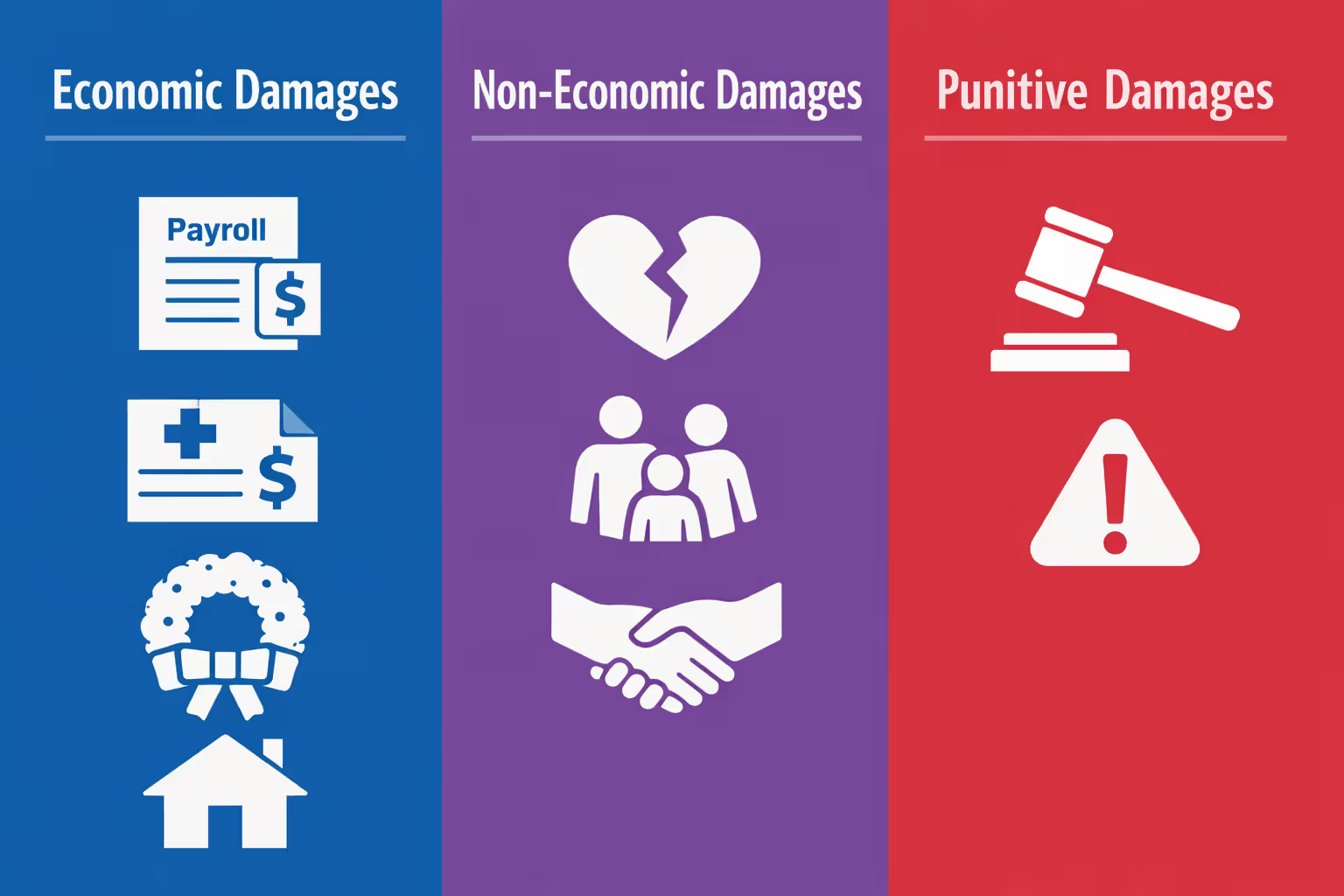
Money can't replace someone you love, but wrongful death compensation attempts to restore your family's financial position to where it would be if the death hadn't occurred. States categorize recoverable losses differently, but most recognize both economic and non-economic damages.
Economic damages include medical costs from your loved one's final illness or injury, even if insurance already paid them. Funeral and burial expenses—often capped at $10,000-$15,000 in many states—qualify for recovery. Lost earnings represent the wages and employment benefits the deceased would have earned throughout their expected working life, calculated as present-day value. A 35-year-old earning $60,000 annually with 30 working years ahead represents massive economic loss—potentially $1.8 million before adjusting for projected raises and inflation.
Author: Michael Thornton;
Source: mannawong.com
Don't forget lost benefits: health insurance coverage the family lost when your loved one died, retirement account contributions that stopped, stock options that expired, and other employment perks. When someone provided unpaid household services—childcare, home repairs, cooking, financial management—you can claim the cost to replace those services. Stay-at-home parents' economic contributions, valued at market rates for childcare, housekeeping, and other services they performed, often exceed $100,000 annually.
Non-economic damages address losses you can't calculate on a spreadsheet: a spouse's lost companionship and intimacy, children losing parental guidance and protection, the emotional trauma survivors experience. These subjective damages vary enormously based on relationship quality, ages involved, and state standards. Some states cap non-economic damages, especially in medical malpractice cases, at anywhere from $250,000 to $1 million.
Punitive damages punish especially outrageous misconduct beyond simply compensating victims. They apply only when defendants acted with intentional malice or showed reckless disregard for human life. A drunk driver with four prior DUI convictions might face punitive damages. A manufacturer that knowingly sold defective products after internal testing revealed fatal risks could face substantial punitive awards. Many states prohibit or severely limit punitive damages in wrongful death cases, while others allow them but require clear and convincing proof of malicious conduct.
Some states let you recover for pain and suffering the deceased experienced between injury and death through survival actions filed alongside wrongful death claims. If your mother suffered for five days before dying from her injuries, her estate might recover compensation for those five days' pain, separate from the family's wrongful death damages.
How settlements get divided depends on state law and how many qualifying beneficiaries exist. Some states split recoveries equally among all eligible survivors. Others allocate based on dependency—spouses who relied entirely on the deceased's income might get larger shares than financially independent adult children. Courts typically must approve settlement distributions, especially when minor children qualify as beneficiaries.
Common Mistakes That Weaken Wrongful Death Claims
Even strong cases fail due to avoidable errors. Families dealing with grief while navigating complex legal procedures frequently make mistakes that reduce compensation or destroy claims completely.
Missing the statute of limitations deadline is the worst possible mistake. Families sometimes wait, hoping criminal proceedings will finish first or thinking they need more time to grieve before dealing with legal issues. Once the deadline passes, no amount of evidence or sympathetic circumstances can revive your case. Calendar that deadline immediately and work backward from it.
Talking to insurance adjusters without an attorney often backfires. Adjusters sound sympathetic but work to minimize their company's payout. They ask strategically worded questions designed to get answers that hurt your case. Say your loved one "seemed healthy" before a fatal medical procedure, or mention they "sometimes drove fast" before a crash another driver caused, and you've just handed the defense ammunition to deny or slash your claim. Politely decline to give statements until you have legal representation.
Accepting quick settlement offers before understanding full damages costs families huge amounts. An insurer might offer $100,000 within days of a death, which sounds generous when you're facing immediate expenses. But if the deceased was a 40-year-old primary earner, actual lifetime losses could exceed $2 million in economic damages alone. Once you accept payment and sign a release, you can't reopen the case after realizing the settlement was grossly inadequate.
Failing to preserve evidence lets defendants create alternative stories. Repairing or throwing away the defective product that caused death, or junking the crashed vehicle before expert inspection, eliminates crucial physical proof. Photograph everything, keep all physical items connected to the fatal incident, and secure copies of documents before they disappear.
Evidence is the backbone of every wrongful death case. Without it, even the most deserving families walk away empty-handed. The hardest part isn’t proving someone was negligent — it’s making sure the proof still exists by the time the case reaches a courtroom. Time destroys what lawyers need most
— Morris Dees
Social media creates discoverable evidence defense lawyers will use against you. Photos of family vacations or celebrations after the death might be presented as proof survivors aren't experiencing the emotional devastation they claim. Comments about the case, your loved one's lifestyle, or your financial situation all become potential evidence. Assume anything you post online will eventually show up in court.
When family members give inconsistent testimony, it severely damages credibility. If your statements about the deceased's income contradict what your sibling says, or medical history descriptions vary between relatives, defense attorneys highlight these discrepancies to suggest you're all unreliable. Family members should stick to factual accuracy but never coordinate false stories—that's fraud.
Hiring lawyers without wrongful death experience, or trying to represent yourself, usually produces substantially lower compensation. These cases involve complex legal and medical issues, require coordinating expert witnesses, and demand negotiation skills developed through specialized practice. General attorneys or personal injury lawyers without specific wrongful death experience often miss critical details that determine outcomes.
How Long Does a Wrongful Death Claim Take to Resolve
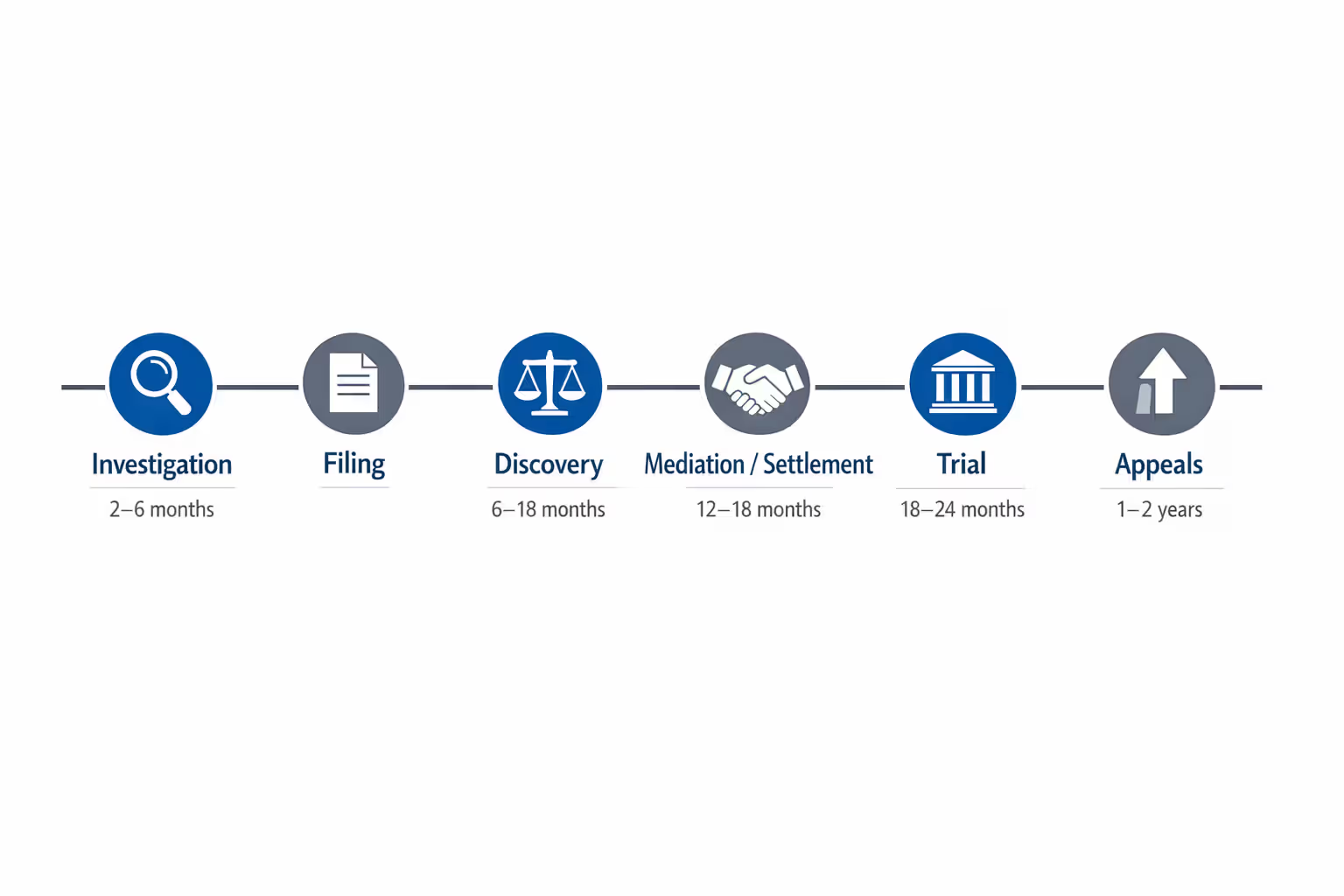
Timeline predictions vary dramatically based on case complexity, defendant cooperation, and whether you settle or go to trial. Straightforward cases with clear liability and cooperative insurers might resolve in 6-12 months. Complex cases with multiple defendants, disputed liability, or substantial damages commonly take 2-4 years or longer.
Investigation and initial filing typically consume 2-6 months. Your attorney gathers evidence, consults experts, identifies all potentially liable parties, and prepares formal complaints. Sometimes you need to file before fully investigating everything to meet the statute of limitations—miss that deadline and your claim dies permanently.
After filing, the discovery phase begins—both sides exchange documents, conduct witness depositions, and build evidentiary support. This usually takes 6-18 months depending on complexity and court scheduling. Defense lawyers often use discovery to delay proceedings and increase your litigation costs, hoping financial pressure forces you to accept lowball settlements.
Settlement negotiations can happen throughout but often intensify after discovery when both sides understand evidentiary strengths and weaknesses. Mediation—where neutral facilitators guide settlement discussions—resolves many cases without trial. When both sides negotiate reasonably, settlement might occur 12-18 months after filing.
Cases that don't settle proceed to trial, adding substantial time. Court congestion means trial dates often get scheduled 18-24 months after filing, then frequently get postponed due to conflicts or docket pressures. Trials themselves last anywhere from days to weeks depending on complexity. Jury deliberations add unpredictable time.
Post-trial motions and appeals can extend final resolution another 1-2 years. Losing parties might challenge verdict validity or appeal unfavorable decisions to higher courts. During pending appeals, winners don't receive any compensation.
Several factors speed up or slow down resolution. Clear liability backed by indisputable proof (video showing a red-light violation causing a fatal crash) encourages faster settlements. Disputed liability where fault is divided between parties extends litigation substantially. Sympathetic facts—a young parent killed through gross negligence—often prompt faster and higher settlement offers. Defendants with limited insurance or assets might settle quickly at policy limits rather than risk excess judgments.
Multiple defendant scenarios complicate everything exponentially. When three parties share fault, they typically blame each other, requiring separate discovery and potentially separate trials. Government defendants move especially slowly due to bureaucratic approval processes and sovereign immunity considerations requiring additional procedural steps.
Your financial situation affects timeline dynamics. Defendants know families experiencing severe financial pressure are likelier to accept reduced settlements for immediate money. Maintaining patience and financial stability to await fair compensation typically yields better results, though not every family can afford that luxury.
Author: Michael Thornton;
Source: mannawong.com
Common Questions About Wrongful Death Cases
Pursuing wrongful death claims while processing profound grief creates burdens few families expect to face. The process demands meticulous attention to procedural technicalities, inflexible deadlines, and sophisticated legal standards during the worst period of your life. Yet these proceedings serve purposes beyond monetary compensation—they establish accountability for negligent parties, potentially prevent similar future deaths through deterrence, and provide families financial resources enabling them to rebuild after devastating losses.
Success demands quick action preserving critical evidence, thorough understanding of your state's specific eligibility criteria and procedural requirements, comprehensive documentation of both measurable economic losses and intangible emotional harm, and collaboration with experienced legal professionals who regularly handle these sensitive matters. Preventable errors including missed deadlines, premature settlement acceptance, or inadequate damage documentation can eliminate or substantially reduce deserved compensation.
Each case presents unique circumstances—varying state legal frameworks, different liability scenarios, and individual family situations affecting both procedural requirements and ultimate outcomes. While legal systems can't restore what families have lost, properly pursued wrongful death claims provide financial stability and meaningful accountability when negligence or wrongdoing causes a loved one's premature death.